


Presenting an ugly, rough plastic shell covered in visible print lines to a board of venture capitalists instantly destroys their confidence in your hardware project. Hardware founders often sabotage their own funding rounds by utilizing cheap desktop printers for their critical aesthetic models. Securing investment and passing rigorous outdoor weather tests requires enclosures that look and perform exactly like final retail products. Developing a premium Drone housing prototype bridges this massive gap between a crude engineering test and a commercial-ready product. Deploying advanced vacuum casting technology allows hardware teams to simulate massive steel injection molds for a fraction of the cost.
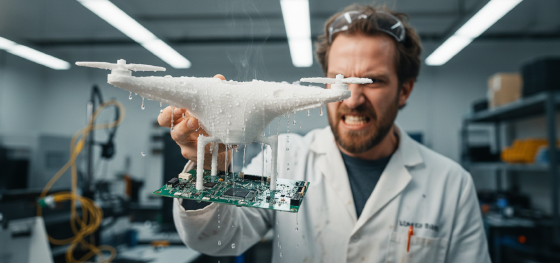
Securing critical electronics against sudden rainstorms exposes the fatal flaw of standard additive manufacturing. Printed plastics are inherently porous; water will aggressively seep through the microscopic layers and permanently short-circuit your expensive flight controllers. Integrating advanced Custom Drone and UAV Parts Manufacturing requires abandoning these leaky plastics when shifting to environmental field trials.
Navigating this fine line between signal transparency, impact resistance, and absolute water-tightness defines successful aerospace design. Let's explore exactly why polyurethane replication dominates the prototyping sector, how engineers perfectly seal their assemblies, and why internal finishing capabilities accelerate your product launch.
content:
Signal Transparency: Balancing Impact and RF Transmission
Vacuum Casting: Achieving Injection-Molded Reality
Weatherproofing: Defeating Severe Rainstorms
Technical Data: Benchmarking Fabrication Methods
JUCHENG Hub: Shenzhen's Advanced Aesthetic Arsenal
FAQ: Honest Answers About Painting and Durability
Signal Transparency: Balancing Impact and RF Transmission

Why must exterior flight shells rely entirely on engineered plastics instead of metal?
Metallic covers act as highly effective Faraday cages, completely blocking crucial GPS satellites, telemetry radios, and high-definition video signals from reaching the internal antennas.
Carbon fiber blocks radio waves almost as aggressively as solid aluminum. Designing an impenetrable metal chassis for the core frame is brilliant, but you must crown that heavy-duty skeleton with a transparent polymer dome. This plastic barrier allows high-frequency signals to pass through flawlessly while protecting the fragile motherboards from physical impact.
Delivering true impact resistance requires mimicking materials like Polycarbonate or ABS. Hard, brittle resins will shatter like glass if the aircraft clips a tree branch. We cast specialized polyurethanes that flex slightly upon impact, absorbing kinetic energy and saving the expensive internal cameras from destruction.
Vacuum Casting: Achieving Injection-Molded Reality
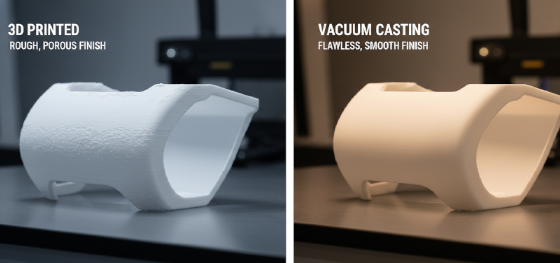
How do startups achieve flawless retail aesthetics without paying for steel molds?
By utilizing vacuum casting to pour advanced liquid polyurethane into flexible silicone master molds, yielding a perfectly smooth, non-porous shell that mimics mass-production quality exactly.
Relying on standard filament printing leaves ugly, stepped ridges across the entire surface of your product. Sanding those ridges down by hand takes hours and usually destroys the precise geometric curves your design team worked so hard to create.
Extracting the air from the silicone mold under a heavy vacuum guarantees the liquid polymer fills every microscopic detail flawlessly. You receive a dense, unyielding shell that looks, feels, and paints exactly like a million-dollar commercial product straight out of the box.
Weatherproofing: Defeating Severe Rainstorms
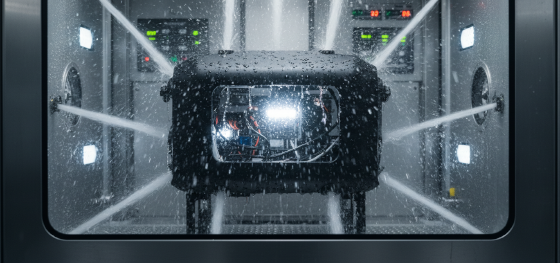
Why do basic plastic prototypes fail rigorous outdoor water tests?
Because additive layer manufacturing creates thousands of microscopic voids throughout the material structure, allowing pressurized rain to literally sweat through the solid walls over time.
Surviving sudden rainstorms requires an absolutely dense, unified molecular structure. Vacuum casting creates a chemically bonded, waterproof barrier. However, the true test of your engineering happens at the physical seams where the upper dome meets the lower chassis plate.
Machining precise O-ring compression grooves is mandatory for securing high IP ratings. If you intend to submerge the hardware entirely, transitioning your design toward a heavy-duty ROV enclosure prototype becomes necessary. For aerial vehicles, perfectly cast silicone gaskets compressed between rigid polyurethane walls provide excellent storm-proof seals.
Technical Data: Benchmarking Fabrication Methods
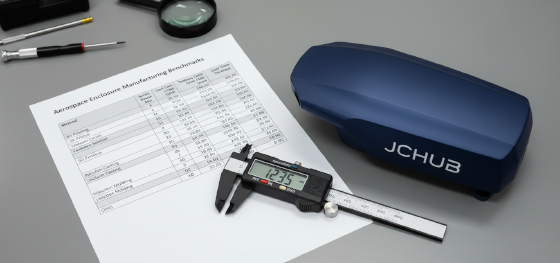
Comparing fabrication methods based purely on speed usually results in terrible cosmetic outcomes. The engineering matrix below outlines exactly when hardware founders must abandon fast printing in favor of high-fidelity casting.
| Fabrication Method | Primary Engineering Advantage | Weather & Water Resistance |
|---|---|---|
| JUCHENG Vacuum Casting | Flawless injection-molded aesthetic, highly durable. | Excellent (Non-porous, highly sealable) |
| SLA Resin Printing | Extreme dimensional accuracy for tiny features. | Moderate (Can be brittle outdoors) |
| FDM / SLS Nylon Printing | Very fast iteration speed, extremely tough. | Poor (Micro-porous structure leaks water) |
Skipping the massive steel tooling costs while still achieving premium retail quality is the ultimate commercial hack. Silicone molds easily produce batches of 15 to 50 identical polyurethane shells, giving your sales team enough units to send to critical beta testers worldwide.
JUCHENG Hub: Shenzhen's Advanced Aesthetic Arsenal
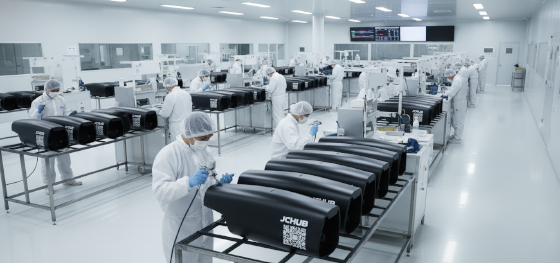
Why is it crucial to keep casting and cosmetic painting inside the same factory?
Shipping raw plastic shells to a third-party painter introduces massive delays and guarantees surface scratches, while keeping it in-house ensures flawless, cleanroom-grade automotive finishes.
Handing a raw, unpainted shell to an investor looks completely unprofessional. Operating our Shenzhen precision manufacturing hub, Jucheng Precision houses dedicated spray booths and silkscreen stations directly next to our casting labs. We apply military-grade matte finishes and print crisp, multi-color warning logos directly onto your enclosures.
Stop pitching cheap-looking models to high-net-worth investors. Send your exterior CAD files to our engineering team today. We evaluate the draft angles, cast the perfect polyurethane replacements, and deliver breathtaking commercial hardware that demands attention.
FAQ: Honest Answers About Painting and Durability

Will the paint peel off the polyurethane shell during a high-speed crash?
We utilize specialized chemical adhesion promoters before painting, ensuring the automotive-grade topcoat chemically bonds to the plastic, making it incredibly resistant to flaking or chipping.
How long does a silicone master mold last before it degrades?
Because the liquid chemicals slowly degrade the silicone, a single master mold reliably produces between 15 and 25 flawless polyurethane copies before we must cast a fresh silicone block.
Can you cast fully transparent plastic domes for camera lenses?
Absolutely. We pour highly specialized, optically clear polyurethane resins to create flawless, bubble-free transparent covers specifically designed to protect delicate optical sensors.
Does vacuum casting require strict drafting angles like injection molding?
It is far more forgiving. Because the silicone mold is inherently flexible, we can easily pull parts out that have minor undercuts or zero-degree draft angles without damaging the geometry.

