


Outdoor survival in industrial hardware demands a material that rejects environmental degradation with total indifference. When engineering large-scale shipping pallets, heavy-duty pipe fittings, or ruggedized fuel tanks, the primary threat is not just mechanical load, but the combined assault of ultraviolet radiation, aggressive chemical solvents, and sub-zero thermal cycling. In the high-pressure world of high-volume production, hdpe injection molding serves as the mandatory solution for projects requiring the highest strength-to-density ratio among the polyolefin family. High-Density Polyethylene (HDPE) is a semi-crystalline thermoplastic with a linear molecular structure that grants the part extreme impact toughness and moisture resistance. Jucheng Precision operates as an industrial-grade manufacturing hub, utilizing high-tonnage machines to process Injection molding materials that must survive where lesser plastics fail. This guide provides a forensic breakdown of HDPE’s technical superiority, leveraging hard data to navigate the trade-offs of crystallinity and shrinkage.

Engineering durability requires a dispassionate comparison of the "Polyethylene Spectrum." Designers often confuse HDPE with its lower-density siblings, leading to catastrophic structural failure in the field. HDPE’s crystalline structure creates a rigid polymer matrix that is virtually impervious to water absorption (less than 0.01%), making it the go-to choice for marine and agricultural hardware. Jucheng Precision eliminates manufacturing doubt by performing a surgical DFM audit on every high-density project, ensuring your wall thicknesses are optimized for the aggressive 1.5% to 3.0% shrinkage rates inherent to this material. The following analysis utilizes technical matrices to compare HDPE against competing resins, providing the data needed to lock in your production bill of materials.
Polyethylene Evolution: HDPE vs LDPE vs LLDPE
Mechanical Sovereignty: Technical Property Matrix
Cryogenic Resilience: Solving the Low-Temperature Brittle Point
Shrinkage Forensics: Managing High Volumetric Contraction
JUCHENG Protocol: Large-Scale Molding for Heavy Industry
Polyethylene Evolution: HDPE vs LDPE vs LLDPE
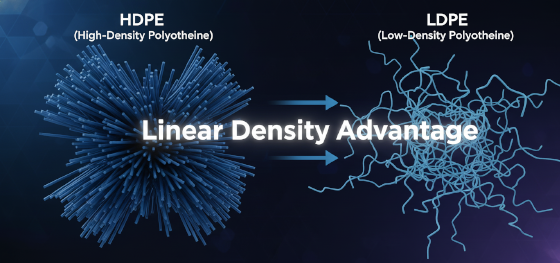
Selecting the correct density determines the failure mode of your hardware. While all polyethylenes share a common hydrocarbon origin, the degree of molecular branching creates radically different physical realities. HDPE is characterized by minimal branching, allowing the long polymer chains to pack tightly together during hdpe injection molding. This high degree of crystallinity results in a stiffer, stronger, and more opaque material than Low-Density Polyethylene (LDPE). To assist in early-stage material selection, Jucheng Precision provides the following comparative matrix:
| Feature | HDPE (High Density) | LDPE (Low Density) | LLDPE (Linear Low) |
|---|---|---|---|
| Density (g/cm³) | 0.941 - 0.965 | 0.910 - 0.940 | 0.915 - 0.925 |
| Tensile Modulus | High (1000+ MPa) | Low (200 MPa) | Medium (350 MPa) |
| Opacity | Opaque / Waxy | Translucent | Translucent |
| Impact Strength | Excellent | Good | Superior |
Observing the Modulus data confirms that HDPE is the only member of its family suitable for structural, load-bearing industrial parts. While LDPE is relegated to flexible packaging and squeeze bottles, HDPE provides the structural spine needed for crates, bins, and machine components that must resist deformation under constant stress.
Mechanical Sovereignty: Technical Property Matrix
Validating hardware for heavy industry requires a deep dive into the Megapascals. HDPE is unique because it retains its mechanical properties across a vast temperature delta, from freezing Arctic ports to sweltering desert mining sites. At Jucheng Precision, we calibrate our injection parameters to preserve the "Tie Molecules" that link the crystalline regions of the polymer. This internal architecture prevents "Environmental Stress Cracking" (ESC)—a common failure mode in lower-quality polyethylenes exposed to detergents or oils. Below is the technical specification matrix used by our engineers to audit HDPE part designs:
| Mechanical Property | Typical Value (Injection Grade) |
|---|---|
| Tensile Strength at Yield | 22 - 32 MPa |
| Flexural Modulus | 1,000 - 1,550 MPa |
| Notched Izod Impact (23°C) | 50 - 200 J/m |
| Heat Deflection (0.45 MPa) | 65°C - 85°C |
| Shore D Hardness | 60 - 70 |
Technical parity between the digital design and the physical shot is achieved by selecting the correct Melt Flow Index (MFI). A high MFI allows for the injection of thin-walled industrial parts, while a low MFI is required for maximum strength in heavy-duty components. We partner with you to select the exact resin grade that supports your specific mechanical load case.
Cryogenic Resilience: Solving the Low-Temperature Brittle Point

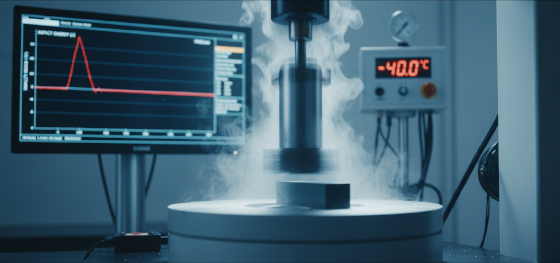
Material fatigue in cold weather kills most common thermoplastics. ABS and many Nylons become brittle and "glass-like" once the temperature dips below 0°C, shattering like a dinner plate upon impact. hdpe injection molding is the undisputed champion of "Cold-Chain" logistics for this very reason. Polyethylene’s glass transition temperature (Tg) is approximately -120°C, meaning it remains in its ductile, "rubbery" state even in the deepest winter. An HDPE pallet dropped at -30°C in a Canadian shipping yard will simply bounce, absorbing the kinetic energy through molecular realignment. Jucheng Precision works with logistics and automotive clients to validate hardware that must survive the "Cryogenic Test." We ensure your part geometry doesn't include "Stress Risers"—sharp internal corners that could trigger a fracture despite the material's inherent toughness. We don't just provide a part; we provide the thermal armor needed for global deployment.
Shrinkage Forensics: Managing High Volumetric Contraction
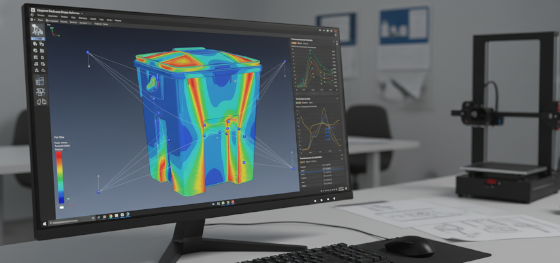
Dimensional precision is notoriously difficult to maintain with hdpe injection molding. Because HDPE is highly crystalline, its molecules pack together with extreme efficiency as they cool, leading to massive volumetric shrinkage—often up to 3.0% in thick sections. If your tool designer fails to calculate this "Crystalline Pulse" with sub-micron accuracy, your parts will warp, sink, and fail to assemble. Jucheng Precision eliminates these "Dimensional Nightmares" by utilizing advanced 5-axis CNC mold making and "Oversize Compensation." We don't just scale the mold; we apply differential scaling to account for the fact that HDPE shrinks more across the flow than with it. We also utilize high-precision "Conformal Cooling" channels to pull heat out of heavy sections at the same rate as thin walls, neutralizing the internal residual stresses before they can pull your part out of tolerance. We treat shrinkage as a predictable mathematical variable, ensuring your high-density components fit perfectly on the first shot.
JUCHENG Protocol: Large-Scale Molding for Heavy Industry
Manufacturing excellence at Jucheng Precision is built on the foundation of high-tonnage capacity and technical advisory. We don't just "mold and ship"; we optimize your project's "Strength-to-Cost" ratio. Our facility, housing machines with clamping forces up to 1200 tons, is optimized for the large-format components typical of the HDPE sector. When you upload a CAD file to our facility, our veteran engineers perform a comprehensive "Heavy-Shot Audit." We analyze gate placements to prevent "Jetting" and suggest rib modifications that maximize the rigidity of your industrial bins or housings. We provide full material lot traceability and dimensional inspection reports for every batch, ensuring your hardware journey is lean, predictable, and market-ready. Stop compromising your heavy-duty designs with weak material choices or low-precision vendors. Leverage our decade of high-density replication mastery to certify confidently and launch profitably. Contact our engineering team today for a free DFM review and see how we can turn your digital intent into a waxy, indestructible reality.

