


You are starting a new project. You open a material supplier's website. You are faced with hundreds of choices. Acronyms swim before your eyes. ABS, PC, PP, PA, PEEK, PEI. How do you even begin to choose?

This feeling of "analysis paralysis" is common. The sheer number of Injection molding materials can be overwhelming.
But what if there was a simpler way to think? Instead of a endless list, what if you had a clear ladder of choices? This guide is that ladder. We will group these materials into clear performance tiers to help you make a smart, confident decision.
Tier 1: The Workhorses (Commodity Plastics)
Tier 2: The All-Stars (Engineering Plastics)
Tier 3: The Specialists (High-Performance Plastics)
Tier 4: The Elite (Ultra-Performance Plastics)
A Note on Flexibility: The Elastomers
Tier 1: The Workhorses (Commodity Plastics)
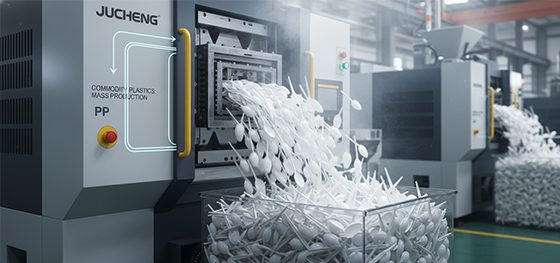
This is the foundation of the plastics world. These are materials produced in enormous quantities at a very low cost. Their performance is basic, but for the right job, they are the smartest choice.
The main players here are Polypropylene (PP) and Polyethylene (PE). They are lightweight, have excellent chemical resistance, and are very easy to mold.
You see them in applications where cost is the number one driver. Think of packaging, disposable containers, simple toys, and bottle caps. For these high-volume, low-cost products, using a more expensive material would be a waste of money.
Tier 2: The All-Stars (Engineering Plastics)
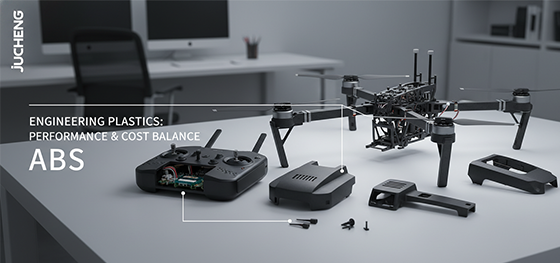
This is the tier where most high-quality products live. These materials offer a fantastic balance of performance, cost, and appearance. They are the "all-stars" of the Injection Molding world.
The key players here are ABS and Polycarbonate (PC). ABS is the champion of balanced properties. It is tough, rigid, and has a good surface finish, all at a reasonable cost. It is perfect for electronic housings, car interiors, and appliances.
Polycarbonate is a step up in performance. It is much tougher and has higher impact strength than ABS. It is also transparent. This makes it ideal for clear parts that need to be durable, like lenses or safety glasses. It is more expensive than ABS, creating a clear trade-off.
Tier 3: The Specialists (High-Performance Plastics)

Sometimes, the all-stars are not enough. Your part might need to handle higher temperatures, or survive extreme wear and friction. For these jobs, you need a specialist.
This is the tier of materials like Nylon (PA) and POM (Acetal). These are true engineering plastics with exceptional mechanical properties.
Nylon is known for its incredible toughness and wear resistance. When reinforced with glass fibers, it also becomes very strong and heat resistant. This makes it a top choice for under-the-hood automotive components.
POM is the king of low-friction applications. It has a very slippery, self-lubricating surface. This makes it the perfect material for making gears, bearings, and other moving parts that need to operate smoothly for millions of cycles.
Tier 4: The Elite (Ultra-Performance Plastics)
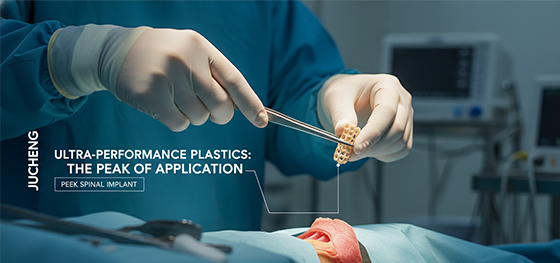
Finally, we reach the top of the pyramid. This is the home of the elite, "super" polymers. These materials are chosen when failure is not an option, and cost is a secondary concern.
The main players here are PEEK and PEI (Ultem). Their superpower is extreme heat resistance. They can survive in environments that would melt most other plastics. They also have outstanding chemical resistance and mechanical strength.
These materials are so strong and stable that they can replace metal in some of the most demanding applications. You find them in aerospace components, surgical instruments, and medical implants. They are difficult to process and very expensive, but they offer performance that no other plastic can match.
A Note on Flexibility: The Elastomers
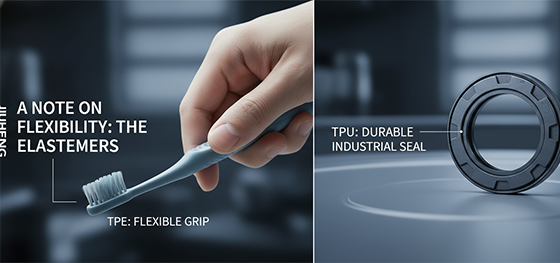
Running parallel to these tiers of rigid plastics is the world of flexible elastomers. These are the materials you choose when you need a soft, rubber-like part.
The most common are TPE (Thermoplastic Elastomer) and TPU (Thermoplastic Polyurethane). They can be molded just like a standard plastic, but their final form is soft and pliable.
TPE is often used for soft-touch grips on consumer products. TPU is an incredibly tough and abrasion-resistant version, perfect for parts like industrial wheels and protective phone cases.
At JUCHENG, we stock over 50 different resins across all these tiers. Our engineers can help you navigate this ladder of choices. We will look at your design, understand your performance needs and budget, and help you select the smartest material from our extensive list of Injection molding materials.

