


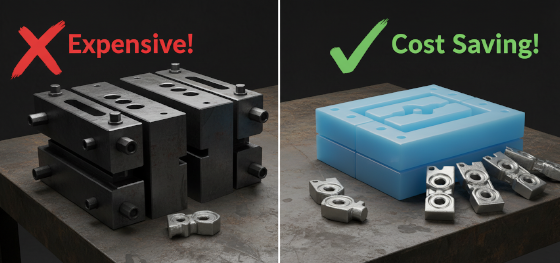
Metal hardware development frequently hits a financial brick wall during the low-volume transition. When a project demands fifty commemorative medals, intricate pewter belt buckles, or low-friction tin-alloy bearings, the traditional manufacturing paths vanish. Die-casting tool steel molds cost twenty thousand dollars and require months of lead time. Sand casting is too coarse for fine cosmetic relief. CNC machining becomes prohibitively expensive when carving deep, organic textures into hard alloys. High-integrity solutions exist within the specialized domain of High Temp Silicone Mold Making. By utilizing advanced platinum-cure elastomers capable of surviving a 350°C thermal shock, engineers can bypass the "Die-Casting Wall" entirely. This is not standard polyurethane work; it is a form of rapid investment casting that utilizes a flexible tool to produce real, heavy metal components. Jucheng Precision has mastered the delicate thermodynamics of silicone mold for casting metals, offering a bridge for designers who refuse to compromise on the weight, luster, and structural coldness of genuine metal.
Platinum-Cure Chemistry: Stability at Extreme Thermal Peaks
Low-Melt Metal Selection: Negotiating with Physics
Atmospheric Control: Managing Heavy Fluid Displacement
JUCHENG Specialized Foundry: Prototyping in Metal
Platinum-Cure Chemistry: Stability at Extreme Thermal Peaks

Thermodynamic survival begins with the choice of the catalyst. Standard silicone mold making utilizes condensation-cure RTV, which uses tin-based catalysts. While excellent for room-temperature polyurethane work, tin-cure silicones suffer from "outgassing" when exposed to heat and exhibit high shrinkage rates that ruin metal dimensional tolerances. Professional High Temp Silicone Mold Making utilizes addition-cure (Platinum-cure) RTV. The platinum catalyst creates a dense, three-dimensional molecular grid that is far more stable under thermal duress. These silicones exhibit virtually zero shrinkage—often less than 0.1%—ensuring that a metal gear cast today is identical to the CAD file created yesterday. This chemical architecture remains stable even as molten pewter at 300°C hits the cavity wall. Instead of becoming brittle or "smoking" like cheap industrial rubbers, the platinum-cure mold maintains its elasticity, allowing for multiple demolding cycles without surface degradation. At Jucheng Precision, we source specialized grades of high-temp RTV that can survive dozens of thermal shocks, protecting your project's dimensional integrity through the entire batch run.
Low-Melt Metal Selection: Negotiating with Physics
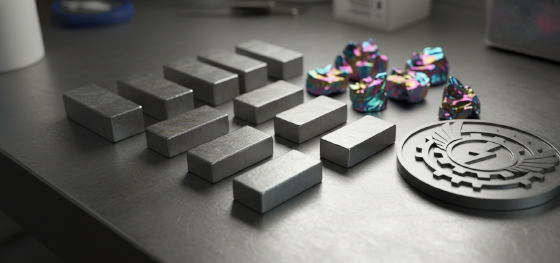
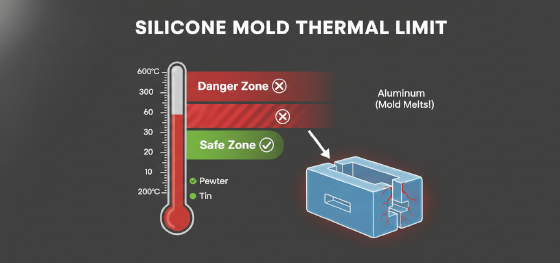
Physical limits define the boundary of soft-tool metalwork. Engineers frequently ask if they can pour molten aluminum or zinc into a silicone mold for casting. The answer is a resounding "No." Aluminum melts at 660°C, a temperature that will instantly incinerate even the most advanced silicone polymer chains, resulting in a toxic, bubbling failure. We operate strictly within the domain of "Low-Melt Alloys." Tin-based alloys, specifically Pewter (a mixture of tin, antimony, and copper), are the undisputed masters of this process. Melting at approximately 230°C to 300°C, these alloys flow with the viscosity of water, capturing microscopic surface details that 3D metal printing often obscures. We also utilize Bismuth-tin alloys for high-precision internal components requiring zero-shrinkage performance. These metals provide the authentic weight and structural rigidity required for high-end automotive shift knobs, luxury jewelry masters, and surgical tool handles. By respecting the thermal ceiling of the silicone, we unlock a world of real-metal prototyping that is ten times faster than waiting for a die-casting tool.
Atmospheric Control: Managing Heavy Fluid Displacement
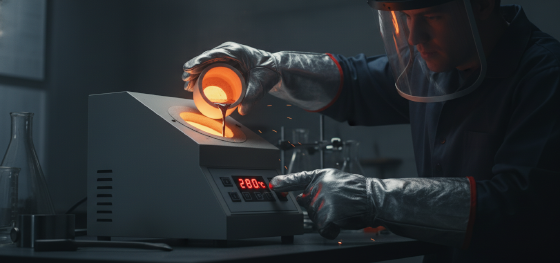
Molten metal behaves far differently than liquid plastic. Liquid polyurethane is light and viscous; molten pewter is heavy and fast. Pouring 300°C metal into a silicone mold for casting requires an aggressive approach to "Degassing and Venting." Because the metal is so dense, it traps air against the mold walls with immense pressure. If the mold lacks strategic venting, the resulting part will suffer from "rounded corners" or internal air pockets. Jucheng Precision manages this through a multi-stage vacuum protocol. We pre-heat the silicone molds to prevent "thermal shock bubbles" that occur when hot metal hits a cold surface. Simultaneously, we use high-power vacuum chambers to evacuate the mold cavity mere seconds before the pour. This creates a negative pressure environment that sucks the molten alloy into every microscopic crevice of the relief work. The result is a metal component with "retail-ready" detail—crisp edges, clear embossed text, and a surface finish that matches the master pattern with surgical fidelity.
JUCHENG Specialized Foundry: Prototyping in Metal
Hardware innovation requires a partner who understands the cold reality of metal. Jucheng Precision operates a dedicated high-temp foundry lab where High Temp Silicone Mold Making is treated with the same digital rigor as our CNC machining. We don't just "pour metal"; we engineer a thermal event. Our technicians use digital melting furnaces to maintain alloy temperatures within a five-degree window, preventing the oxidation that clouds the metal's surface. We also apply specialized graphite-based release agents that act as a thermal barrier, extending the life of your silicone tool while ensuring a mirror-like finish on the metal part. Stop settling for "plastic that looks like metal." Experience the structural truth and premium feel of genuine pewter and tin alloys. Leverage JUCHENG's expertise in high-temp replication to bring your heavy hardware to market weeks ahead of the competition. Contact our engineering team today for a feasibility review of your next metal prototyping project.

