


Pixels meet liquid rubber at the most critical juncture of rapid prototyping. Transitioning a high-fidelity CAD model into a functional batch of polyurethane parts requires more than just a 3D printer; it requires an impeccably executed Silicone Mold Making Process. While the industry fixates on the speed of additive manufacturing, the true "heart" of low-volume production remains the manual, artisan-driven creation of the silicone mold for casting. This process is essentially a form of parasitic replication. We use a physical master to "infect" a block of liquid Room Temperature Vulcanizing (RTV) silicone, forcing it to memorize every microscopic detail of the original's surface architecture. Mastering this transition is what separates a crude garage hobbyist from an industrial-grade manufacturing partner. If the mold fails, the entire batch fails. This guide provides a 1000-word forensic analysis of the five stages of mold fabrication, stripping away the mystery to expose the engineering rigor required for a perfect pour.

Master Pattern Geometry and Surface Sealing
Parting Line Design and Structural Framing
Atmospheric Degassing and Silicone Pouring Physics
Thermal Curing and Master Pattern Extraction
JUCHENG Quality Control and Defect Prevention
Master Pattern Geometry and Surface Sealing
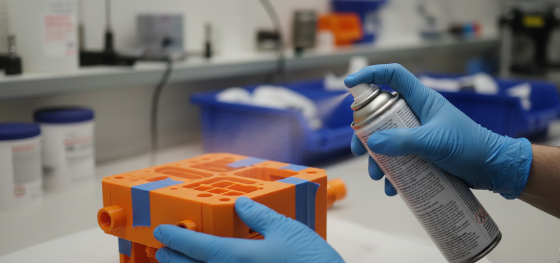
Foundation integrity dictates the final quality of every cast part. Before the first drop of silicone is mixed, the master pattern—typically a CNC-machined or SLA-printed component—must undergo rigorous surface remediation. Silicone is an unforgiving medium; it captures VDI textures as easily as it captures accidental scratches or fingerprints. Our technicians begin by sealing the master to prevent "cure inhibition." Certain 3D printing resins contain sulfur or tin compounds that chemically "poison" the silicone, leaving a sticky, uncured mess at the interface. We apply specialized chemical sealants and high-performance release agents to create a microscopic barrier. This ensures a clean separation later. For parts requiring high-gloss aesthetics, we polish the master to an SPI A2 finish. This is the only stage where we can dictate the texture of the entire Silicone Mold Making Process. Once the silicone cures, the surface finish is locked into the tool permanently.
Parting Line Design and Structural Framing
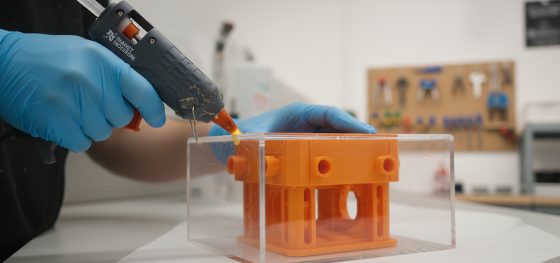
Engineering a mold is essentially an exercise in planning the "Great Escape." We must determine exactly where the two halves of the mold will meet—the parting line. This is a manual, skill-intensive phase involving a "clay-up" or a "suspended-pour" strategy. For complex geometries with undercuts, our master mold makers utilize a zigzag parting line. This increases the surface area of the seam, preventing the mold from shifting under the weight of the resin. We then construct a rigid frame, usually from acrylic sheets, to house the silicone. This frame must be leak-proof, sealed with industrial-grade adhesives. Inside this frame, we strategically place "Registration Keys"—conical indentations that act as mechanical locks. These keys ensure that Part A and Part B of the mold align with sub-millimeter precision every time they are mated. A poorly designed parting line results in "flash"—the ugly excess plastic that signals a low-quality prototype. At Jucheng Precision, we design for invisibility.
Atmospheric Degassing and Silicone Pouring Physics
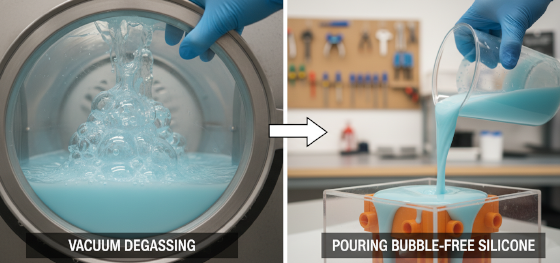
Mixing two-part RTV-2 silicone inevitably introduces a massive volume of atmospheric air. If poured directly, these millions of microscopic bubbles would cling to the master pattern, resulting in a part covered in "zits" or voids. We prevent this through "Total Evacuation." The mixed silicone is placed inside a vacuum chamber and subjected to a deep vacuum—typically 29 inches of Mercury. Under this negative pressure, the bubbles expand violently, rising to the surface and "boiling" over before the mixture collapses into a dense, bubble-free liquid. This is the most volatile stage of the Silicone Mold Making Process. Once degassed, we pour the silicone into the mold box in a thin, steady stream from a significant height. This "long pour" further stretches any remaining air bubbles until they burst. We pour into the lowest point of the frame, allowing the liquid to rise naturally around the master pattern. This bottom-up approach prevents air from being trapped in deep ribs or blind holes, ensuring a perfect negative impression.
Thermal Curing and Master Pattern Extraction
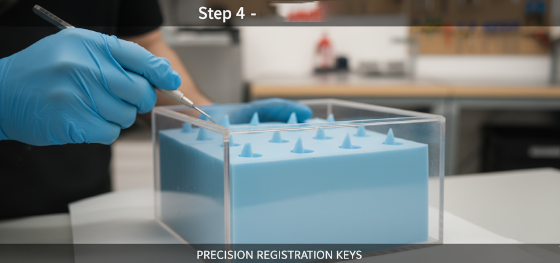
Chemistry requires patience and controlled thermodynamics. While "RTV" stands for Room Temperature Vulcanizing, we often accelerate and stabilize the cure inside digital ovens set to 40°C. This prevents "linear shrinkage," ensuring the mold maintains the exact dimensions of the CAD file. Once the silicone has transitioned from a liquid to a high-tear-strength elastomer, the "Excavation" begins. This is a surgical operation. Using precision scalpels, our technicians cut along the pre-planned parting line. This is not a straight cut; it is a delicate, wavy incision that allows the mold to "key" back together perfectly. We then gently pry the silicone apart and extract the master pattern. What remains is a flawless, high-resolution cavity—a silent, empty ghost of your design, ready to be filled with polyurethane resin. This concludes the primary fabrication phase of the silicone mold for casting, but the tool is not yet ready for production. We must first "season" the mold with a final heat cycle to drive off any residual moisture.
JUCHENG Quality Control and Defect Prevention
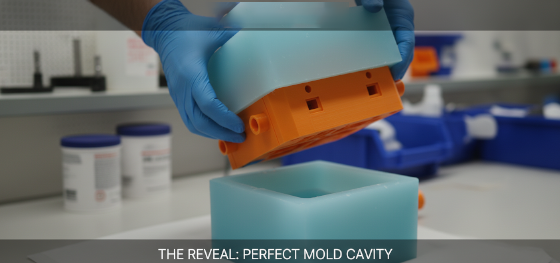
Standardization is the enemy of manufacturing defects. Many boutique shops treat the Silicone Mold Making Process as an ad-hoc craft, leading to inconsistent part dimensions and surface flaws. Jucheng Precision operates under a rigorous ISO-certified framework. We monitor the "Pot Life" of every silicone batch with digital timers. We verify the mix ratios using high-precision scales to ensure the Shore A hardness of the final tool is exactly as engineered. If a mold exhibits even a microscopic tear or a single air bubble on a critical cosmetic face, it is immediately scrapped and remade. We understand that our clients in the medical and automotive sectors rely on these parts for life-critical testing. A mold that is "good enough" is a failure. We deliver manufacturing sovereignty through process discipline, ensuring that your hundredth part is as dimensionally accurate as your first. Experience the difference that professional mold-making brings to your hardware lifecycle. Contact JUCHENG today for a free DFM review of your next project.

