


The quality of paint and coating on a plastic car part—from a glossy black fascia to a custom color match—is not defined by the spray gun, but by the surface it adheres to. For B2B buyers in the automotive and high-end consumer electronics industries, securing a durable, showroom-quality finish requires precise control over the plastic part's Plastic Surface Preparation long before the paint ever touches it.
The majority of coating failures (peeling, bubbling, poor gloss) are traced back to unseen defects: internal stress, chemical contaminants, or poor surface energy resulting from the initial Injection Molding process. This guide details the advanced manufacturing strategies that ensure your plastic components offer the perfect, clean foundation for a lasting professional finish.
content:
The Molding Foundation: Eliminating Surface and Subsurface Defects
Contamination Control: The Invisible Enemy of Coating Adhesion
Surface Activation: Chemically Preparing Low Surface Energy Plastics
Finishing Standards: Automated Process for High-Volume Quality
The Molding Foundation: Eliminating Surface and Subsurface Defects
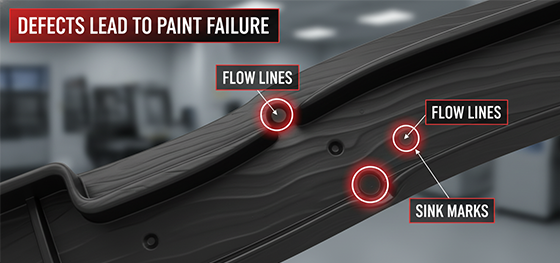
The Injection Molding process creates the initial surface texture. Any flaws at this stage become permanent and are often magnified by the paint's gloss layer:
Surface Roughness (Ra): The initial surface finish of the mold steel (achieved via CNC Machining and polishing) directly dictates the Ra value of the plastic part. A poor finish requires extensive, costly hand-sanding prior to painting.
Sink Marks and Voids: Defects like sink marks (slight depressions) or internal voids are caused by incorrect cooling or packing pressure during molding. These flaws show up clearly under a glossy paint finish and cannot be easily corrected.
Internal Stress: Poor temperature control during molding can lock internal stress into the plastic. When exposed to the heat of the paint curing oven or the solvent in the paint itself, this stress can be released, causing the paint to crack or the part to warp.
Contamination Control: The Invisible Enemy of Coating Adhesion
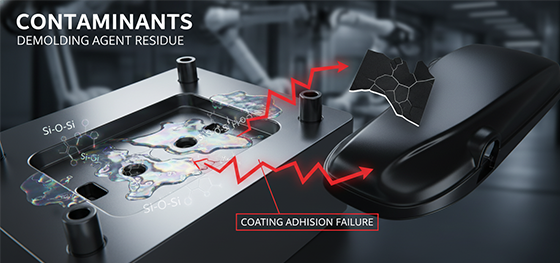
Paint failure often results from a microscopic layer of contamination that prevents the coating from bonding to the polymer substrate:
Demolding Agents: Molds often use external release agents (sprays) to help the part eject easily. While necessary for the molding process, residues from these agents are hydrophobic (repel water) and prevent paint adhesion.
Mold Tooling Oils: Microscopic residues of lubrication oil from the molding machine or tooling cleanup processes can transfer to the part surface, acting as a barrier to the paint.
The Solution (Deep Cleaning): Professional painting preparation requires multi-stage cleaning, often including high-power solvent wipes, de-ionized water rinses, and specialized detergents to ensure the polymer surface is chemically clean before priming.
Surface Activation: Chemically Preparing Low Surface Energy Plastics
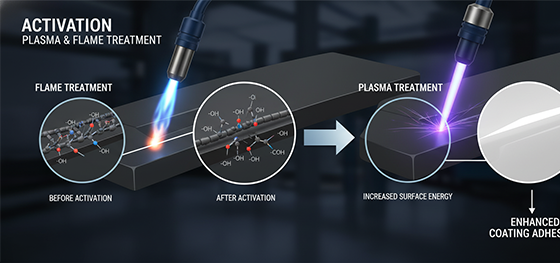
Many common plastics (like Polypropylene, Polyethylene, and even some ABS grades) have low surface energy, meaning they naturally resist bonding. This problem is solved by increasing the surface energy through activation:
Plasma Treatment: The component is exposed to a controlled electrical plasma field, which breaks molecular bonds on the surface and introduces polar, paint-friendly chemical groups, significantly increasing the polymer's wettability and paint adhesion.
Flame Treatment: A high-temperature, oxidizing flame is rapidly passed over the surface. This controlled process is cost-effective and chemically modifies the surface layer to improve adhesion without melting the bulk material.
Adhesion Promoter (Primer): For plastics that cannot be physically activated, specialized adhesion promoters (primers) are applied to chemically bridge the gap between the low-energy plastic and the paint layer.
Finishing Standards: Automated Process for High-Volume Quality

For high-volume automotive and consumer electronics projects, manual, inconsistent paint preparation is replaced by automated, high-standard finishing processes:
Clean Room Environment: Professional painting is performed in filtered, temperature- and humidity-controlled paint booths (or clean rooms) to prevent microscopic dust and particulate matter from settling on the part and creating surface flaws.
Automated Application: Robotic spray arms are used for large-volume production to ensure uniform coat thickness and perfect paint coverage, eliminating the inconsistency of manual application.
Quality Verification: The final finish is verified using gloss meters (to measure reflectivity), film thickness gauges, and cross-hatch adhesion tests (to test the bonding strength of the paint to the plastic).
A truly professional paint finish starts in the mold. Jucheng Precision Technology offers specialized Injection Molding and Plastic Surface Preparation services, ensuring your automotive and consumer plastic parts have the flawless foundation necessary for superior, durable coating adhesion.
Secure guaranteed paint quality on your plastic components. Contact us today to discuss DFM analysis for paint-ready Injection Molding and post-molding surface activation strategies.

