


Bionic agility remains the ultimate judge of humanoid hardware success. In the hyper-competitive landscape of 2026, the transition from industrial robotic arms to self-balancing bipeds represents a violent leap in mechanical complexity. For hardware engineers, the primary adversary is not the neural network—it is the physical mass of the limbs. If the humanoid robot parts are over-engineered and heavy, the actuators draw excessive current, overheating the thermal management system and slashing the battery life to minutes. Navigating this requirement for extreme power-to-weight ratios requires the strategic deployment of Robotics Automation Manufacturing. Jucheng Precision operates as a high-fidelity manufacturing sanctuary in the Shenzhen precision manufacturing hub, providing the technical depth to deliver skeletal frames, harmonic drive housings, and bionic linkages that possess the mechanical spine needed for human-level movement. We don't just "cut metal"; we engineer the structural anatomy of the future, ensuring your bot maintains its sub-micron repeatability through the most aggressive mobility audits.
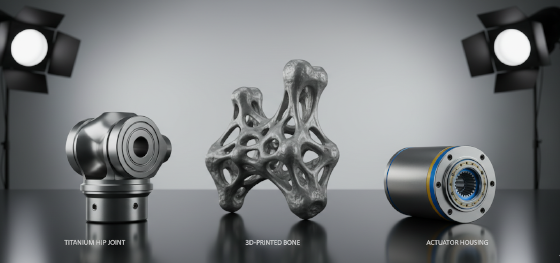
Establishing a resilient humanoid supply chain in 2026 demands the rejection of traditional "solid-metal" thinking. Amateurs often default to heavy steel or 6061 aluminum for skeletal bones, unaware that magnesium and titanium offer the necessary modulus to survive fall-impacts without the mass penalty. Jucheng Precision eliminates these "Mechanical Drags" by providing an integrated multi-process ecosystem of 5-axis CNC, DMLS metal 3D printing, and high-precision casting. Whether you are developing prototype robot limbs for warehouse agility or specialized effectors for Medical Robotics, our facility provides the material science and metrological rigor required for market entry. We turn "anatomical concepts" into "structural assets," ensuring your hardware remains dimensionally sovereign through millions of gait cycles. This guide deconstructs the necessity of exotic alloy machining, the physics of bionic lattice structures, and why JUCHENG’s "Anatomy Protocol" is the mandatory foundation for anyone developing humanoid robot parts for global deployment.
Skeletal Sovereignty: Machining Magnesium and Titanium Alloys
Bionic Complexity: DMLS Metal 3D Printing for Organic Frames
Dynamic Precision: Tight-Tolerance Actuator and Gear Housings
Mass Economics: Balancing Battery Life and Structural Modulus
JUCHENG Protocol: Integrated Multi-Process Scaling for AI Bots
Frequently Asked Questions: Humanoid Robot Parts
Skeletal Sovereignty: Machining Magnesium and Titanium Alloys
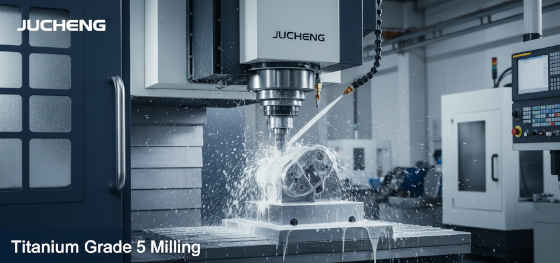
Weight reduction in humanoid bipeds is a battle won at the micron level. For humanoid robot parts like femurs, shins, and pelvis structures, the choice of alloy dictates the energy efficiency of every step. Jucheng Precision utilizes 5-axis CNC machining to carve these components from Magnesium (AZ31B) and Titanium (Grade 5). Magnesium offers a 33% weight reduction compared to aluminum while maintaining excellent vibration-damping properties—vital for protecting sensitive IMUs and cameras during rapid movement. Titanium, conversely, provides the extreme fatigue strength required for high-stress joints like the ankles and hips. Our facility manages the unique risks of magnesium machining—including high flammability and specialized coolant requirements—ensuring your skeletal assets are produced with zero surface contamination. By maintaining +/- 0.01mm tolerances on joint mounting faces, we ensure your robot’s "bones" provide the rigid foundation needed for complex self-balancing algorithms.
Bionic Complexity: DMLS Metal 3D Printing for Organic Frames
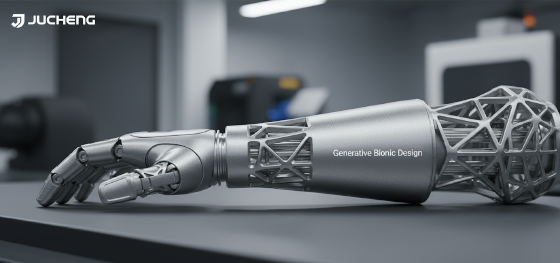
Manufacturing the unmachinable represents the primary advantage of additive tooling. humanoid robot parts often feature organic, bone-like geometries that are optimized via generative design to put material only where the stress vectors demand it. These complex, hollow architectures are impossible to produce via traditional CNC milling. Jucheng Precision utilizes Direct Metal Laser Sintering (DMLS) to "grow" these skeletal parts from AlSi10Mg or Titanium powder. This technology allows us to integrate internal cooling channels for servos and cable routing paths directly into the structural bones, reducing your Bill of Materials (BOM) count significantly. We turn "hollow concepts" into "high-modulus realities," ensuring your robot possesses the structural complexity needed to emulate human agility. Our hybrid workflow involves DMLS printing followed by 5-axis CNC finishing of all bearing seats, ensuring your bionic frames possess both organic freedom and industrial precision.
Dynamic Precision: Tight-Tolerance Actuator and Gear Housings
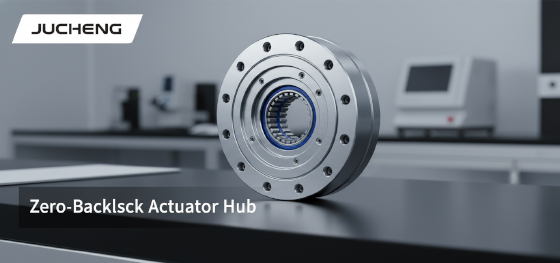
Precision is a byproduct of anticipation. The actuators of a humanoid robot—specifically the housings for harmonic drives and ultra-compact micro-motors—are the most heavily scrutinized humanoid robot parts in our factory. Any dimensional drift in the actuator housing leads to misaligned gears, which increases friction and causes premature motor failure. Jucheng Precision utilizes precision 5-axis machining to achieve sub-micron concentricity on internal bearing diameters. We utilize 7075-T6 aluminum for its superior dimensional stability, ensuring that your actuators remain cool and precise even during continuous walking cycles. We don't just "cut pockets"; we engineer thermal heat sinks into the housing geometry, ensuring your robot’s "muscles" operate at peak efficiency without thermal throttling. We turn "motor mounts" into "precision movement hubs," documented for industrial reliability.
Mass Economics: Balancing Battery Life and Structural Modulus
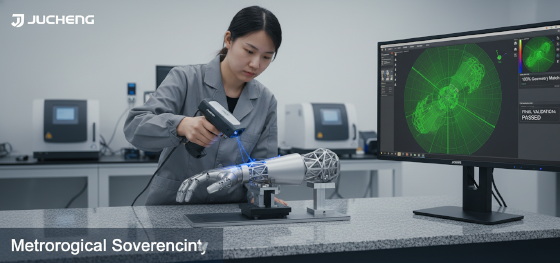
Inertia management dictates the real-world utility of autonomous bipeds. In humanoid robot parts engineering, every extra gram in the distal limbs (feet and hands) requires exponentially more energy to move. Jucheng Precision engineers act as your "Mass Navigators," recommending material switch-outs—such as moving from aluminum to carbon-fiber reinforced nylon injection molding for non-structural covers. We utilize a dispassionate, data-driven approach to balance stiffness versus mass. Below is the technical performance matrix our facility uses to guide material selection for humanoid skeletons:
| Material Class | Strength-to-Weight Ratio | Manufacturing Method |
|---|---|---|
| Aluminum 7075 | High (Standard) | 5-Axis CNC (Fast) |
| Magnesium AZ31B | Superior (30% Lighter) | Precision CNC (Complex) |
| Titanium (Gr 5) | Extreme (Highest Strength) | CNC / DMLS (Stiffest) |
| Carbon-PA (Lattice) | Ultra-Light | MJF 3D Printing |
JUCHENG Protocol: Integrated Multi-Process Scaling for AI Bots
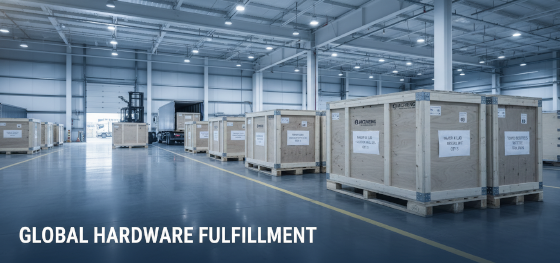
Manufacturing excellence at Jucheng Precision is built on the foundation of the "Bionic Bridge" mandate. We recognize that humanoid robot parts iterate with violent frequency; what worked in simulation must be physically proven in days. JUCHENG eliminates the friction of vendor-hopping by housing our elite CNC machine shop, DMLS printing bay, and RIM molding laboratory under one ISO 9001 and IATF 16949 certified roof. We don't just "take orders"; we act as your manufacturing navigator, ensuring every skeletal joint and actuator housing is documented for survival in the 2026 AI market. Stop being ransomed by slow suppliers who treat humanoid development like a hobby. Leverage our decade of aerospace-grade replication mastery to validate rapidly and scale profitably. Contact our technical team today for a free DFM review and see how we can turn your digital humanoid intent into a structurally sovereign, physical reality.
Frequently Asked Questions: Humanoid Robot Parts
Question: Can JUCHENG help with the weight reduction of humanoid limbs?
Answer: Yes. We specialize in machining Magnesium and utilizing DMLS lattice structures to reduce humanoid robot parts mass by up to 40% without compromising structural stiffness.
Question: What is the tightest tolerance for humanoid actuator housings?
Answer: Utilizing our 5-axis Haas and Mazak machines, we routinely achieve +/- 0.01mm (0.0004") on critical bearing diameters to ensure zero-backlash movement.
Question: Do you offer secondary finishes for bionic skeletal frames?
Answer: JUCHENG provides hard-anodizing for aluminum, PEO (Plasma Electrolytic Oxidation) for magnesium, and high-gloss painting for cosmetic covers, providing retail-ready aesthetics.
Question: How fast can you deliver a T1 skeletal kit?
Answer: Our expedited robotics workflow allows us to deliver full CNC-machined humanoid robot parts skeletal kits in as fast as 10 to 14 business days.

