


Protecting the delicate compute stacks and high-torque mounting points of an autonomous platform requires a departure from traditional bolt-on assembly logic. In the world of polyurethane reaction injection molding, the enclosure is no longer just a shell; it is an active protective medium. If a sensor is simply screwed into a plastic housing, it remains vulnerable to moisture, vibration, and thermal expansion stress. Achieving a truly ruggedized hardware profile demands a mastery of Insert molding and encapsulation in RIM to physically bond electronics and structural metals into a single monolithic unit. This process eliminates mechanical fasteners, reduces part count, and provides the ultimate environmental shield for the most expensive components of a prototype robot or medical scanner.
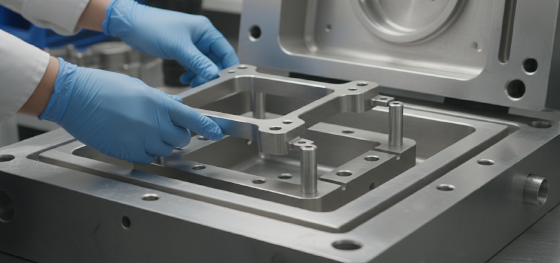
Mechanical integrity in modern robotics is often compromised at the interface between plastic and metal. Standard injection-molded parts suffer from air gaps around threaded inserts, which act as leaking highways for dust and water. Jucheng Precision addresses these critical sealing hurdles by utilizing the liquid-to-solid reaction to create a seamless molecular lock. Jucheng Precision delivers components that integrate Hermetic Sealing with structural reinforcement, ensuring technology survives the transition from the laboratory bench to the unrelenting chaos of the field.
Operating under the strict quality standards of ISO 13485, ISO 14001, and IATF 16949, Jucheng Precision acts as the innovation partner for global hardware OEMs. Jucheng Precision transforms raw concepts into validated, encapsulated assemblies in as fast as 15 business days, leveraging a capacity of 150+ CNC machines and 25 5-axis Haas/Mazak units to build the specialized tooling required for complex overmolding. This guide explores the essential low-pressure physics for fragile electronics, the elimination of metal-polymer leak path prevention, and the micro-vibration damping for sensor stacks required for manufacturing Insert molding and encapsulation in RIM hardware that secures the future of an autonomous fleet.
content:
Low-Pressure Advantage: How to Protect Sensors from Crush?
Technical Data: Comparing Encapsulation Strength and Seal Quality
Structural Logic: Eliminating Leak Paths Around Metal Inserts
Shock Protection: Mastering Vibration Damping for AI Nerves
JUCHENG Hub: Managing Multi-Material Integration in Shenzhen
FAQ: Real Answers for Electronic Protection and Insert Security
Low-Pressure Advantage: How to Protect Sensors from Crush?
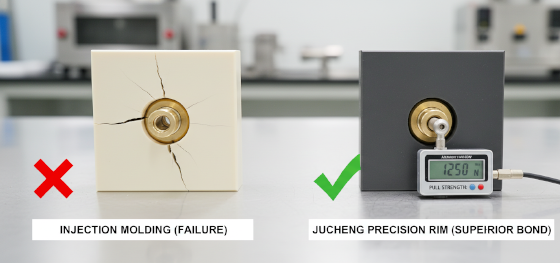
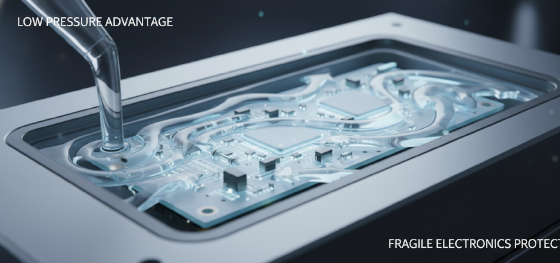
The primary hurdle in overmolding electronics is the hydraulic hammer effect of traditional injection molding. When molten plastic enters a mold at 15,000 psi, it can easily crush surface-mount capacitors or shear delicate solder joints from a PCB. In Insert molding and encapsulation in RIM, the internal cavity pressure remains below 100 psi. This low-stress environment allows Jucheng Precision to flow liquid polyurethane directly over sensitive electronic boards without damaging the circuitry. By utilizing the low-pressure physics for fragile electronics, a solid, shock-proof block is created that protects a robot brain better than any bolted enclosure ever could.
How to prevent resin from entering sensitive connectors?
Jucheng Precision utilize custom-machined silicone shut-off dams within the mold to protect ports and plugs while allowing the rest of the board to be fully encapsulated.
Thermal expansion matching is the second pillar of electronic protection. If the resin expands at a different rate than the PCB, the thermal cycles of daily operation will eventually pull the solder joints apart. Jucheng Precision material experts formulate Side B polyols with mineral fillers to adjust the Coefficient of Linear Thermal Expansion (CLTE). This ensures that the cocoon of polyurethane moves in harmony with the glass-epoxy board, preventing the internal stress that ruins prototype robot units during long-duration field testing. The Shenzhen facility provides the technical oversight to ensure hardware is molecularly compatible with its skin.
Acoustic and thermal conductivity can also be tuned during the RIM cycle. For electronics that generate heat, Jucheng Precision integrates aluminum thermal pads into the encapsulated assembly. The low-viscosity liquid resin flows perfectly around these pads, creating a direct thermal path from the chips to the external surface. This removes the need for internal fans, which are prone to failure in dusty agricultural or industrial environments. By delivering passive-cooled encapsulated modules, Jucheng Precision allows an engineering team to focus on the software while the factory handles the thermodynamics of survival.
Technical Data: Comparing Encapsulation Strength and Seal Quality
Success in hardware ruggedization depends on the strength of the bond between dissimilar materials. If the resin does not grip the metal or plastic insert, the assembly will eventually leak. Jucheng Precision provides full peel-strength and pressure-test data to help teams validate their designs. The following table compares the essential performance metrics of Insert molding and encapsulation in RIM against traditional mechanical sealing for the current industrial market.
| Metric | Mechanical Gasket Seal | RIM Encapsulated Bond | Engineering Advantage |
|---|---|---|---|
| Ingress Protection | IP65 - IP67 (Variable) | IP69K (Hermetic) | Survives Power Washing |
| Shock Resistance | Moderate (Mount dependent) | Maximum (Cradled) | Zero Jitter for Optics |
| Insert Pull-Out (lbs) | 800 - 1,200 | 2,500 - 4,000 | Unyielding Torque Strength |
| Assembly Time | High (Manual Bolting) | Zero (As-Molded) | Reduces Production Costs |
The insert pull-out strength is the most critical data point for building heavy-duty robotic skeletons. Jucheng Precision utilize Insert molding and encapsulation in RIM to anchor large steel mounting plates directly into the plastic shell. Because the resin flows into the microscopic undercuts and knurling of the metal, it creates a joint that is significantly stronger than a post-mold ultrasonic or heat-staked insert. This structural integrity is essential for industrial robot parts that must handle the reversing torque of a 50kg payload arm without the mounting bolts backing out over time.
Structural Logic: Eliminating Leak Paths Around Metal Inserts
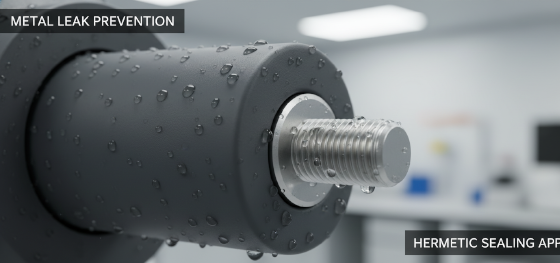
Threaded inserts are the Achilles Heel of waterproof enclosures. In traditional manufacturing, moisture finds its way into the device by traveling along the threads of the mounting bolts. Jucheng Precision solves this through metal-polymer leak path prevention. By encapsulating the entire blind-end of the threaded insert within the RIM part, the physical path to the interior is eliminated. The liquid polyurethane creates a high-pressure seal against the metal surface during the curing phase, providing Hermetic Sealing that survives even the pressure differentials of high-altitude flight or deep-sea submersion.
How to ensure metal inserts do not move during injection?
Jucheng Precision utilize specialized registration nests in the aluminum mold that lock the inserts into place with +/- 0.05mm accuracy.
Chemical bonding agents are applied to the metal surfaces before they enter the mold. While the mechanical interlock is strong, Jucheng Precision utilizes specialized primers that create a covalent bond between the metal oxide and the polyurethane resin. This chemical bridge ensures that the seal remains intact even if the part is subjected to extreme thermal cycles that cause the metal and plastic to expand at different rates. This level of attention to the invisible interface is why Jucheng Precision remains the preferred partner for global medical OEMs who cannot afford a single microscopic leak in their diagnostic hardware.
Weight management is also improved by this integration. By molding the structural metal frame directly into the shell, Jucheng Precision eliminates the need for redundant internal skeletons. This monocoque design approach reduces the total mass of a robot while increasing its torsional rigidity. Every gram saved in the chassis is a gram added to the battery capacity, extending the mission time of an autonomous fleet. Jucheng Precision’s free DFM analysis in 24 hours service identifies these consolidation opportunities, helping build a sleeker, more reliable machine on a leaner budget.
Shock Protection: Mastering Vibration Damping for AI Nerves
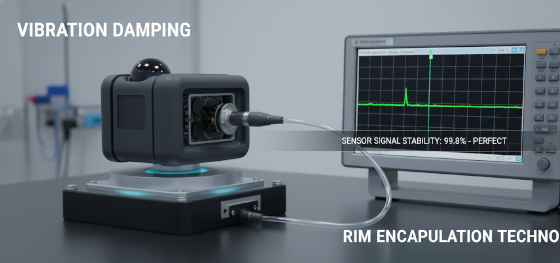
High-resolution sensors like LiDAR and multi-spectral cameras are incredibly sensitive to high-frequency mechanical noise. If the sensor mount vibrates, the resulting data jitter can blind the robot's AI. In Insert molding and encapsulation in RIM, the sensor is not just mounted; it is cradled. Jucheng Precision utilize elastomeric polyurethane formulations that act as a permanent micro-vibration damping for sensor stacks cocoon. The material absorbs the harmonic energy of the drivetrain, decoupling the delicate optics from the vibrating chassis. This results in a much cleaner data stream and extends the service life of the expensive sensors.
Does encapsulation block sensor signals?
No. Jucheng Precision utilize optical windows made of clear PC or Acrylic that are encapsulated into the shell, ensuring a transparent path for the laser or vision signal.
Impact protection is the second benefit of the foamed core. By utilizing structural foam RIM, Jucheng Precision can produce encapsulated assemblies with a dense solid skin and a microcellular core. This bionic bone architecture acts like a helmet for electronics. If an autonomous vehicle strikes an obstacle, the core deforms slightly to dissipate the kinetic energy, protecting the internal boards from the G-shock that would shatter a traditional thin-walled plastic case. This environmental resilience is essential for robots operating in shared human workspaces like fulfillment centers and hospital corridors.
ESD (Electrostatic Discharge) protection is integrated during the material blending phase. To protect sensitive microchips during the Insert molding and encapsulation in RIM cycle, Jucheng Precision adds anti-static agents to the Side B polyol. This ensures that the cocoon does not build up a static charge during field travel, preventing the random electronic resets that plague low-tier hardware iterations. By delivering electrically-safe structural parts, Jucheng Precision helps clients pass the most rigorous regulatory safety audits on the first attempt, providing the unyielding foundation an autonomous innovation requires.
JUCHENG Hub: Managing Multi-Material Integration in Shenzhen
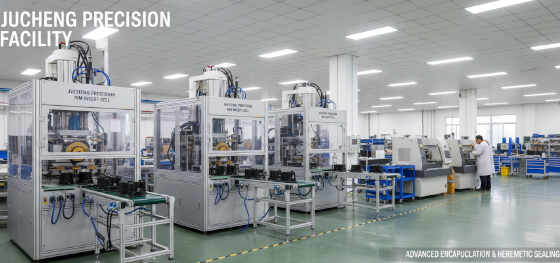
Dominating the large-format hardware market requires a partner that doesn't just mold plastic, but integrates complex systems. Jucheng Precision operates with a 24/7 manufacturing mindset in our Shenzhen precision manufacturing hub, delivering high-tolerance Insert molding and encapsulation in RIM results with industry-leading speed. Jucheng Precision provides a bridge to production that allows a transition from a single hand-fitted Alpha unit to a commercial deployment of 5,000 Beta robots with consistent metallurgical and chemical quality. Jucheng Precision has No MOQ, allowing clients to source 1 to 10 units for high-stakes sensor trials without the crushing cost of mass-production tools.
Integrating structural design with Jucheng Precision’s expertise ensures that hardware survives the first-field contact and moves into mass adoption. Jucheng Precision offers a free DFM analysis in 24 hours, identifying potential air-pockets or thermal-bottlenecks in a design before they become field failures. Whether building an autonomous medical assistant or a heavy-duty industrial mobile base, Jucheng Precision provides the rigid, precise, and integrated foundations that keep innovation moving through the high-speed cycles and the years of hard labor.
The facility is equipped with dedicated high-pressure RIM assembly cells and dedicated ISO 13485 and ISO 14001 quality labs, allowing Jucheng Precision to manage the entire hardware lifecycle in one location. Jucheng Precision manages the complexity of multi-material bonding and automotive-grade finishing so the engineering team can focus on the motion control and the AI. By combining speed with industrial-grade material verification and global quality standards, Jucheng Precision remains the preferred partner for the world's most aggressive Polyurethane Molding Services challenges. Contact the Shenzhen hub today to start a project.
FAQ: Real Answers for Electronic Protection and Insert Security
Can a standard PCB be encapsulated without a custom housing?
Yes. RIM allows for potting logic where the resin becomes the permanent structural housing for the board itself.
What is the maximum torque an encapsulated insert can handle?
Encapsulated M8 steel inserts in Jucheng Precision rigid PU typically handle over 40 Nm of torque without loosening or spinning.
Does the RIM process damage electronic components?
No. The low-pressure and moderate-temperature cure (below 60°C) is safer for electronics than any other molding process.
How is the hermetic seal verified after molding?
Jucheng Precision perform vacuum leak testing and submerged pressure testing to ensure zero-porosity seals for critical modules.
What is the lead time for an encapsulated Beta prototype?
Aluminum rapid tooling and the first set of encapsulated parts are typically delivered in 15 to 20 business days.
Sensor failure and loose anchors are absolute project killers for clinical and industrial robotics. Partnering with Jucheng Precision ensures that functional iterations are built with the unyielding polyurethane reaction injection molding and specialized Insert molding and encapsulation in RIM techniques the industry demands. Reach out to the Shenzhen manufacturing hub today for a complete DFM review and build the unyielding foundation an autonomous fleet requires.

