


Milling massive solid aluminum blocks to house a giant blood analyzer guarantees financial ruin. Procurement teams scaling low-volume diagnostic equipment constantly hit a brutal manufacturing wall. Paying hundreds of thousands of dollars for heavy steel injection molds makes zero mathematical sense when your total market demand caps at fifty units a year. Specifying a custom Laboratory instrument casing built via advanced polymer chemistry perfectly bridges this massive financial gap.

Harsh sterilization protocols dictate your material survival rates inside professional clinics. Nurses wipe these massive machines daily with highly aggressive bleach and industrial alcohol. Deploying cheap filament-printed plastics ensures the chemicals will melt the porous surface instantly, creating microscopic bacterial traps. Designing a superior Industrial enclosure prototype utilizing chemical casting prevents this dangerous bio-hazard completely.
Bypassing expensive steel tooling requires mastering alternative liquid polymer physics. Let's explore why reaction mixing dominates oversized medical housings, how flexible silicone supports benchtop devices, and why integrating professional turnkey finishing secures your clinical aesthetics.
content:
Chemical Resistance: Surviving Harsh Sterilization
Reaction Injection Molding: Conquering Massive Shapes
Vacuum Casting: Perfecting Benchtop Devices
Turnkey Hub: Dust-Free Medical Aesthetics
FAQ: Honest Answers About EMI and Fire Ratings
Chemical Resistance: Surviving Harsh Sterilization
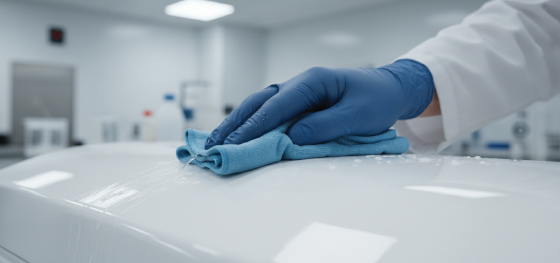
Why do standard commercial plastics fail miserably inside hospital environments?
Basic polymers physically degrade and discolor when constantly bombarded by caustic hospital-grade disinfectants, leaving the exterior looking terribly unsanitary and structurally compromised.
Formulating specialized polyurethane blends guarantees absolute chemical immunity. Producing your casings with these engineered liquids creates a remarkably dense, non-porous outer skin that actively repels corrosive biological cleaning agents.
Maintaining a sterile, flawless white aesthetic remains non-negotiable for medical brands. Smooth, organically curved polymer shells allow technicians to wipe away dangerous contaminants instantly without snagging their cleaning cloths on rough manufacturing layer lines.
Reaction Injection Molding: Conquering Massive Shapes
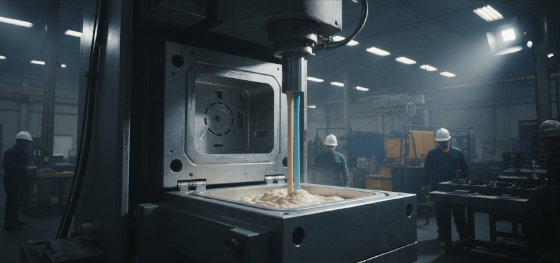
How do factories produce two-meter-tall housings without buying massive steel molds?
Mixing two highly reactive liquid polymers together inside a low-cost aluminum tool triggers a rapid expansion that fills massive geometric cavities effortlessly.
Traditional injection presses cannot physically pump melted plastic far enough to create giant medical cart panels before the material freezes. Reaction technology utilizes water-like liquid viscosity, allowing the chemicals to flow perfectly across massive surface areas.
Slashing your initial NRE tooling invoice represents the primary commercial benefit of this technique. Because the internal cavity pressure remains incredibly low, factories carve the molds out of cheap metal or epoxy alloys, cutting your upfront tooling debt by eighty percent.
Vacuum Casting: Perfecting Benchtop Devices
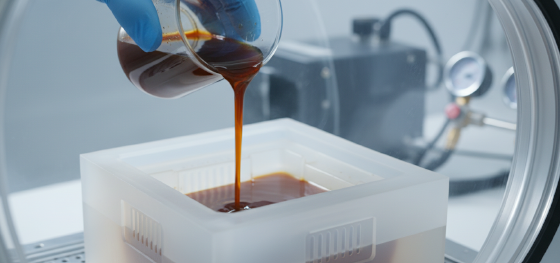
What fabrication method works best for small batches of compact diagnostic tools?
Pouring liquid polyurethane into flexible silicone master molds under deep vacuum pressure replicates injection-molded quality flawlessly for pilot runs of twenty to fifty units.
Securing venture capital funding requires pitching hardware that looks completely retail-ready. Flexible replication delivers breathtaking cosmetic perfection, capturing microscopic logo details and razor-sharp ventilation grills that standard printers simply cannot mimic.
Protecting fragile internal sensors relies on this exact casing quality. Combining this polymer strategy with a robust internal Measurement equipment housing machined from solid metal creates the ultimate hybrid defense against both chemical spills and kinetic factory tremors.
Turnkey Hub: Dust-Free Medical Aesthetics

Why must you paint and silk-screen your medical housings inside the exact same factory?
Shipping bare polymer shells across town exposes the porous surfaces to aggressive dust and humidity, guaranteeing massive aesthetic blisters when the final sterile paint layer cures.
Operating our massive turnkey precision manufacturing hub eliminates this logistical nightmare entirely. We pour the raw chemicals, apply the medical-grade white polyurethane paint, and silk-screen your exact corporate branding seamlessly under one roof.
Stop paying for rejected batches of ugly, peeling medical hardware. Send your massive CAD assemblies to our engineering department today for a rigorous structural audit, securing flawless, hospital-ready diagnostic shells.
FAQ: Honest Answers About EMI and Fire Ratings

Can these liquid polymer casings achieve strict UL94-V0 fire retardant ratings?
Absolutely. Metallurgical chemists actively mix specialized flame-retardant additives directly into the raw liquid resin before pouring, ensuring the final hardware passes severe commercial fire safety audits.
How do you block electromagnetic interference using plastic medical shells?
Polymers naturally lack radio shielding capabilities. Technicians spray conductive copper or nickel shielding paint directly onto the interior walls of the casing, creating a powerful internal Faraday cage.
Will integrating heavy metal CNC brackets into the plastic cause structural failures?
No. We routinely mold solid metallic threaded inserts and heavy-duty structural joints directly into the polyurethane matrix, seamlessly blending polymer aesthetics with unyielding subtractive rigidity.
How many exact copies can a single silicone vacuum mold produce?
Aggressive chemical reactions slowly degrade the flexible silicone material. Single master molds typically yield twenty to twenty-five flawless polyurethane copies before our technicians must pour a replacement tool.

