


Designing an innovative hardware product for a highly competitive market requires extreme strategic agility. Procurement teams and hardware startups frequently encounter devastating financial bottlenecks when traditional foundries demand massive minimum order quantities (MOQs) for initial production runs. Specifying agile Low-volume manufacturing for new products eliminates these high-risk capital barriers completely, protecting your development budget.

Trapping valuable seed capital in five thousand unverified units is a dangerous commercial gamble. If early customer feedback reveals a minor geometric defect, modifying completed steel injection molds is incredibly expensive and delays your launch by months. Operating our versatile rapid manufacturing facility allows your team to scale safely using temporary, highly flexible production pathways.
Balancing initial launch speeds with uncompromising assembly tolerances defines successful new product introduction (NPI). Let's dissect the physical mechanics of bridge production, explore why heavy MOQs threaten hardware startups, and analyze the most cost-effective technologies for short runs.
content:
Defining Bridge Production: What is Low-Volume Manufacturing?
Shunning Inflexible Minimums: Why High MOQs Threaten New Launches
Optimal Production Technologies: Rapid Tooling and Reaction Molding
Scaling Towards Mass Production: Transitioning to Enterprise Supply Chains
FAQ: Honest Answers About Molds, Speeds, and Quality
Defining Bridge Production: What is Low-Volume Manufacturing?
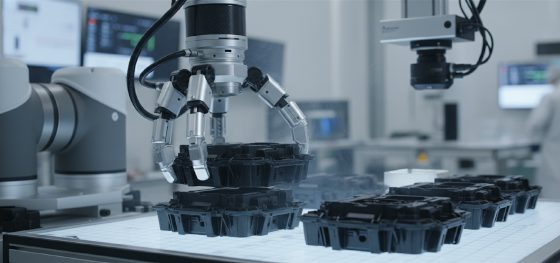
What physical volume limits define the crucial intermediate stage of product development?
Bridge production typically covers batches ranging from one hundred to five thousand finished components, bridging the gap between early prototyping and massive mass production.
Traditional foundries ignore this vital intermediate stage entirely. They are geared exclusively for millions of units, forcing young hardware brands to make impossible financial commitments before validating their actual market demand.
Utilizing low-volume manufacturing for new products provides the ultimate scaling sandbox. You receive real, production-grade plastic and metal parts that match your strict structural specifications exactly, allowing you to run comprehensive field trials.
Shunning Inflexible Minimums: Why High MOQs Threaten New Launches
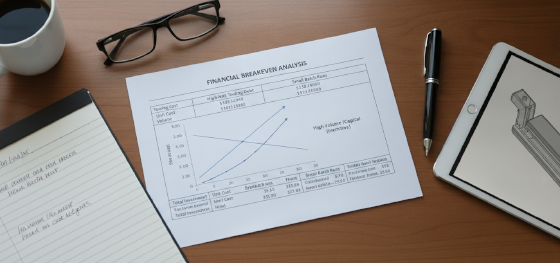
Why do standard high-pressure injection molding foundries enforce rigid minimum order requirements?
Because setting up massive hydraulic presses and pre-heating heavy steel dies takes hours of manual labor, making short runs completely unprofitable under old-school business models.
Sourcing raw components cheaply is impossible if you are forced to pay for five thousand units you cannot sell. If your product requires a sudden engineering modification after the first hundred customer deliveries, your remaining inventory immediately becomes useless scrap.
Utilizing low-volume manufacturing for new products completely neutralizes this inventory liability. You order precisely what your early marketing demands, keeping your cash flow completely free to execute rapid design improvements based on real user feedback.
Optimal Production Technologies: Rapid Tooling and Reaction Molding
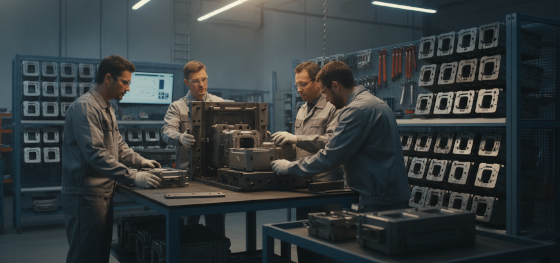
Which rapid manufacturing processes deliver the best physical quality for short production runs?
Combining custom rapid tooling using affordable aluminum molds with advanced reaction injection molding (RIM) for massive structural plastic enclosures.
Slicing custom cavity inserts directly into pre-machined master mold bases is the core secret of rapid tooling. This modular approach slashes our CNC milling time by weeks, cutting your upfront tooling bills by over fifty percent while injecting real thermoplastic resins.
Manufacturing massive structural shells for medical devices or industrial carts demands reaction injection molding. This specialized low-pressure process utilizes lightweight aluminum or epoxy molds to cure large polyurethane parts beautifully, bypassing six-figure steel mold debts entirely.
Scaling Towards Mass Production: Transitioning to Enterprise Supply Chains

Comparing manufacturing methodologies based on your current engineering goals prevents massive budget overruns. The technical matrix below outlines how different rapid methods support specific developmental milestones.
| Developmental Milestone | Best Technology Choice | Key Sourcing Advantage |
|---|---|---|
| 1 to 50 Units (R&D) | 5-Axis CNC Machining | Zero mold debt, instant modifications, real metals. |
| 50 to 500 Units (Beta) | Vacuum Casting (Polyurethane) | Flawless injection-molded aesthetics for validation. |
| 500 to 5,000 Units (NPI) | Rapid Tooling (Modular Molds) | Bridges the gap with production-grade materials. |
Moving past the pilot phase requires a structured roadmap to high-volume manufacturing. Once we validate your designs using low-volume manufacturing for new products, we can scale your production seamlessly without requiring you to switch suppliers.
Partnering with an agile Rapid prototype supplier for OEMs secures your long-term supply chain. We scale your output smoothly from hundred-unit test batches to multi-thousand-unit automated production runs, ensuring absolute material and dimensional consistency.
JC Rapid: Your Trusted Partner for Fast NPI Sourcing

Why do top hardware brands trust JC Rapid to handle their new product introductions?
Because we maintain a highly flexible manufacturing floor, balancing automated rapid tooling, massive CNC bays, and dust-free assembly rooms under one integrated roof.
Stop letting cheap brokers ruin your premium designs with high MOQs and slow delivery times. Send your complex CAD files to our engineering team today for a comprehensive, manual DFM review. We will map the most cost-effective production pathways and deliver flawless hardware.
FAQ: Honest Answers About Molds, Speeds, and Quality
Does a cheap rapid tool wear out quickly when injecting abrasive polymers?
Softer steel and aluminum alloy molds naturally degrade faster than hardened H13 steel, but they easily survive two to five thousand shots before showing any dimensional wear.
Can I request strict tolerances on a low-volume cast component?
Yes, we utilize our extensive in-house CNC bays to post-machine critical sealing grooves and threaded holes, achieving microscopic tolerances on small batches.
Do you provide complete chemical and material certifications for small runs?
Providing complete chemical certifications (CoA) and RoHS compliance certificates with every single delivery is our standard practice, regardless of your order size.
Why do some small-batch castings suffer from severe surface sink marks?
Uneven cooling inside poorly designed molds pulls material away from thick sections. We run advanced flow simulations during DFM to eliminate these thermal traps before injection.

