


Imagine a beautiful, strong, and corrosion-resistant brass part. You install it on a ship's deck. It looks perfect. A year later, you inspect it. The part is still there, but it has turned a strange, dull pink color. It feels porous and weak. You tap it with a hammer, and it crumbles into dust.
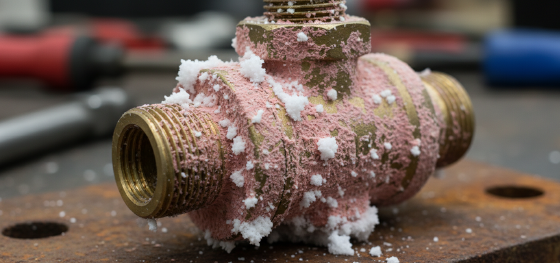
This is not a normal corrosion. This is a silent killer. A metallurgical disease that attacks many common brass alloys from the inside out. It is called dezincification.
To fight this enemy, engineers turn to a special, battle-hardened alloy. A material specifically designed to survive the unforgiving ocean. This is the world of C464, and the specialized process of Machining C464 Naval Brass.
content:
The Ocean's Silent Killer: Dezincification
Naval Brass's Secret Armor: A Pinch of Tin
A Machinist's Perspective: A Formidable Opponent
Your Partner in Marine-Grade Manufacturing
The Ocean's Silent Killer: Dezincification
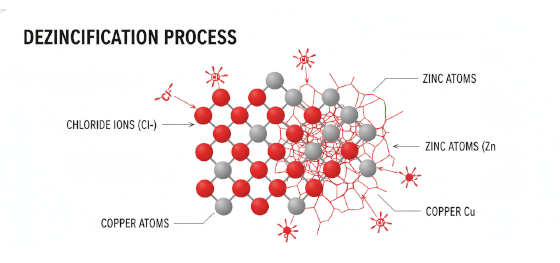
To understand why Naval Brass is so special, you must first understand its enemy. Dezincification is a specific type of corrosion that attacks brass alloys with a high zinc content.
In a saltwater environment, the chlorine ions selectively attack and leach the zinc atoms out of the alloy's crystal structure. The zinc is literally eaten away.
What is left behind is a weak, porous, copper-rich structure. It has the pinkish color of copper, but none of its strength. The part may look intact from the outside, but it has lost all its structural integrity. It is a ticking time bomb. For a critical component in a ship's plumbing or propulsion system, this is a catastrophic failure waiting to happen.
Naval Brass's Secret Armor: A Pinch of Tin
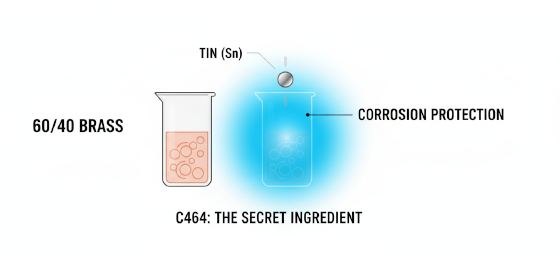
C464 Naval Brass was specifically invented to defeat this enemy. Its base recipe is a "60/40" brass, containing about 60% copper and 40% zinc. This gives it high strength.
But it has a secret ingredient. A tiny, magical addition of about 1% tin. This is its armor.
This pinch of tin has a profound effect. It acts as a corrosion inhibitor. It dramatically reduces the tendency for zinc to be leached from the alloy in the presence of chlorides. It protects the integrity of the material's structure.
This is why C464 is the gold standard for any brass cnc machining application that will be used in or near the ocean. It is used for propeller shafts, valve stems, pipe fittings, and any other hardware that needs to be both strong and impervious to the relentless attack of saltwater.
A Machinist's Perspective: A Formidable Opponent
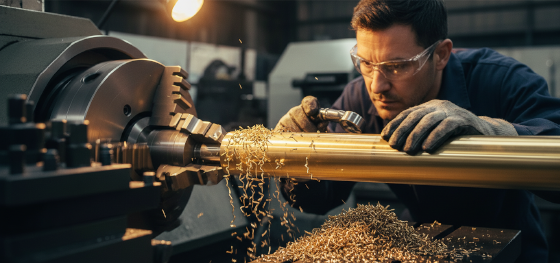
This superior strength and toughness also make Machining C464 Naval Brass a significant challenge. It is a much more formidable opponent on the CNC machine than its softer cousins.
Unlike the "free-machining" C360, C464 is tough and abrasive. It creates high cutting forces and causes tools to wear out much faster.
A machinist must use a different strategy. Slower cutting speeds are essential to manage heat and reduce tool wear. The depth of cut must be carefully controlled. And only very tough, coated carbide tools can survive the battle for long.
Because it is a more difficult and time-consuming process, the cost of machining C464 is higher than for other brass alloys. But this higher cost is a necessary investment in the part's ultimate survival and reliability.
Your Partner in Marine-Grade Manufacturing

When you are designing a product for a critical marine application, there is no room for compromise. You must use a material designed for that battlefield. C464 Naval Brass is that material.
But choosing the right material is only half the solution. You also need a manufacturing partner who has the experience and the equipment to handle these tough, high-performance alloys.
At JUCHENG, we are experts in machining a wide range of CNC machining materials, from the easiest to the most challenging. We have the rigid machines, the advanced tooling, and the process knowledge to turn a tough block of C464 Naval Brass into a precise, reliable, and perfectly finished component.
We understand that for your project, failure is not an option. Our commitment to quality is your guarantee that the parts we deliver are ready to face the ocean, and win.

