


Purchasing heavy metal alloys often terrifies inexperienced hardware procurement managers. Looking strictly at the raw material invoice, golden copper alloys appear significantly more expensive per kilogram than standard aerospace aluminum or mild steel. Stopping the financial analysis at this initial raw material phase guarantees your engineering team will miss out on massive downstream manufacturing savings.
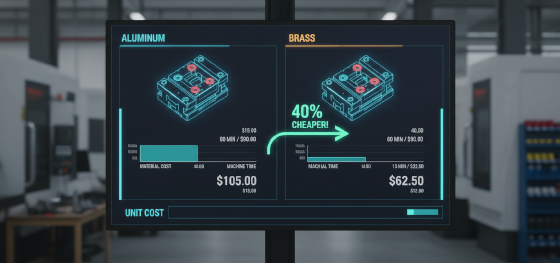
Executing flawless brass cnc machining completely reverses this initial sticker shock on the factory floor. This specific material cuts exactly like warm butter under a high-speed carbide endmill, requiring significantly less spindle horsepower than tough titanium or stainless steel. Cranking the machine feed rates to absolute maximum velocity drastically slashes your expensive hourly machine time, driving the final variable unit cost straight down into the floor.
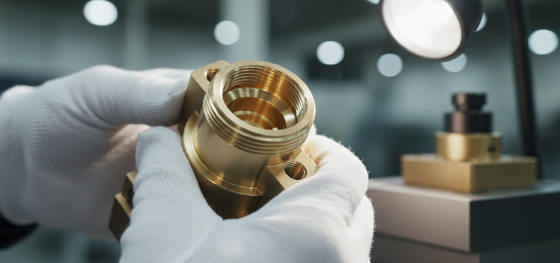
Designing high-pressure pneumatic valves and precision optical housings practically mandates utilizing this specific heavy golden alloy. Engineers aggressively exploit its natural internal lubricity, preventing critical mating threads from violently seizing or galling together during repetitive assembly cycles. Surviving brutal industrial environments requires entirely abandoning cheap, weak plastics and embracing the unyielding molecular density of solid metal.
Operating deep inside the Shenzhen precision manufacturing hub equips our veteran technicians to handle massive production scaling flawlessly. We aggressively monitor cutting fluid temperatures and tool wear degradation to prevent catastrophic surface damage before it ever happens. Mastering the aggressive physical thermodynamics behind subtractive metal cutting delivers absolutely pristine, retail-ready components straight off our automated machine beds.
content:
Mastering High-Speed Turning Economics
Defeating Surface Micro-Scratches Automatically
Navigating Strict Lead-Free Brass Compliance
JUCHENG Hub: Dominating Heavy Valve Production
Frequently Asked Questions: Subtractive Limits
Mastering High-Speed Turning Economics
Does the higher raw material price of golden alloys make the final machined component more expensive?
Rarely. The physical softness of the metal allows machinists to run CNC spindles at terrifyingly fast speeds, drastically reducing the billable machine hours and completely offsetting the initial material premium.
Calculating true high-speed turning economics separates amateur buyers from elite global supply chain executives. Tooling wear drops to practically zero when cutting C360 free-machining grades. Standard carbide inserts will successfully carve thousands of identical heavy fittings before ever needing physical replacement, eliminating costly machine downtime.
Pushing aggressive machine feed rates forces the cutting tool to violently shatter the golden metal into tiny, highly manageable chips rather than long, dangerous ribbons. Clearing these tiny chips instantly from the deep cutting zone prevents catastrophic toolholder jams. Subtractive facilities absolutely love running these specific alloys because they practically machine themselves without requiring constant human babysitting.
Selling the scrap metal back into the industrial recycling ecosystem heavily subsidizes your massive production runs. Because the tiny chips remain completely pure and separated from steel or aluminum waste streams, recycling centers pay premium rates to acquire them. Smart financial directors aggressively factor this lucrative scrap recovery directly into their brass cnc machining amortization formulas.
Defeating Surface Micro-Scratches Automatically
Why do perfectly machined golden optical parts sometimes exhibit terrible, cloudy surface finishes?
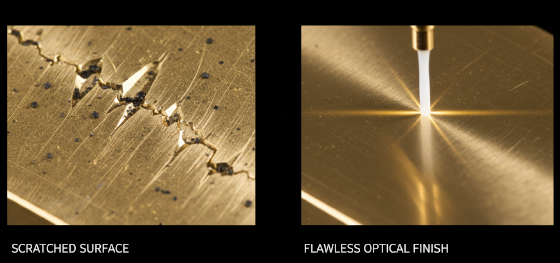
Tiny, highly abrasive metallic chips frequently get trapped directly beneath the spinning cutting tool, physically dragging across the soft metal and gouging deep micro-scratches into the pristine surface.
Protecting premium cosmetic finishes requires aggressive physical interventions on the factory floor. Engineers must deploy extreme high-pressure coolant systems designed to violently blast the abrasive dust completely out of the cutting zone instantly. Relying on basic gravity to clear the chips mathematically guarantees your expensive optical housing will fail aesthetic quality control inspections.
Programming finishing passes demands ruthless mathematical precision from the CAM technician. Leaving just zero-point-one millimeters of material for the final toolpass ensures the razor-sharp carbide insert barely kisses the metal, shearing away the final layer without generating excess kinetic heat. This precise subtractive strategy delivers absolute mirror-like perfection straight off the machine.
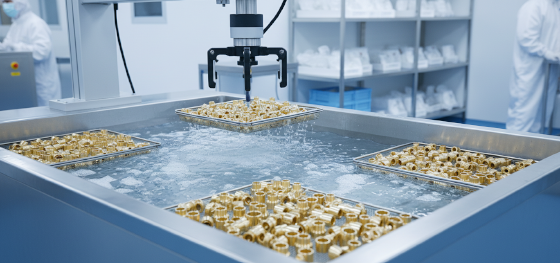
Handling finished components requires strict protocol enforcement to prevent post-machining damage. Dropping heavy metallic parts into a communal collection bin causes violent impacts, heavily denting the soft external threads and ruining the airtight pneumatic seal. Technicians strictly utilize customized foam-lined trays to isolate and protect every single component during the final ultrasonic cleaning phase.
| Industrial Material Grade | Machinability Rating | Lead Content Factor | Optimal Factory Application |
|---|---|---|---|
| C360 (Free-Machining) | 100% (Industry Standard) | High (2.5% to 3.7%) | Heavy gears, commercial valves, generic fittings |
| C260 (Cartridge Grade) | 30% (Very Difficult) | Near Zero | Deep drawn stampings, ammunition casings |
| Lead-Free Eco Brass | 70% (Destroys tooling faster) | Strictly Zero (< 0.25%) | Drinking water manifolds, surgical instruments |
| Naval Grade (C46400) | 50% (Requires slow speeds) | Low | Saltwater marine propellers and deep sea seals |
Navigating Strict Lead-Free Brass Compliance
Can standard free-machining alloys legally be used for surgical tools and drinking water components?
Absolutely not. Standard grades contain toxic heavy metals designed specifically to lubricate the cutting tool, severely violating strict global medical and environmental health regulations.
Securing massive medical contracts forces hardware engineers to strictly enforce lead-free brass compliance before the raw billet ever touches the spindle. Removing the internal heavy metals violently alters the cutting physics inside the machine. The alloy suddenly becomes extremely gummy and aggressive, actively fighting the spinning endmill rather than cleanly breaking away into tiny, manageable chips.
Machining these specialized eco-grades absolutely destroys standard carbide inserts in mere hours. Factory operators must upgrade entirely to highly polished, specialized tooling geometries and drastically reduce their cutting speeds to prevent catastrophic thermal failure. Surviving this brutal material requires deep mechanical expertise to prevent severe production bottlenecks.
Deploying pneumatic equipment into highly corrosive marine environments mandates utilizing extreme dezincification resistance (DZR) alloys. Standard metal grades physically lose their internal zinc molecules when constantly exposed to harsh saltwater or acidic chemicals, leaving behind a brittle, porous copper shell that violently crumbles under pressure. DZR alloys chemically lock the zinc structure, guaranteeing permanent structural survival underwater.
JUCHENG Hub: Dominating Heavy Valve Production
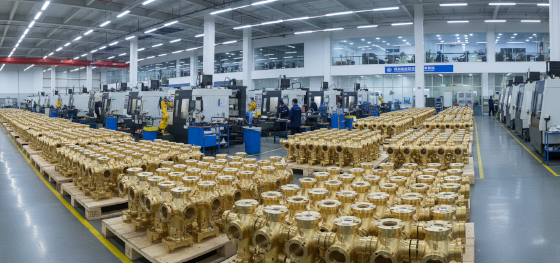
Why do elite hardware startups refuse to use cheap, scattered machine shops for high-pressure fluid tasks?
Because achieving absolute pneumatic sealing requires maintaining flawless geometric concentricity across multiple setups, which amateur shops physically cannot guarantee without heavy 5-axis capabilities.
Jucheng Precision dominates the complex brass cnc machining sector by deploying a massive fleet of automated Swiss-type turning centers. Operating deep within the global supply chain, we execute uncompromising Design for Manufacturing (DFM) audits instantly upon receiving your digital file. We identify impossible internal threads and dangerous wall thicknesses before they ruin your production timeline.
Eliminating unpredictable minimum order quantities (No MOQ) proves our absolute commitment to aggressive engineering teams. Whether your project requires five bespoke prototype nozzles or fifty thousand identical fluid regulators, we maintain absolute dimensional accountability. Protecting your proprietary fluid dynamics IP remains paramount throughout our entire localized workflow.
Frequently Asked Questions: Subtractive Limits
Will freshly cut golden metal components naturally turn green and tarnish over time?
Yes. Heavy atmospheric oxidation naturally attacks the exposed copper molecules, slowly turning the bright golden surface dull and eventually green. Preventing this chemical degradation requires secondary protective clear coating, aggressive chemical passivation, or premium electroplating directly after the final cut.
Can a spinning CNC endmill create a perfectly sharp internal square corner inside a heavy valve pocket?
It remains mathematically and physically impossible. Round cutting tools always leave a curved internal radius exactly matching their own diameter. Hardware designers must intelligently engineer dog-bone reliefs into the CAD file to allow square mating components to assemble properly.
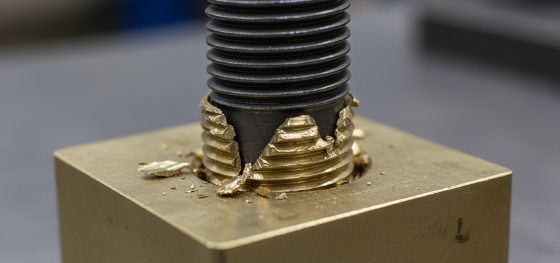
Is tapping very deep, tight threads into soft golden alloys dangerous for the cutting tool?
Unlike titanium or tool steel, soft golden alloys rarely snap industrial taps. The natural internal lubricity of the metal aggressively protects the threading tool from seizing. However, operators must carefully clear the soft chips to prevent them from severely galling and tearing the delicate newly formed threads.

