


Can metal behave like clay? Can a rigid material be coaxed to bend, stretch, and flow into a seamless, organic shape without breaking?
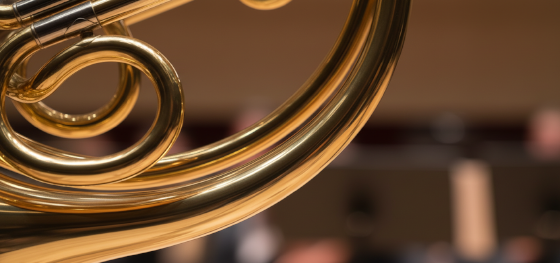
For a designer or an artist, this is the ultimate dream. A material that does not fight back. A material that yields to the creative vision.
In the world of brass alloys, this dream is a reality. It has a name: C260. While the process of Machining C260 Brass is a challenge, its true talent lies in its incredible willingness to be formed.
The Artist's Alloy: Understanding C260
Its Superpower: Unmatched Cold Workability
A Machinist's Cautious Approach
Choosing Your Brass: A Tale of Two Tempers
The Artist's Alloy: Understanding C260
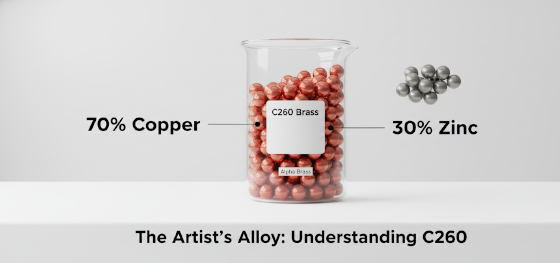
C260 Brass, also famously known as "Cartridge Brass," is a member of the "alpha" brass family. This tells you everything you need to know about its personality.
Its recipe is simple and pure: approximately 70% copper and 30% zinc. This high copper content is the secret to its character. It gives the alloy a beautiful, warm, reddish-gold color.
More importantly, this composition creates a single-phase "alpha" crystal structure. This structure is what gives C260 its phenomenal ductility and formability, especially at room temperature. It is a material that loves to be shaped.
Its Superpower: Unmatched Cold Workability
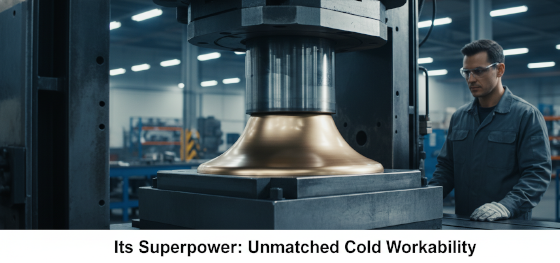
The undisputed superpower of C260 is its ability to be "cold-worked." This means it can be bent, stretched, stamped, and deep-drawn into extreme shapes without needing to be heated.
Its historic nickname, "Cartridge Brass," comes from its primary use: manufacturing ammunition cartridges. A small, flat disc of C260 brass is progressively stamped and drawn into the long, thin, and complex shape of a bullet casing. This is a testament to its incredible ability to be formed without cracking.
This is why it is the material of choice for artisans and musical instrument makers. The flowing, seamless curves of a trumpet or a french horn are created by skillfully shaping C260 brass. It is also used in architecture and design for decorative panels, custom light fixtures, and any application where a beautiful, flowing metal shape is desired.
A Machinist's Cautious Approach
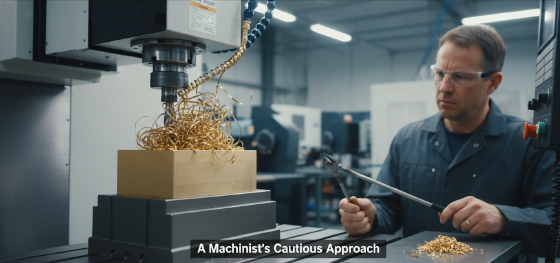
The very same property that makes C260 a dream to form makes Machining C260 Brass a challenge. Its softness and ductility mean it is a "gummy" material on a CNC machine.
Unlike the free-machining C360, C260 does not produce small, broken chips. It produces long, continuous, ribbon-like chips. These chips have a strong tendency to wrap around the cutting tool and the part, creating a "bird's nest." This can ruin the surface finish and even break the tool.
A machinist must use a very different strategy for C260. They must use extremely sharp tools with a high rake angle to "slice" the material cleanly. They must use high cutting speeds. And a generous flood of coolant is essential to cool the part and help wash the stringy chips away. It is a much more demanding process than machining C360.
Choosing Your Brass: A Tale of Two Tempers

So, when do you choose the "artist" C260, and when do you choose the "machinist" C360? The choice is a tale of two very different tempers.
| Factor | C260 Brass ("The Artist") | C360 Brass ("The Machinist") |
|---|---|---|
| Superpower | Excellent Formability (Bending) | Excellent Machinability (Cutting) |
| Composition | ~70% Copper, 30% Zinc | ~61% Copper, 36% Zinc, 3% Lead |
| Best For | Stamping, Bending, Deep Drawing | High-Speed CNC Turning, Milling |
| Chip Type | Long and Stringy | Small and Broken |
You choose C260 when your part's primary manufacturing process is forming. Stamping, deep drawing, bending, spinning. It is for creating shapes.
You choose C360 when your part is primarily created by removing material on a CNC lathe or mill. It is for creating features like threads, grooves, and complex profiles at high speed.
A partner with deep expertise in brass cnc machining, like JUCHENG, understands this critical distinction. We can help you make the right choice, ensuring that the material you select is a true partner to your design, not an obstacle.

