


Visual lies are the ultimate currency of industrial design. In the early stages of product development, the ability to hold a prototype that looks and feels exactly like a finished consumer product is worth more than a thousand CAD renderings. Within the high-tech spectrum of the 3D printing process, most technologies struggle to bridge the gap between color, texture, and transparency. They produce parts in single colors or with visible layer grains that require extensive manual painting. However, one method stands alone as the "inkjet printer of the 3D world." This is material jetting 3d printing. It is a process that discards the laser and the filament in favor of microscopic droplets of photopolymer, allowing for the creation of multi-material, full-color masterpieces that can mimic everything from human tissue to high-gloss automotive dashboards in a single build.

At JUCHENG, we analyze every additive technology not just for its novelty, but for its strategic placement in the manufacturing lifecycle. Material jetting is a technical miracle of sensory replication, yet it comes with a structural trade-off. It is the premier choice for marketing mock-ups and surgical planning models where visual fidelity is the primary mandate. But for components that must survive mechanical stress or high temperatures, the chemistry of jetted resins often reaches its limit. This guide moves past the surface-level definitions to explore the fluid dynamics of droplet orchestration, the logic of overmolding simulation, and why JUCHENG’s commitment to high-durability MJF and CNC machining serves as the essential pivot for parts that must move from the design studio to the harsh reality of the field.
Realism in manufacturing is a matter of microscopic coordination. You aren't just printing a shape; you are mixing a digital palette of physical properties at the voxel level. Whether you are building a realistic medical heart model for preoperative planning or a high-fidelity consumer electronic mockup, the logic of the droplet is a powerful engineering ally. Let us examine the technical pillars of Material Jetting and see how it redefines the speed of high-detail visual validation.
Droplet Orchestration: Mechanics of Inkjet Deposition
Chromatic Precision: Engineering Full-Color Realism
Soluble Foundations: Achieving Perfect Internal Bores
Sensory Illusions: The Fragility of Aesthetic Resins
Technical Pivot: When to Choose JUCHENG Functional Solutions
Droplet Orchestration: Mechanics of Inkjet Deposition
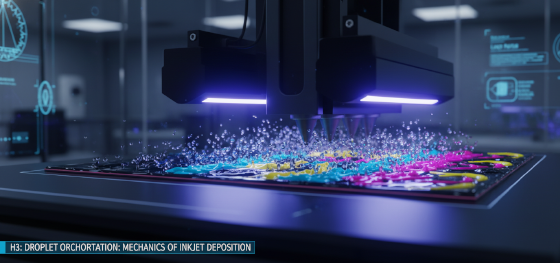
The operational logic of material jetting 3d printing is a sophisticated evolution of the traditional office printer. Instead of ink on paper, the machine utilizes multiple print heads equipped with hundreds of microscopic nozzles to deposit tiny droplets of photopolymer resins onto a build tray. As the heads sweep across the workspace, a high-intensity ultraviolet (UV) lamp follows immediately behind, curing the liquid droplets into a solid state in a fraction of a second. This simultaneous jetting and curing allows for incredibly thin layers—often as fine as 16 to 30 microns—resulting in parts with surface smoothness that rivals the sla 3d printing standard.
Because the droplets are dispensed in a discrete grid, the machine can vary the material type from one micron to the next. This is "Digital Material" engineering. We can mix rigid resins with flexible elastomers during the build to create a part with a graded Shore hardness. Imagine a medical tool handle that is rock-solid in the center but transitions into a soft-touch rubber grip at the surface—all printed in a single continuous cycle without any manual assembly. This level of microscopic coordination is the hallmark of Material Jetting, providing a level of geometric and material complexity that is technically impossible to achieve through traditional overmolding or adhesive bonding. It is a process of additive alchemy, turning digital data into complex sensory experiences.
Chromatic Precision: Engineering Full-Color Realism

For a designer, color is information. Standard 3D prints are often limited to the color of the filament or powder, requiring secondary painting that can obscure fine details. Material Jetting shatters this barrier by utilizing a CMYK (Cyan, Magenta, Yellow, Key/Black) color system. By jetting droplets of different colors in specific concentrations, the machine can generate over 500,000 distinct hues with incredible accuracy. This is not just a surface tint; the color is integrated into the entire volume of the part. If you cut a full-color Material Jetting part in half, the color remains consistent all the way through.
This chromatic precision is why JUCHENG identifies Material Jetting as the gold standard for high-fidelity consumer mockups. We produce prototypes for smartphones, wearable technology, and premium appliance controls that include vibrant brand colors, subtle gradients, and even transparent windows—all in one piece. The technology can even replicate the "wood grain" or "carbon fiber" appearance on a surface by projecting a high-resolution texture map into the resin matrix. When you present a Material Jetting prototype to a stakeholder, you aren't asking them to imagine the final product; you are showing it to them. This ability to eliminate visual ambiguity accelerates the design approval process and reduces the risk of aesthetic errors discovered late in the production cycle.
Soluble Foundations: Achieving Perfect Internal Bores

Internal geometry is the graveyard of many additive methods. Removing rigid supports from a 2mm internal fluid channel is a physical impossibility. Material Jetting solves this through a secondary jetting system dedicated to "Support Material." Alongside the modeling resin, the machine jets a specialized wax or gel-like substance that fills all the voids and supports overhanging features. Once the print is complete, the part is either placed in a pressurized water bath or a chemical solution that melts or dissolves the support material away.
This "Soluble Foundation" allows for the creation of internal labyrinths, tiny cross-holes, and intricate lattice structures that remain perfectly clean. It ensures that the "skin" of the part is never touched by a mechanical scraper or a file, preserving the pristine surface finish that is essential for optical and aesthetic components. At JUCHENG, we leverage this non-contact support strategy to deliver micro-scale assemblies with moving internal parts—like captured ball valves or interlocking gears—that are ready for inspection directly from the cleaning tank. By removing the physical struggle of support removal, Material Jetting ensures that your most delicate internal visions are realized without the scars of manual labor.
Sensory Illusions: The Fragility of Aesthetic Resins

We must balance the visual awe of material jetting 3d printing with a technical reality check. These parts are sensory illusions. While they look and feel like production-grade plastic, the photopolymer resins used in the jetting process are inherently sensitive. They are susceptible to UV light (which can cause them to yellow or become brittle over time) and have relatively low heat-deflection temperatures compared to sintered nylons. If you leave a Material Jetting part on a car dashboard on a hot day, it may warp. If you drop it onto a concrete floor, it may shatter.
This fragility defines the material’s niche. It is a material for the eyes and the hands, not for the hammer. Designers often fall into the trap of using these realistic models for functional stress tests, leading to false failure data. At JUCHENG, we help our clients navigate this "Realism Trap." We advise that if your prototype is meant for a boardroom presentation or an ergonomic tactile study, Material Jetting is unbeatable. But if that same design must undergo high-pressure fluid testing or survive a 1,000-cycle mechanical endurance run, the beautiful resin facade will fail. Understanding the mechanical limits of the "Digital Material" is vital for engineering success. We don't just provide the pretty part; we provide the technical warning that ensures your testing data is accurate and your project avoids post-validation disasters.
Technical Pivot: When to Choose JUCHENG Functional Solutions
Choosing a manufacturer for high-end prototypes is a move of technical trust. While Material Jetting creates the most beautiful visual models in the 3D printing process, JUCHENG’s core manufacturing philosophy is built on functional durability. We are honest with our clients: when the design moves past the "look-and-feel" phase and into the "work-and-survive" phase, you must pivot your technology choice.
For prototypes that need to survive the brutal reality of functional testing, we will direct you toward our MJF 3D Printing line or our precision CNC Machining Services. These technologies deliver parts made from industrial-grade thermoplastics like Nylon 12, PEEK, and Ultem—materials that can handle the heat, the chemicals, and the stress of real-world use. When you partner with JUCHENG, you are accessing a diversified manufacturing hub that understands when to use the sensory magic of the jet and when to use the raw power of the mill. We don't just ship 3D prints; we ship validated engineered solutions. Contact our engineering team today for a free technical consultation and let us help you choose the technology that will armor your next breakthrough.

