


Human perception is the ultimate judge of manufacturing success. In the high-stakes environment of 3D printing post processing, a part can be dimensionally perfect and structurally invincible, but if it looks "printed," it carries a stigma of unreliability. To bridge the gap between a technical model and a market-ready product, we must manipulate the way light interacts with the surface. This is the sophisticated art of Painting and Dyeing 3D Prints. It is a transition from the monochromatic limits of raw resin and powder into a world of vibrant brand identity and professional aesthetics. However, coloring an additive component is not a matter of simple aesthetics; it is a complex engineering challenge involving molecular surface energy, chemical compatibility, and the physics of light absorption.
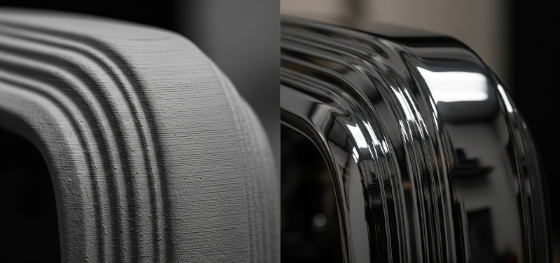
At Jucheng Precision, we recognize that the final finish is a functional requirement, not a cosmetic after-thought. We understand that a medical enclosure must not only be the correct Pantone blue but must also resist the aggressive solvents of hospital sterilization. We have engineered our finishing facility to treat every component as an individual case study in adhesion and saturation. By utilizing automated dyeing systems for porous polyamides and cleanroom paint booths for high-detail resins, we provide our clients with prototypes that are visually indistinguishable from mass-production injection molded parts. This guide moves past the basic aerosol cans to explore the thermodynamic grit of chemical dyeing, the layered logic of automotive-grade painting, and why JUCHENG’s integrated finishing protocols are the final link in the chain of manufacturing excellence.
Profitability in hardware development is found in the removal of visual doubt. When you present a prototype that feels like a product, you eliminate the cognitive friction of your stakeholders. Whether you are building an innovative heart pump or a high-end consumer wearable, the logic of the finish is your greatest ally. Let us break down the technical pillars of chromatic engineering and see how JUCHENG transforms raw plastic into professional hardware.
Subsurface Saturation: Molecular Absorption in Porous Nylon
Surface Armor: Multi-Layer Logic for Non-Porous Resins
Chromatic Precision: Engineering Pantone and RAL Accuracy
Adhesion Integrity: Neutralizing Outgassing and Delamination
Visual Realism: Mastering Gloss, Matte, and Metallic Effects
Technical Validation: JUCHENG’s Finishing Quality Audit
Subsurface Saturation: Molecular Absorption in Porous Nylon
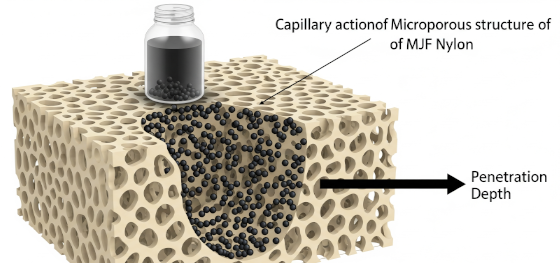
In the world of MJF and SLS technologies, the part is born with a microscopic porosity that is a double-edged sword. While these voids can be a liability for airtightness, they are a massive advantage for Painting and Dyeing 3D Prints. Dyeing is not a surface coating; it is a chemical infiltration. We utilize high-temperature pressurized tanks where acid-based dyes are forced into the nylon matrix. Through capillary action, the pigment doesn't just sit on the skin—it penetrates up to 0.2mm into the material.
This "Subsurface Saturation" is vital for functional parts that will see heavy use. If you paint a nylon gear and it gets scratched, the grey base material will show through instantly. If you dye that same gear black, the color is deep enough that minor surface wear remains invisible. At Jucheng Precision, we calibrate the temperature of our dye baths to ensure maximum penetration without reaching the material's glass transition point, which would cause warping. This process results in a uniform, matte finish that feels like a natural part of the material’s DNA. For industrial robotics and automotive clips, dyeing is the most cost-effective and rugged way to achieve a professional monochromatic look that lasts a lifetime.
Surface Armor: Multi-Layer Logic for Non-Porous Resins
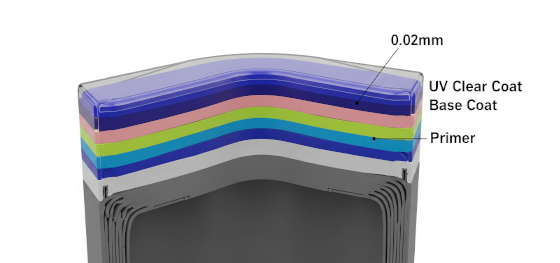
When we move to non-porous materials like SLA resins or high-density FDM extrusions, the rules of color change from absorption to adhesion. These surfaces are "closed," meaning a dye has nowhere to go. To achieve chromatic perfection here, we must build a layered defense system. Our 3D printing post processing for SLA parts mimics the rigor of a high-end automotive paint shop. It begins with a dedicated primer layer designed to bond with the specific photopolymer chemistry. Without this chemical bridge, the paint would eventually flake off due to the material's inherent low surface energy.
Following the primer, we apply the base color coat using high-volume low-pressure (HVLP) spray systems. This ensures a fine mist that preserves the microscopic details—like engraved logos or fine textures—that make SLA parts so valuable. The final act of protection is the clear coat. We offer matte, satin, or high-gloss polyurethane clear coats that act as the "Surface Armor." This layer provides the UV resistance and scratch protection needed for consumer electronic housings. JUCHENG technicians manage the flash-off times between these layers with extreme precision, ensuring there is no "solvent trap" that could cause bubbling. The result is a part with a "deep" finish that feels identical to a mass-produced product, turning a 3D print into a high-fidelity asset for user-testing and marketing.
Chromatic Precision: Engineering Pantone and RAL Accuracy
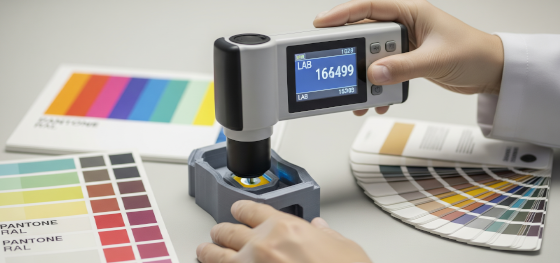
For a global brand, "Red" is not a specification—"Pantone 186 C" is. Achieving this level of chromatic precision across different batches and different 3D materials is a significant technical milestone. Painting and Dyeing 3D Prints at Jucheng Precision is a data-driven discipline. We recognize that the underlying material color—whether the natural beige of PEEK or the dark grey of MJF—will act as a "tint" that influences the final result.
Our finishing lab utilizes digital colorimeters to perform a "Spectral Audit" on every batch. We mix our paints and dyes using precise gram-scale formulas to compensate for the substrate color. For our medical clients who require color-coded surgical instruments, this consistency is a safety requirement. We ensure that the "Safety Orange" on part one is identical to part one hundred. By providing documented Delta-E color-variance reports, we eliminate the visual ambiguity that plagues standard prototype shops. We don't just "match the color"; we engineer the pigment concentration to ensure your parts meet the global visual standards of your industry, providing a seamless visual transition from prototype to production.
Adhesion Integrity: Neutralizing Outgassing and Delamination
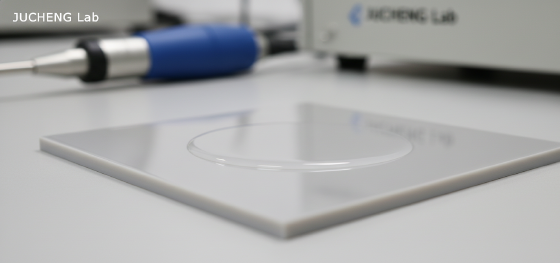
The biggest enemy of a painted 3D print is the material itself. Many resins and filaments contain residual oils, waxes, or unreacted photoinitiators that can "outgas" over time. This gas becomes trapped under the paint layer, causing blisters, bubbles, and eventual delamination. This is the "Aesthetic Time Bomb" of additive manufacturing. Success in Painting and Dyeing 3D Prints requires a rigorous pre-treatment protocol.
At Jucheng Precision, we utilize multi-stage cleaning cycles, including ultrasonic degreasing and thermal outgassing sessions in a vacuum oven. This forces the volatile compounds out of the plastic *before* the paint is applied. For difficult-to-bond materials like Polypropylene or certain elastomers, we utilize plasma surface activation to increase the surface energy, allowing the primer to "bite" into the material at a molecular level. This obsession with "Adhesion Integrity" ensures that the beautiful finish we ship today won't start peeling six months from now when the part is exposed to varying temperatures or moisture. We treat the bond between the paint and the part as a structural joint, ensuring your aesthetic investment is as durable as the engineering beneath it.
Visual Realism: Mastering Gloss, Matte, and Metallic Effects
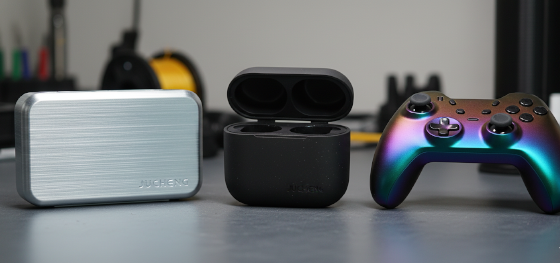
Reality is found in the texture. A perfectly smooth part often looks "fake" because the real world is full of subtle grains, mists, and metallic flakes. JUCHENG’s finishing department offers a vast library of specialized textures to elevate your Painting and Dyeing 3D Prints to the level of high-end consumer goods. We can achieve a "Soft-Touch" rubberized finish that mimics overmolding, or a ruggedized "Sand-Texture" that provides grip and hides machining artifacts.
Our metallic finishing strategies are a particular area of expertise. We utilize vacuum-metallization and specialized high-solids paints that contain real metallic powders. This allows an SLA part to look exactly like brushed aluminum or chrome-plated steel. These finishes are essential for automotive interior prototypes where the designers need to evaluate the "specular highlights" of a chrome-trimmed button or a silver-painted bezel. By mastering these complex finishes, JUCHENG enables your engineering team to conduct functional "look-and-feel" audits with 100% confidence. We don't just add color; we add the tactile and visual soul that defines your brand's presence in the market.
Technical Validation: JUCHENG’s Finishing Quality Audit
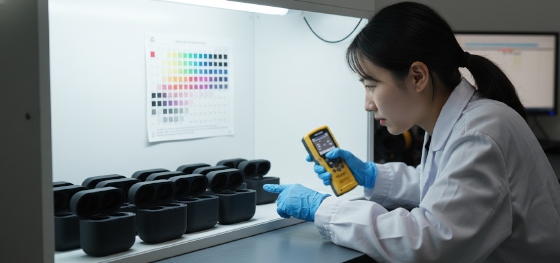
The final hallmark of a professional manufacturer is the refusal to accept "subjective" quality. In our facility, finishing is an audited phase of the 3D printing post processing cycle. We don't just hold the part up to the light; we perform standardized validation tests. This includes the "Cross-Hatch Adhesion Test" (ASTM D3359), where we attempt to physically lift the paint from the substrate using a high-tack tape. If the paint moves, the batch is failed.
We also perform "Environmental Stress Cracking" (ESC) tests for parts destined for chemical environments, ensuring that our paints and dyes provide a protective barrier rather than a liability. JUCHENG maintains a D65-standard light box to verify that colors match under consistent sunlight simulation, preventing the "metamerism" problem where a part looks correct in the office but wrong outdoors. When you receive a component from JUCHENG, you receive a finished engineering solution that has been verified for visual, tactile, and chemical integrity. Whether you are building an innovative medical device or a high-performance aerospace housing, our expertise in Painting and Dyeing 3D Prints ensures your vision is delivered without compromise. Contact Jucheng Precision today for a technical DFM review and let our finishing protocols armor and elevate your next breakthrough.

