


Designing complex enclosures and bracket arrays involves navigating the delicate boundaries of production economics. Implementing robust sheet metal DFM principles before sending your drawings to the shop floor is the single most effective way to slash lead times, prevent physical material tearing, and slash ongoing unit expenses. By designing with high-speed manufacturing limits in mind, engineers can optimize part geometries to flow cleanly through automated work cells while avoiding expensive manual revisions by minimizing complex tooling setups during production.
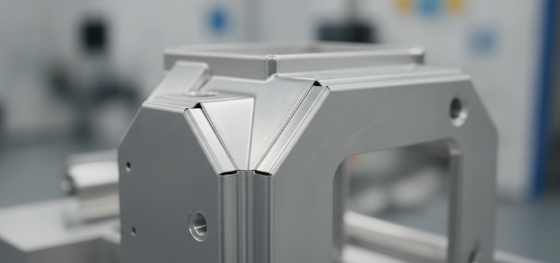
Sourcing custom sheet metal fabrications without a detailed manufacturability review always leads to massive budget inflation. A minor design overlook like non-standard bend radii or inefficient blank layouts forces fabricators to execute multiple setups, slowing down machine run times and driving up scrap rates. Designing your CAD models to match automated machine constraints ensures high-yield outputs and protects your margins.
Let's examine why pre-production design reviews are critical for budget management, analyze how standardizing your corner parameters drops setup times, and review how to optimize flat patterns to achieve maximum material utilization.
content:
Why DFM is the Most Important Step Before Fabrication
Minimizing Setups: Standardizing Bend Radii
Optimizing Flat Patterns to Reduce Material Waste
Take Advantage of JUCHENG's Free DFM Analysis
FAQ: Critical Questions About Sheet Metal DFM
Why DFM is the Most Important Step Before Fabrication

What makes Design for Manufacturability (DFM) the ultimate cost-killer in metalworking?
DFM identifies and corrects unbendable features, tight tolerance mismatches, and inefficient tool paths during the digital design phase, preventing expensive material scrap.
Many hardware teams assume that any geometry modeled in a 3D CAD program can be easily built on the shop floor. In reality, physical tooling constraints such as punch clearance, brake tonnage limits, and weld torch access can make complex configurations impossible to manufacture without manual intervention. Executing a structured DFM review bridges the gap between digital modeling and physical machinery constraints.
By evaluating the design before cutting any metal, engineers can modify hard-to-form elements, such as adjusting a hole placed too close to a fold. This proactive optimization eliminates the need for expensive secondary processes like manual grinding, ensuring your parts slide through laser cutters and benders with high speed and zero downtime.
Minimizing Setups: Standardizing Bend Radii

How does standardizing corner parameters reduce press brake processing costs?
Using a single, uniform bend radius across the entire part allows the bender to form all flanges using one tool set, eliminating multiple machine downtime intervals.
One of the most powerful, often overlooked aspects of sheet metal DFM is the standardization of bend radii across your product. When an engineer specifies multiple distinct corner radii on a single bracket, the operator must stop the press brakes to reload different punches and V-dies for each specific fold. This multiple setup labor rapidly inflates machine downtime and increases labor bills.
Standardizing your corner geometries means operators can fold an entire multi-flange chassis using a single tooling setup, eliminating multiple downtime intervals. We recommend utilizing standard radii that correspond to standard commercial tooling, enabling our high-speed benders to execute continuous folds in a single pass. This simple geometry standardization reduces your NRE tooling costs and keeps production highly efficient.
Optimizing Flat Patterns to Reduce Material Waste

How does flat-pattern optimization improve raw material nesting efficiency?
Designing flat patterns with nested boundaries allows software to pack multiple parts tightly onto standard-sized sheets, minimizing raw material waste.
Raw sheet stock is purchased by the sheet or coil, making material utilization a major component of your final unit price. If a flat pattern features irregular protruding tabs or odd angular extensions, it cannot be packed tightly during the laser nesting phase. This poor nesting efficiency leaves large areas of unusable scrap metal, forcing you to pay for wasted material.
To optimize material yield, DFM engineers design parts to nest cleanly together. For instance, modifying a bracket flange to fold inward or designing a multi-part assembly to share a single slit-cut line can pack parts incredibly close. This raw plate optimization ensures that you get maximum parts per sheet, driving down the base material cost of every single component you manufacture.
Take Advantage of JUCHENG's Free DFM Analysis
How does JUCHENG help designers optimize their custom models for cost-efficient production?
We run your CAD files through our automated DFM platform, checking for tooling clearances, bend tolerances, and flat-pattern nesting yields within hours.
Integrating professional DFM analysis into your initial sheet metal design process is the single most effective way to eliminate costly errors. JUCHENG integrates these advanced geometric and material validations into our digital manufacturing network, ensuring that your CAD files translate into fully finished, durable assemblies with extreme dimensional precision.
We process a wide range of raw sheets, including lightweight aluminum, high-yield stainless steel, and formable carbon steel. Our technical queue provides a 24-hour free DFM analysis to evaluate your CAD models, checking stress concentrations and minimum bend parameters before production. Supported by our no MOQ policy and rapid delivery guarantee, we manage your project from initial flat pattern cutting to final, fully integrated cosmetic coating and packaging.
FAQ: Critical Questions About Sheet Metal DFM

What is the minimum recommended flange length for automated bending?
To bend a flange successfully, its length must span across the selected V-die opening. If the flange is too short, it will slide straight into the die instead of bending, causing severe deformation. As a general DFM rule, the minimum flange length should be at least four times the material thickness to ensure stable, accurate press brake operations.
Why should we avoid placing holes near a bend line?
Placing holes or slots too close to a fold line exposes the hollow cavity to intense tensile stresses during bending, stretching the hole into an deformed, elliptical shape that prevents mounting bolts from passing through. To prevent this, always maintain a minimum distance of twice the material thickness plus the bend radius away from the fold line.
How does material thickness affect the recommended minimum bending radius?
Thicker metal sheets require much larger bending radii to prevent material splitting and tool damage. While soft mild steels can handle a tight inner radius equal to their thickness, high-strength alloys require larger bend radii (often three to five times the plate thickness depending on the grade) to prevent outer-edge splitting.
How does JUCHENG conduct a complimentary sheet metal DFM analysis?
Our technical department analyzes your CAD models during our complimentary DFM stage. If your enclosure design features holes that are too close to a fold, or flanges that are too short to bend safely, we suggest clear modifications to keep your parts functional, highly manufacturable, and cost-effective.

