


Molecular fatigue represents the single greatest threat to integrated mechanical joints. In the hyper-competitive landscape of consumer packaging and medical hardware, the ability to eliminate separate metal pins and springs by utilizing a "Living Hinge" is a masterpiece of material efficiency. This engineering feat is only possible through the mastery of polypropylene injection molding. Polypropylene (PP) is a semi-crystalline thermoplastic that possesses an extraordinary "Molecular Memory"—the ability to undergo millions of flexural cycles without reaching its fatigue limit. Unlike amorphous resins that exhibit brittle fracture under repeated stress, PP allows polymer chains to realign themselves along the axis of bending, creating a fibrous internal structure that gains strength with use. Jucheng Precision operates as a high-fidelity manufacturing partner, navigating the complex thermodynamics of Injection molding materials to deliver flexible, chemically inert, and exceptionally lightweight components. Whether you are designing a flip-top medical container or a complex automotive fluid reservoir, our integrated facility provides the technical spine needed to turn "flexible concepts" into durable physical assets.
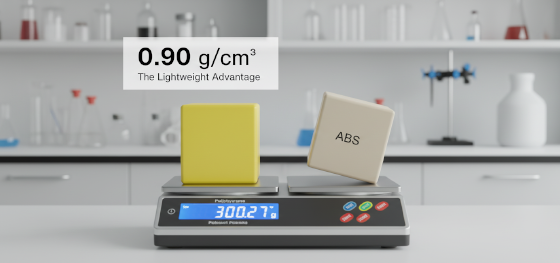
Lightweighting and chemical sovereignty define the strategic value of PP in modern hardware. With a density of approximately 0.90 g/cm³, polypropylene is among the lightest polymers available, offering a significant "Mass Reduction" advantage for portable electronics and automotive trim. However, this low density comes with a hidden challenge: aggressive volumetric contraction. PP exhibits some of the highest shrinkage rates in the industry, often reaching 1.5% to 2.0% during cooling. Failing to calculate these variables with sub-micron precision leads to warped parts and failed assemblies. Jucheng Precision eliminates these "Dimensional Disasters" by performing a surgical DFM audit on every PP project, ensuring your tool geometry accounts for the volatile crystalline transition of the resin. This guide deconstructs the physics of the living hinge, the mathematics of shrinkage compensation, and the safety protocols required for medical and food-grade production.
The Living Hinge Masterclass: Managing Molecular Alignment
The 2% Challenge: Engineering for High Volumetric Contraction
Chemical Sovereignty: Purity, Acids, and Biocompatibility
Economic Lightweighting: Balancing Stiffness and Mass
JUCHENG Protocol: Zero-Warp Polypropylene Production
The Living Hinge Masterclass: Managing Molecular Alignment

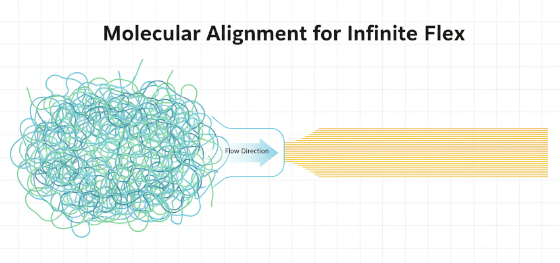
Flexible joints in polypropylene injection molding are not just thin pieces of plastic; they are engineered molecular valves. A successful living hinge relies on "Flow-Induced Crystallization." When molten PP is squeezed through a narrow 0.3mm gap at high velocity, the polymer chains are physically stretched out into long, parallel lines—much like the fibers in a piece of wood. This orientation is what grants the hinge its incredible flex life. If the gate placement is incorrect and the plastic flows parallel to the hinge line rather than across it, the molecular "grain" will be oriented the wrong way, leading to instant snapping upon the first bend. Jucheng Precision engineers utilize Moldflow simulation to verify that the melt front passes perpendicularly across the hinge area. We also implement a "Warm-Bend" protocol, where parts are folded while still warm from the mold to permanently set the molecular alignment. By respecting the orientation physics, we deliver hinges that survive a million cycles without a single molecular tear, effectively replacing expensive multi-part assemblies with a single, elegant component.
The 2% Challenge: Engineering for High Volumetric Contraction
Dimensional sovereignty is difficult to maintain when the material is "shaping itself" during cooling. Polypropylene is a semi-crystalline polymer, meaning its molecules fold into highly ordered, dense structures as they solidify. This phase change triggers a dramatic reduction in volume—often up to 2.0%—which is significantly more volatile than the 0.5% shrinkage found in ABS. In polypropylene injection molding, if the wall thickness is not perfectly uniform, the part will experience "Differential Shrinkage," pulling the geometry into a "potato chip" shape or creating massive sink marks on cosmetic faces. Jucheng Precision toolmakers utilize "Oversize Compensation" matrices. We machine the mold cavities slightly larger than the final part dimensions, specifically adjusting for the "Heated Volume" of the melt. Furthermore, we optimize cooling channel layouts to ensure that both sides of the part reach the solidification point simultaneously, neutralizing the internal stresses before the part is even ejected. We treat shrinkage as a predictable mathematical variable, ensuring your PP parts assemble with sub-millimeter precision.
Chemical Sovereignty: Purity, Acids, and Biocompatibility
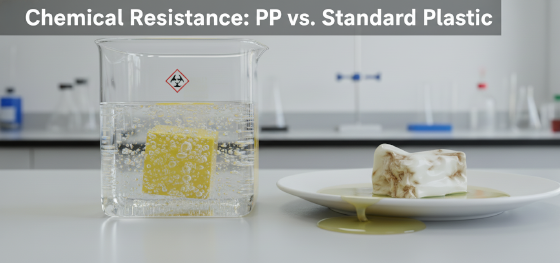
Hostile environments demand materials that refuse to react. One of the primary reasons engineers specify polypropylene injection molding for medical labware, battery cases, and chemical containers is its spectacular non-polarity. PP is virtually immune to most organic solvents, strong acids, and bases at room temperature. It does not absorb water (less than 0.01% absorption), meaning its physical dimensions remain stable even in high-humidity clinical environments. At Jucheng Precision, we process medical-grade PP resins that are BPA-free and biocompatible, making them ideal for surgical kits and diagnostic tools. Because PP possesses high surface energy resistance, it is also difficult to contaminate, which simplifies sterilization protocols. We provide the material documentation needed for regulatory audits, ensuring that your chemical-defense hardware is as pure as the engineering design intent.
Economic Lightweighting: Balancing Stiffness and Mass

Mass reduction is a core pillar of modern product portability. By switching from a traditional plastic to polypropylene injection molding, engineers can reduce a component's weight by up to 15% without altering the geometry. This density advantage (0.90 g/cm³) is why PP dominates the automotive interior and consumer wearable sectors. However, PP has a lower flexural modulus than ABS or PC, meaning it is naturally "softer." To compensate for this, Jucheng Precision engineers utilize structural ribbing strategies (as discussed in our design guides) to add rigidity where it's needed most. We can also process "Talc-Filled" or "Glass-Filled" PP grades, which dramatically increase the material's stiffness and heat resistance while maintaining its chemical-proof soul. This ability to tune the material's mechanical spine allows us to deliver parts that are incredibly light for their size yet rigid enough to survive high-load industrial applications.
JUCHENG Protocol: Zero-Warp Polypropylene Production
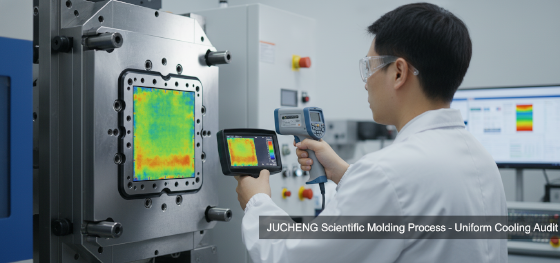
Manufacturing excellence at Jucheng Precision is built on the foundation of thermodynamic discipline. We don't just "shoot and ship" PP; we engineer the cooling cycle. Our facility, housing over 150 CNC machines and elite injection bays, is optimized for the high-shrinkage challenges of crystalline resins. When you upload a CAD file to our facility, our veteran engineers perform a comprehensive "Warp and Sink Audit." We suggest gate modifications and wall-thinning maneuvers that maximize the molecular orientation of your hinges and minimize the volumetric contraction of your walls. We provide full material lot traceability and CMM inspection reports for every batch, ensuring your project meets the strict safety and dimensional standards of the medical and automotive industries. Stop compromising your hardware vision with warped, failed prototypes. Leverage our decade of polymer mastery to validate rapidly and scale profitably. Contact our engineering team today for a free DFM review and see how we can anchor your design's future with the mechanical soul of professional polypropylene replication.

