


Hardware commercialization relies on a specific chemical trinity: Acrylonitrile, Butadiene, and Styrene. In the high-stakes environment of high-pressure manufacturing, abs injection molding remains the undisputed champion for consumer electronics housings, automotive interiors, and medical device enclosures. This amorphous terpolymer offers a mechanical balance that crystalline resins simply cannot match—possessing the chemical resistance of acrylonitrile, the impact toughness of butadiene, and the rigid processability of styrene. Jucheng Precision operates as a high-fidelity injection hub, utilizing the unique surface energy of ABS to deliver prototypes and production batches that feel premium and survive the rigors of field use. Unlike more volatile polymers, ABS provides the dimensional sovereignty needed to ensure that complex multi-part assemblies snap together perfectly on the first shot. Understanding the physics of Injection molding materials requires starting with this versatile workhorse, as it serves as the baseline for nearly all cosmetic hardware standards in the modern market.
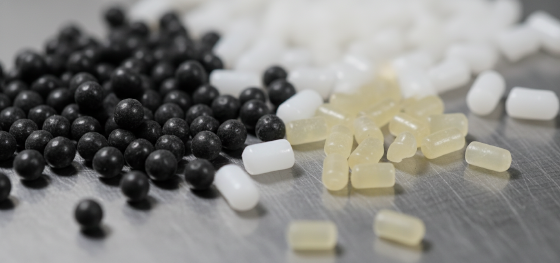
Molecular stability dictates the predictability of your production yield. ABS is favored by engineers because its shrinkage rate is remarkably low (0.4% to 0.7%) and consistent across the X, Y, and Z axes. This lack of "Anisotropy" makes it the safest choice for tight-tolerance enclosures where warping would lead to catastrophic failure during PCB integration. Jucheng Precision eliminates manufacturing doubt by performing a surgical DFM audit on every ABS project, ensuring your wall thicknesses are optimized for rapid cooling without sacrificing the "Butadiene spine" that grants the part its impact resistance. This guide deconstructs the mechanical properties, finishing advantages, and critical design pitfalls of ABS, providing the technical forensic data needed to secure a zero-defect product launch.
Mechanical DNA: Hardness, Impact, and Stability
Cosmetic Sovereignty: Painting, Plating, and Post-Processing
DFM Forensics: Avoiding Sink Marks and Gate Scars
JUCHENG Protocol: One-Stop Plating and Painting
Mechanical DNA: Hardness, Impact, and Stability
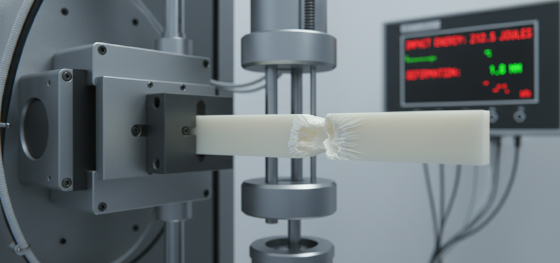
Engineering confidence in abs injection molding stems from the material's balanced stress-strain curve. ABS provides a high flexural modulus (around 2,300 MPa) which grants the part a "Crisp" feel during user interaction—vital for buttons and interlocking tabs. Below is the technical reference matrix utilized by Jucheng Precision engineers for ABS validation:
| Property | Typical Value (General Purpose ABS) |
|---|---|
| Tensile Strength | 40 - 50 MPa |
| Flexural Modulus | 2,100 - 2,500 MPa |
| Shrinkage Rate | 0.4% - 0.7% |
| Heat Deflection (HDT) | 80°C - 95°C |
Structural toughness is the standout feature of this polymer. Unlike brittle Acrylic or glass-like Polycarbonate, ABS possesses an "Elastic Buffer." If a handheld diagnostic tool is dropped, the butadiene rubber particles within the ABS matrix act as microscopic shock absorbers, blunting the crack propagation and preventing catastrophic shattering. This ductility is why ABS is the mandatory choice for ruggedized consumer hardware. However, engineers must account for the material's thermal ceiling; with an HDT around 90°C, ABS is not suitable for under-the-hood automotive engine components, but remains perfect for the cabin's dashboard and door trim where aesthetic warmth and impact safety are prioritized.
Cosmetic Sovereignty: Painting, Plating, and Post-Processing
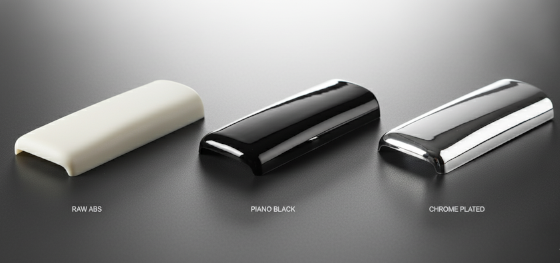
Surface energy dictates the success of secondary value-added operations. ABS is the undisputed king of finishing because its chemical structure is highly receptive to coatings. When we perform abs injection molding for consumer devices, we often move the parts directly into our integrated plating or painting lines. Because ABS can be "etched" chemically, it provides an incredible mechanical bond for electroplating. This allows us to deliver parts with genuine "Cool-to-the-Touch" chrome or nickel finishes that won't peel or blister over time. Furthermore, ABS is the easiest plastic to paint, requiring minimal primer and allowing for high-gloss "Piano Black" or "Metallic Frost" finishes without the risk of solvent-induced stress cracking found in Polycarbonate. If your product roadmap includes a high-end luxury version with metallic accents, designing in ABS from the EVT stage is the only strategically sound maneuver. It transforms a plastic shell into a high-perceived-value asset.
DFM Forensics: Avoiding Sink Marks and Gate Scars
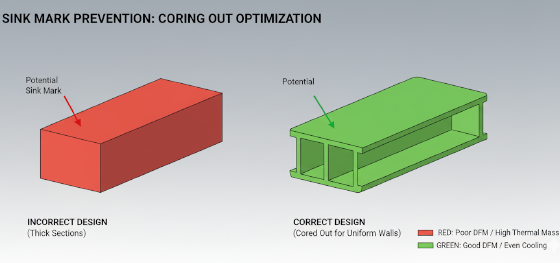
Thermal mass management is the primary battleground of ABS part design. Because ABS is amorphous, it doesn't have a sharp melting point—it gradually softens. While this makes it easy to mold, it also makes it prone to "Sink Marks" if wall thickness is non-uniform. If an internal rib is more than 60% of the main wall thickness, the localized heat reservoir will pull the cosmetic surface inward as it cools. Jucheng Precision eliminates these visual shadows by advocating for a "Coring-Out" philosophy. We recommend thin nominal walls (typically 2.0mm to 3.0mm) reinforced by an optimized rib network. Furthermore, ABS is sensitive to "Gate Blush"—the dull, hazy spot that occurs if the plastic is sheared too hard as it enters the cavity. Our engineers utilize Moldflow simulation to position gates in hidden areas or utilize "Sub-Gates" that automatically shear during ejection, ensuring that the "A-side" surface is pristine and retail-ready. We treat every 0.1mm of geometry as a thermal variable, optimizing the path from liquid melt to solid perfection.
JUCHENG Protocol: One-Stop Plating and Painting
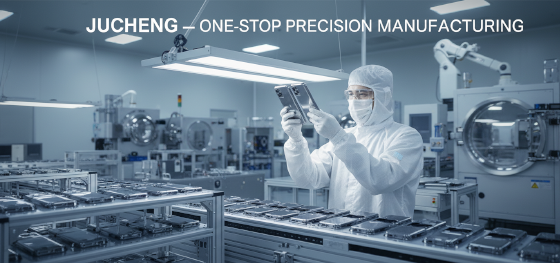
Manufacturing excellence at Jucheng Precision is built on the foundation of vertical integration. We don't just "fill a mold"; we engineer a finished product. Our facility, housing over 150 CNC machines and elite injection bays, is complemented by dedicated cleanrooms for painting and vacuum metallization. When you partner with us for abs injection molding, you are securing a supply chain that eliminates the risk of vendor-hopping. We handle the 5-axis CNC mold making, the high-pressure injection, and the final cosmetic finishing under a single ISO 9001 and IATF 16949 certified roof. This ensures zero data loss and perfect color consistency across your entire production batch. Stop gambling with fragmented suppliers who don't understand the chemistry of ABS. Leverage our decade of polymer mastery to validate rapidly and launch profitably. Contact our engineering team today for a free DFM review and see how we can turn your digital CAD into a retail-ready masterpiece.

