


Crashing a multi-million dollar hardware project during an investor demo because of a snapped bracket reveals the brutal reality of the [2026] robotics race: the first prototype robot must be as reliable as the final production unit. In the high-velocity world of autonomous systems, engineering teams no longer have the luxury of multi-month development cycles. The ability to move from a CAD file to a mud-ready, functional machine in under a week is the only competitive advantage that matters. Achieving this requires a sophisticated approach to Rapid prototyping for robotics that treats hardware iteration as a sprint, not a marathon.
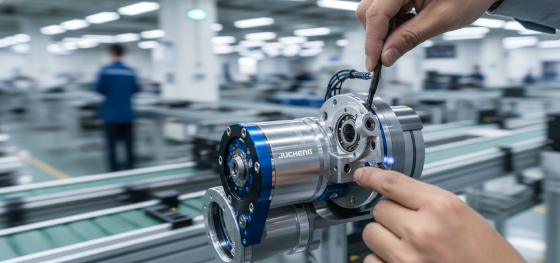
Standard prototyping shops often prioritize aesthetic models that look good on a desk but fail under the high torque of a servo motor. When a motor mount flexes or a sensor housing vibrates, the software developers lose days debugging code that isn't actually broken—the hardware is simply lying to the sensors. Jucheng Precision addresses this "Fidelity Gap" by providing industrial-grade prototyping that utilizes production-representative materials and sub-micron tolerances from the very first build.
Operating out of the Shenzhen precision manufacturing hub, JUCHENG serves as the high-velocity engine for global robotics innovators. We combine 5-axis CNC machining, additive manufacturing, and rapid tooling to deliver assemblies that can handle real-world physics immediately. This guide explores the essential iterative mindset, the multi-process toolkit, and the logistical strategies required for manufacturing Rapid prototyping for robotics hardware that accelerates your path to commercial validation.
The Iterative Mindset: Why Speed to Failure is a Win
Technical Data: Comparing Prototyping Process Fidelity
The Toolkit: Orchestrating CNC, 3D Printing, and Casting
Time-to-Market: Reducing Lead Times by 40%
JUCHENG: The Functional Alpha Unit Solution
FAQ: Rapid Iteration for Autonomous Hardware
The Iterative Mindset: Why Speed to Failure is a Win
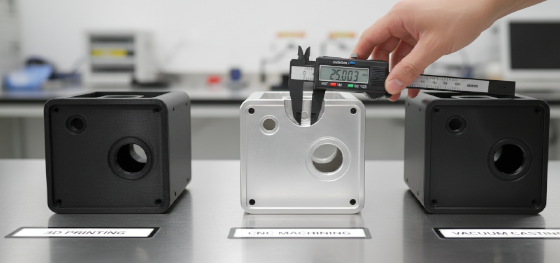
Hardware development in [2026] has adopted the "Fail Fast" mantra of software engineering. In Rapid prototyping for robotics, the goal is not to build a perfect machine on the first try, but to identify the catastrophic failure points as quickly as possible. If a robotic leg is going to buckle under peak dynamic load, it is better to discover this in a lab within three days of design than in a field trial three months later. JUCHENG supports this aggressive iteration by offering 24-hour turnaround on critical structural components, allowing engineers to test, break, and redesign in a single work week.
Speed to failure requires hardware that doesn't hide its flaws. Inexpensive 3D-printed resins often shatter unpredictably, making it difficult to determine if a failure was caused by poor design or poor material. JUCHENG utilizes high-fidelity CNC machining for load-bearing joints, ensuring that when a part breaks, it is a clear signal that the engineering margins need adjustment. This "High-Fidelity Failure" is the most valuable data a robotics startup can possess during the early Alpha phase of a prototype robot development.
Logistical friction is the primary bottleneck of iteration. Waiting for a quote, followed by a two-week shipping delay from an overseas vendor, kills the momentum of an R&D team. JUCHENG eliminates this by providing an integrated DFM (Design for Manufacturing) review within 24 hours of CAD upload. We identify features that will slow down production—such as deep internal corners or non-standard thread pitches—and suggest immediate alternatives. This proactive communication ensures that the hardware arriving at your bench is optimized for both performance and speed.
Iterative agility also means being able to change materials on the fly. A robot designed for indoor hospital use might pivot to an outdoor logistics role, requiring a shift from lightweight polymers to UV-stable aluminum. JUCHENG maintains a massive inventory of Ag-rated and aerospace-grade materials in our Shenzhen hub, allowing our clients to switch from an Alpha build in ABS to a Beta build in 7075 aluminum without changing manufacturing partners. This continuity of service is what allows Rapid prototyping for robotics to remain truly agile.
Technical Data: Comparing Prototyping Process Fidelity

Choosing the wrong process for a specific sub-assembly can invalidate your testing data. A plastic gear will not provide the same feedback as a hardened steel gear, and a 3D-printed link will have different resonant frequencies than a machined one. Jucheng Precision provides multi-process consultations to ensure your Rapid prototyping for robotics strategy aligns with your testing goals. The following table compares the fidelity and durability of common prototyping methods used for the [2026] market.
| Process | Lead Time (Typical) | Material Authenticity | Primary Test Use |
|---|---|---|---|
| 3D Printing (MJF/SLS) | 1 - 3 Days | Moderate (Nylon) | Fit-Check / Cable Routing |
| CNC Machining | 3 - 7 Days | Maximum (Alu/Steel) | Dynamic Loads / Motor Mounts |
| Vacuum Casting | 10 - 15 Days | High (ABS-like PU) | Environmental / IP Sealing |
| Rapid Tooling | 3 - 4 Weeks | Ultimate (Production) | Regulatory / Pilot Trials |
CNC machining remains the bedrock of Rapid prototyping for robotics because it uses real, extruded billets. The mechanical properties—such as Young's Modulus and thermal conductivity—are 100% predictable and consistent. For a prototype robot carrying a 100kg payload, the structural frame must be CNC machined to ensure the safety of the human testers. JUCHENG utilizes high-speed 5-axis trunnion machines to carve complex robotic geometries in a single setup, ensuring that the critical joint concentricity is maintained for smooth motion.
The Toolkit: Orchestrating CNC, 3D Printing, and Casting
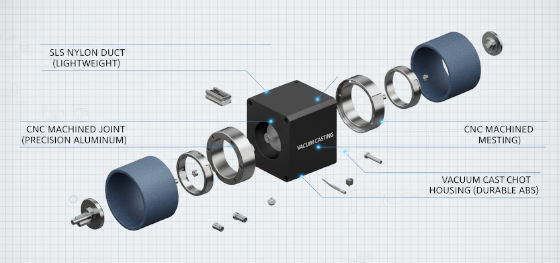
Modern Rapid prototyping for robotics is a multi-disciplinary orchestration. JUCHENG creates "multi-fidelity" assemblies where the primary skeleton is CNC machined for rigidity, while the complex, organic internal cable guides and air ducts are 3D printed using SLS. This hybrid approach allows us to deliver a prototype robot that is significantly lighter than a 100% machined version, without sacrificing the structural strength required for high-torque actuators. We manage the fitment of these different processes in our Shenzhen hub, ensuring that the "handshake" between the aluminum frame and the printed plastic skin is airtight and vibration-proof.
Additive manufacturing (3D printing) serves as the "form" tool in our kit. We utilize MJF (Multi Jet Fusion) and DMLS (Direct Metal Laser Sintering) for components with internal lattices or bionic geometries that are impossible to machine. For robotic fruit harvesters or humanoid hands, 3D printing allows for the rapid testing of different gripper designs in a matter of hours. JUCHENG’s additive department operates alongside our CNC fleet, allowing us to perform "Parallel Iteration," where the skeleton is being machined while the end-effectors are being printed.
Vacuum Casting bridges the gap between the first prototype and the pilot run. If your Rapid prototyping for robotics project requires ten sets of high-impact enclosures for a Beta field trial, 3D printing is too expensive and CNC is too slow for complex thin-walled shells. JUCHENG utilizes silicone molds to cast polyurethane resins that mimic the properties of injection-molded ABS or Polycarbonate. This allows you to test waterproofing (IP67) and chemical resistance on a "production-grade" surface finish without the $20,000 NRE cost of a steel mold.
Advanced metrology ensures that the toolkit remains precise. JUCHENG utilizes Coordinate Measuring Machines (CMM) and 3D laser scanners to verify that the hybrid assembly matches the digital CAD. In robotics, a tolerance stack-up error of 0.2mm across a 3-part assembly can lead to bearing binding or sensor occlusion. Our quality control lab performs physical fitment checks on every multi-process prototype before it leaves the Shenzhen hub, identifying and correcting potential interference issues so your team can focus on the AI.
Time-to-Market: Reducing Lead Times by 40%

Dominating the [2026] market requires a manufacturing partner that understands the "Product-Market Fit" deadline. Jucheng Precision has optimized its internal workflow to reduce the standard Rapid prototyping for robotics lead time by up to 40%. We achieve this through "Continuous Manufacturing"—where our CNC machines run 24/7 in our Shenzhen precision manufacturing hub. By utilizing zero-point clamping systems and automated tool changers, we minimize the downtime between setups, allowing us to finish a complex 6-axis arm assembly in as little as 5 business days.
Internal logistics play a major role in speed. JUCHENG manages all secondary processes—such as hard-anodizing, heat treatment, and laser marking—under one roof. In traditional prototyping, a part might spend three days at a separate plating shop, adding unnecessary delays and increasing the risk of part damage. By consolidating the entire Rapid prototyping for robotics lifecycle in our facility, we maintain absolute control over the timeline and the quality. We don't just provide parts; we provide a guaranteed "Window of Progress" for your engineering team.
Design-for-Rapid-Prototyping (DFRP) is the technical service we provide to accelerate your market entry. Our engineers analyze your CAD for "time-wasters"—features that add days to the machining cycle without adding value to the prototype’s function. We might suggest replacing a complex internal radius with a simple chamfer or substituting a rare alloy with a readily available 6061 alternative for the Alpha build. These subtle shifts can shave 48 hours off a lead time, which is the difference between making or missing an investor demo.
Supply chain resilience in Shenzhen provides the ultimate speed-buffer. If a specific servo motor mount requires a specialized high-density polymer, we can source it locally within hours. This local ecosystem allows JUCHENG to pivot your prototype robot design mid-week based on new testing data. Whether you need a sudden change in arm length or a reinforced battery tray, our rapid-response team is equipped to handle design revisions with zero bureaucratic delay, ensuring your R&D momentum never stalls.
JUCHENG: The Functional Alpha Unit Solution
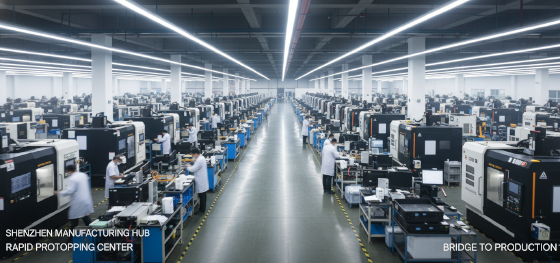
Moving from a single functional prototype to a commercial fleet requires a manufacturing partner that can scale with your success. Jucheng Precision operates with a "Bridge to Production" philosophy in our Shenzhen precision manufacturing hub, delivering high-tolerance Rapid prototyping for robotics and structural components with industry-leading speed. We provide the manufacturing horsepower that allows you to scale from your first hand-fitted Alpha unit to a commercial deployment of 500 Beta robots with consistent metallurgical and dimensional quality.
Integrating your design with JUCHENG’s expertise ensures that your prototype robot survives the "First-Field Season" and moves into mass adoption. We offer comprehensive DFM reviews within 24 hours, identifying potential fatigue points or weight-saving opportunities in your design before they become field failures. Whether you are building an autonomous vineyard scout or a heavy-duty industrial mobile base, Jucheng Precision provides the rigid, precise foundations that keep your innovation moving through the high-speed cycles and the years of hard labor.
Our facility is equipped with 150+ CNC machines and dedicated additive manufacturing cells, allowing us to manage the entire prototype lifecycle in one location. We manage the complexity of multi-process manufacturing and material science so your engineering team can focus on the autonomy and the AI. By combining Shenzhen's speed with industrial-grade material verification, JUCHENG remains the preferred partner for the world's most aggressive Rapid prototyping for robotics challenges. Contact us today to start your next project.
FAQ: Rapid Iteration for Autonomous Hardware
What is the fastest turnaround for a CNC robot chassis?
JUCHENG typically delivers complex machined aluminum chassis in 3 to 5 business days.
Can JUCHENG handle confidential R&D prototyping?
Yes. We operate under strict NDA protocols with isolated production cells to protect your intellectual property.
Is 3D printing or CNC better for robot motor mounts?
CNC is mandatory for motor mounts to handle vibration and ensure thermal conductivity for cooling.
How do you ensure prototype fitment with existing electronics?
We utilize sub-micron measurement and perform physical pre-assembly checks against your sensor and motor samples.
What are typical lead times for vacuum-cast robot covers?
A set of 10 to 20 functional covers is typically delivered in 10 to 15 business days.
Hardware delays in the AgTech or industrial robotics sector are absolute project killers. Partnering with Jucheng Precision ensures that your functional iterations are built with the high-strength aluminum and specialized Rapid prototyping for robotics techniques the industry demands. Reach out to our Shenzhen manufacturing hub today for a complete DFM review and build the functional foundation your autonomous fleet requires.

