


What is the integrity of a product? It is a form of honesty. It is the promise that a product is what it appears to be. A flat surface should be truly flat. A straight edge should be truly straight.
This is not just about aesthetics. It is about function. A baseplate that is not flat will cause the entire machine built upon it to be misaligned. A display window that is not perfectly flat will distort the view.
This structural honesty is a direct result of a material's stiffness, or rigidity. And for many applications, a high-quality rigid plastic sheet material is the foundation upon which this integrity is built.
content:
The Integrity of a Product
Decoding 'Rigidity': More Than Just Hardness
The Material Candidates: A Spectrum of Stiffness
The Unseen Enemy: Creep and Warp
Manufacturing for Flatness and Stability
The Integrity of a Product
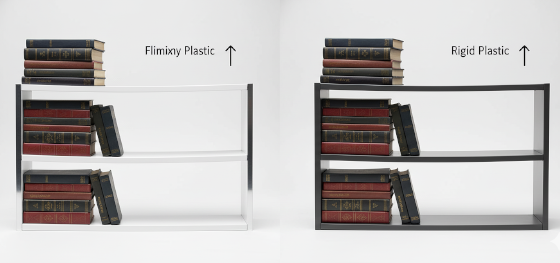
Imagine a simple bookshelf made of thin, cheap plastic. You put a few books on it. A week later, you notice the shelf is sagging in the middle. It has lost its straightness. It has lost its integrity.
The product has failed. It has failed to resist the force of gravity. This is a failure of rigidity.
For many engineering applications, this is the most important property. The internal chassis of an electronic device must be perfectly rigid. If it flexes, it can put stress on the delicate circuit boards and solder joints, causing a failure. A mounting plate for a scientific instrument must be absolutely stable to ensure accurate measurements.
Rigidity is the promise of stability.
Decoding 'Rigidity': More Than Just Hardness

What property defines rigidity? It is not hardness. It is a specific mechanical property called "flexural modulus" or "modulus of elasticity."
This number tells you how much a material will resist bending when a force is applied to it. A material with a high flexural modulus is very stiff. It is a rigid plastic sheet material. A material with a low flexural modulus is very flexible.
This is one of the most important numbers on a material datasheet for any structural application. It allows an engineer to calculate exactly how much a part will bend under a given load. This is how they can design a shelf that will not sag, or a chassis that will not flex. It is a core part of the language of mechanical design.
The Material Candidates: A Spectrum of Stiffness

The world of plastic sheets offers a full spectrum of rigidity.
At the very top of the stiffness chart are materials like Acrylic (PMMA) and Polycarbonate (PC). They are very rigid. This is why they are often used as glass substitutes. A thick sheet of acrylic feels almost as stiff as a piece of glass. This makes them perfect for high-end display cases, architectural glazing, and machine guards.
Other common rigid materials include PVC and ABS. They offer a good balance of stiffness, toughness, and cost.
For the ultimate in rigidity, engineers turn to composite sheets. A rigid plastic sheet material made from glass-fiber or carbon-fiber reinforced polymers can be as stiff as aluminum, but at a much lower weight. These are used for the most demanding structural applications.
The Unseen Enemy: Creep and Warp

But a material's initial stiffness is not the whole story. The unseen enemy of long-term integrity is "creep."
Creep is the tendency of a plastic to slowly deform over time when it is under a constant load. This is what caused our bookshelf to sag. Even though the initial load was not enough to bend it, over many weeks, the plastic molecules slowly moved and rearranged themselves.
A related problem is "warp." This is a deformation caused by internal stresses that are locked into the material during its manufacturing. A poorly made sheet of plastic might look flat at first, but it can slowly warp or bow over time.
Choosing a material with good dimensional stability and low creep is critical for any part that needs to remain flat and true for its entire lifespan.
Manufacturing for Flatness and Stability

How do you guarantee a perfectly flat and stable part? It is a partnership between good material choice and expert manufacturing.
Even the most stable raw material can have some internal stress. For applications that require ultimate flatness, a secondary machining process is often needed.
At JUCHENG, we can take a thick, rigid plastic sheet material and use our large CNC machines to perform a "face milling" operation. This process uses a large, perfectly flat cutting tool to skim a very thin layer off the top and bottom surfaces of the sheet.
This removes any surface imperfections and relieves the internal stresses. The result is a sheet that is not just flat, but is dimensionally stable and will stay flat. This is a level of precision that is essential for high-end applications. It is how we deliver on the promise of product integrity.

