


Opening a quote for a multi-axis prototype robot in [2026] often triggers immediate "Sticker Shock" for engineering leads and startup founders. The gap between a consumer-grade 3D print and a high-fidelity functional machine is not just measured in microns, but in thousands of dollars of specialized labor and material costs. In the high-stakes world of autonomous hardware, the lowest quote is rarely the best value. Understanding the variables behind Robot prototype cost estimation is essential for maintaining a viable R&D runway and avoiding the mid-season budget collapses that kill innovation.
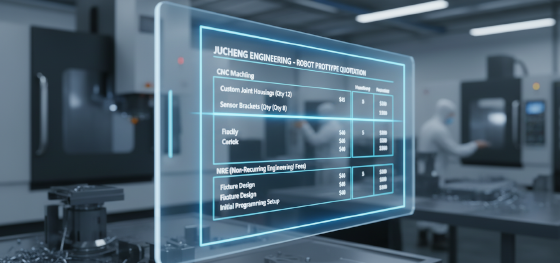
Manufacturing costs for robotics are non-linear. Small design choices—like a deep internal radius or a mirror-finish requirement—can triple the machining time of a structural link without adding a single percentage point of performance. When procurement managers treat prototype sourcing like commodity purchasing, they often receive hardware that requires days of manual filing to assemble, effectively shifting the cost from the vendor to their internal engineering team. Jucheng Precision addresses these financial risks by providing transparent DFM-driven quotes that identify cost-drivers before the first spindle turns.
Operating within the Shenzhen precision manufacturing hub, JUCHENG provides a comprehensive financial perspective on hardware development. Our combine 150+ CNC machines with a deep local supply chain to deliver high-fidelity hardware at optimized price points. This guide explores the primary cost drivers, the hidden expenses of assembly, and the strategic design shifts required for accurate Robot prototype cost estimation in the current competitive market.
Primary Drivers: Materials, Complexity, and NRE
Technical Data: Material and Process Cost Multipliers
Hidden Expenses: Finishing, QC, and Assembly Labor
Optimization Strategies: 5 Ways to Reduce Prototype Spend
JUCHENG: Transparent Budgeting for Robotics R&D
FAQ: Budgeting for Prototype Robot Hardware
Primary Drivers: Materials, Complexity, and NRE
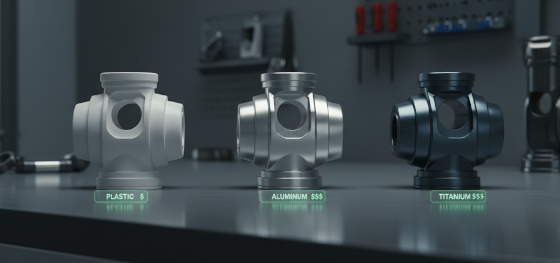
Raw material selection is the most immediate factor in Robot prototype cost estimation. While 6061-T6 aluminum is the budget-friendly baseline for robotics, moving to 7075-T6 or Titanium increases the material cost by 2x and 10x respectively. Beyond the price per kilogram, harder materials increase tool wear and slow down feed rates, leading to higher machine-hour charges. JUCHENG recommends utilized aluminum for 90% of Alpha builds, reserving exotic alloys only for the highest-stress joints where the physics absolutely demand it.
Geometric complexity dictates the "Machine-Hour" component of the quote. In industrial robot parts, features like deep pockets, thin walls (under 1mm), and internal threads in hard metals require specialized tooling and slow, careful passes. A 5-axis CNC setup is more expensive per hour than a 3-axis setup, but it often reduces the total number of setups required, which can lower the overall part cost. JUCHENG analyzes your CAD files to identify "cost-traps"—features that add to the price tag without adding to the robot's functional value—and suggests DFM alternatives in every quote.
Non-Recurring Engineering (NRE) fees represent the "setup" cost of the project. This includes the time required for CAM programming, custom fixture design, and machine calibration. For a single prototype robot, NRE can account for 50% or more of the total invoice. JUCHENG manages these costs by utilizing universal modular fixtures and standardized tool libraries, allowing us to amortize the engineering time across multiple similar parts. This efficiency is why JUCHENG remains a preferred partner for startups that need to iterate on individual components weekly without being crushed by recurring setup fees.
Lead-time premiums are the "urgency tax" of the industry. If a demo is scheduled for next Friday, the cost of the hardware can increase by 30-50% to account for expedited material shipping and overtime labor. JUCHENG eliminates these premiums for our long-term R&D partners by maintaining a 24/7 production cycle in our Shenzhen precision manufacturing hub. Our "Always-On" capacity means that a 3-day turnaround is our standard operating procedure, not a special service, allowing you to stay on schedule without inflating your budget.
Technical Data: Material and Process Cost Multipliers
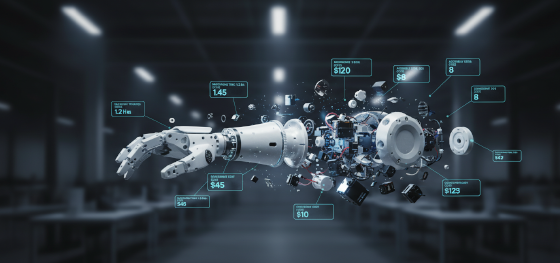
Visualizing the cost impact of material and process choices is the first step in successful Robot prototype cost estimation. The following table provides a relative cost index using CNC-machined 6061 Aluminum as the baseline (1.0). Use this data to identify where your R&D budget is being consumed during the Alpha and Beta phases.
| Material / Process | Relative Cost Index | Machining Time Impact | Primary Decision Factor |
|---|---|---|---|
| 6061-T6 Aluminum | 1.0 (Baseline) | Standard | General Purpose Chassis |
| 7075-T6 Aluminum | 1.4 - 1.6 | +15% (Tool Wear) | High-Torque Joint Links |
| PEEK (Plastic) | 4.0 - 6.0 | +20% (Stability) | Thermal/Chemical Barrier |
| Stainless Steel 316L | 2.5 - 3.5 | +50% (Hardness) | Environment/Hygiene |
| Titanium Gr. 5 | 10.0+ | +200% (Speeds) | Aerospace/Bionic Weight |
Moving from 6061 to 7075 aluminum is often a "high-ROI" upgrade in Robot prototype cost estimation. For a 40% increase in cost, you receive nearly double the yield strength. However, moving to Titanium is rarely justified for an early-stage prototype robot unless weight is the absolute limiting factor for flight or agility. JUCHENG helps procurement teams identify these "Sweet Spots" in the material matrix, ensuring that every dollar spent translates directly into valid R&D data.
Hidden Expenses: Finishing, QC, and Assembly Labor
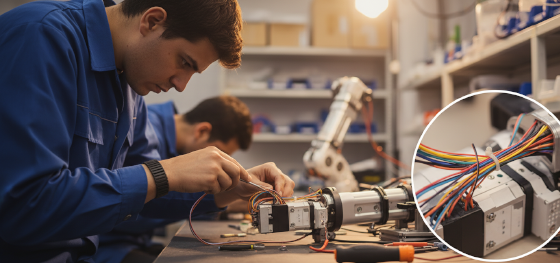
Aesthetic finishing is the most common "Hidden Cost" in robotic prototyping. While a raw-machined part is functional, trade-show requirements often demand Class-A painting, bead-blasting, or hard-anodizing. These processes add secondary logistics and labor that can account for 20-30% of a Robot prototype cost estimation. JUCHENG manages these finishes in-house, eliminating the "Third-Party Markup" and ensuring that the final surface quality matches the engineering specifications without the standard 5-day delay of outsourced plating shops.
Quality Control (QC) and metrology requirements must be budgeted based on the part's function. A simple cosmetic cover does not need a CMM report, but a J2 gearbox housing requires sub-micron verification of bearing concentricity. Excessive QC requests on non-critical parts inflate the project cost by adding inspection labor and machine-wait time. JUCHENG’s "Tiered QC" approach allows you to specify different inspection levels for different components within the same prototype robot build, focusing the budget where the precision actually matters for machine performance.
Assembly labor and hardware fitment can derail a project's finances during the final week. If the manufactured parts have "tolerance stack-up" issues, your expensive robotics engineers will spend their time hand-grinding parts to fit rather than writing code. JUCHENG eliminates this "Internal Labor Sink" by performing physical pre-assembly and interference checks on every robotic assembly we ship. We ensure that the hardware is "Ready-to-Bolt," effectively saving you thousands in high-level engineering overhead during the integration phase.
Packaging and international logistics are the final hidden hurdles. Shipping a 100kg robot chassis across the ocean in a standard cardboard box is a recipe for expensive damage. JUCHENG provides custom-fitted wooden flight cases with internal shock-dampening for all functional prototypes. While this adds a small upfront cost to the Robot prototype cost estimation, it prevents the multi-thousand dollar loss of a damaged Alpha unit, ensuring your hardware arrives in the lab calibrated and ready for its first power-up.
Optimization Strategies: 5 Ways to Reduce Prototype Spend
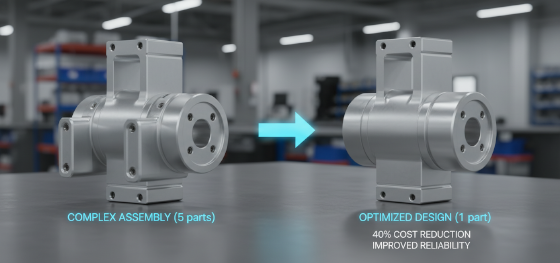
Reducing the cost of a prototype robot does not mean compromising on quality; it means manufacturing smarter. The first strategy is "Part Consolidation." Using 5-axis CNC machining, JUCHENG can often combine three separate brackets into a single monolithic part. This reduces the number of unique setups, eliminates the cost of dozens of fasteners, and drastically lowers assembly time. By simplifying the skeleton, you reduce both the manufacturing price and the failure points in the field.
Standardize your hardware interfaces. Using non-standard thread pitches or custom-headed bolts adds unnecessary expense to the Robot prototype cost estimation because it requires the manufacturer to source or machine custom fasteners. JUCHENG maintains a vast inventory of standard ISO and imperial fasteners; designing your mounts to match these off-the-shelf items can shave hundreds of dollars off your R&D bill. We provide a "Standard-Hardware Guide" to our clients to help them align their designs with global supply chain availability.
Utilize "Prototype Tooling" for Beta fleets. If you need 20 sets of enclosures, don't jump straight to a $50,000 hardened steel injection mold. JUCHENG utilizes aluminum rapid tooling or vacuum casting to provide production-grade parts for a tenth of the price. This "Bridge to Production" allows you to finalize your design through real-world testing without a massive upfront capital commitment, preserving your cash for the eventual mass-market rollout in [2026].
Relax tolerances on aesthetic surfaces. In industrial robot parts, engineers often apply a blanket "+/- 0.05mm" tolerance to the entire part out of habit. By identifying "Non-Critical Zones"—such as external covers or wire-routing channels—and allowing for +/- 0.2mm tolerances, you reduce the machine-time and scrap-rate of the part. JUCHENG’s DFM reviews specifically look for these "Tolerance Over-Specs" and suggest where you can save budget without impacting the robot’s accuracy or durability.
Consolidate your shipments and iterations. Sourcing the drivetrain from one vendor and the chassis from another increases shipping costs and leads to "Finger-Pointing" if parts don't fit. JUCHENG’s integrated hub handles the entire prototype robot lifecycle—from CNC and 3D printing to final painting. By consolidating your build with a single high-tier partner, you eliminate multiple layers of markup and ensure that the responsibility for fitment and function rests with a single, accountable manufacturing engine.
JUCHENG: Transparent Budgeting for Robotics R&D
Dominating the [2026] robotics market requires a partner that provides financial clarity alongside mechanical precision. Jucheng Precision operates with a 24/7 manufacturing mindset in our Shenzhen precision manufacturing hub, delivering high-tolerance Robot prototype cost estimation data and structural components with industry-leading speed. We provide a "Bridge to Production" that allows you to scale from a single functional prototype to a commercial pilot run of 50 Beta units with consistent metallurgical and dimensional quality.
Integrating your budget goals with JUCHENG’s expertise ensures that your prototype robot survives the "Cash-Burn Season" and moves into mass adoption. We offer comprehensive DFM reviews within 24 hours, identifying potential cost-saving opportunities or weight-reduction risks in your design before they become financial failures. Whether you are building an autonomous vineyard scout or a heavy-duty industrial mobile base, Jucheng Precision provides the transparent foundations that keep your innovation moving through the high-speed cycles and the years of hard labor.
Our facility is equipped with 150+ CNC machines and dedicated assembly and testing cells, allowing us to manage the entire prototype lifecycle in one location. We manage the complexity of multi-process manufacturing and material science so your engineering team can focus on the autonomy and the AI. By combining Shenzhen's speed with industrial-grade material verification, JUCHENG remains the preferred partner for the world's most aggressive prototype robot challenges. Contact us today to start your next project.
FAQ: Budgeting for Prototype Robot Hardware
What is NRE and why is it so high for 1 part?
NRE covers the one-time programming and setup work required to teach a machine how to make your unique part.
Is CNC always more expensive than 3D printing?
No. For high-torque structural parts or quantities over 20 units, CNC is often cheaper and provides better material durability.
How much does a custom robot chassis typically cost?
Depending on size and material, a functional aluminum mobile base prototype typically ranges from $2,500 to $8,000.
Does JUCHENG provide volume discounts for Beta fleets?
Yes. We amortize NRE costs across the run, significantly reducing the per-unit price for 10 to 50 unit orders.
How can I get the fastest quote for my robot project?
Upload a clean 3D step file with a clear bill of materials and tolerance requirements to our secure Shenzhen portal.
Budget inaccuracies in the robotics sector are absolute hardware killers. Partnering with Jucheng Precision ensures that your financial planning is built with the transparent Robot prototype cost estimation and specialized DFM techniques the industry demands. Reach out to our Shenzhen manufacturing hub today for a complete DFM review and build the cost-effective foundation your autonomous fleet requires.

