


Sandblasting, or bead blasting, is often misunderstood as a simple cleaning process. In high-precision manufacturing, it is a critical step in Precision Surface Texturing, used not just to clean but to engineer the surface for specific functional and aesthetic requirements. From preparing components for durable coatings to achieving a low-glare aesthetic finish, precise control over the blasting process is mandatory.
The challenge for B2B buyers is ensuring the process does not compromise the tight dimensional tolerances achieved by CNC Machining or introduce contaminants that will ruin the final coating. This guide explores the strategic control required to leverage sandblasting as a vital surface engineering tool.
The Functional Role: Aesthetics, Friction, and Coating Adhesion
Dimensional Control: Protecting Critical Tolerances During Blasting
Media Strategy: Selecting the Right Grit for the Right Finish
Post-Blast Protocol: Mandatory Cleaning for Coating Integration
The Functional Role: Aesthetics, Friction, and Coating Adhesion
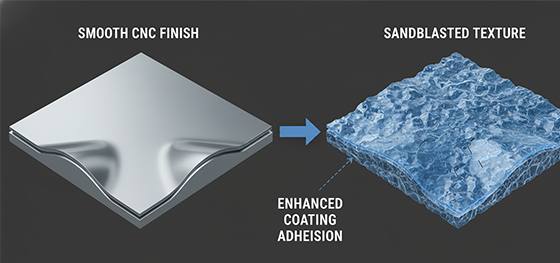
Sandblasting is integral to the final function of a part, addressing key requirements that CNC Machining alone cannot fulfill:
Aesthetics and Glare: The process removes tool marks, providing a uniform, non-directional matte finish. This is essential for components that must reduce glare (e.g., optical housings, instrument panels) and for achieving a professional aesthetic before anodizing or painting.
Coating Adhesion: The primary functional role. Sandblasting intentionally roughens the surface, increasing the microscopic surface area and creating anchor points for paint, powder coating, or plating to bond securely. This prevents peeling and bubbling.
Friction and Wear: Controlled blasting can be used to induce slight compressive stress on the surface, which can increase the fatigue life of certain metals. It can also create a textured surface that retains lubrication, beneficial for slow-moving sliding mechanisms.
Dimensional Control: Protecting Critical Tolerances During Blasting
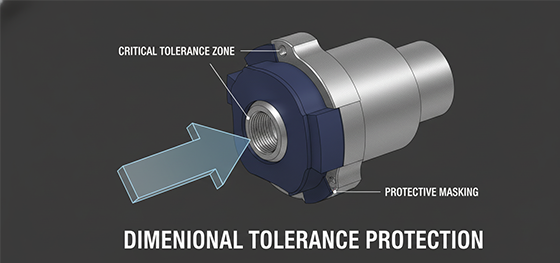
Blasting is a destructive process—it removes material. While it is beneficial for preparing surfaces, it must be rigorously controlled to protect critical features achieved by high-precision CNC Machining:
The Masking Requirement: Critical features—such as bearing bores, threaded holes, precision mating faces, and any surface with a tight tolerance—must be completely sealed off using specialized chemical-resistant tape, plugs, or lacquer during the blasting process.
Pressure Management: Blasting pressure and duration must be tailored to the material and media type. Too high a pressure or too long a duration will excessively remove material from the base component, permanently violating dimensional tolerance.
Process Traceability: For aerospace and medical components, the manufacturer must document the blasting pressure and media type to ensure the process does not introduce surface defects that could compromise the component's fatigue life.
Media Strategy: Selecting the Right Grit for the Right Finish
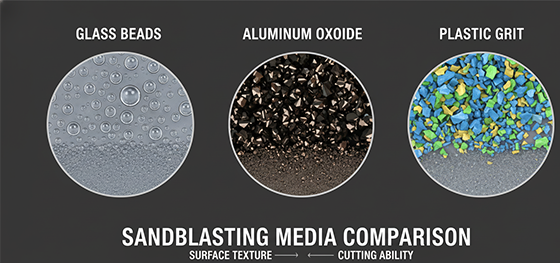
The final texture (Ra value) and subsequent coating performance are determined by the media selected for blasting:
Glass Beads: The most common choice. Glass beads are spherical, meaning they peen (dent) the surface without removing much material. They are ideal for achieving a smooth, satin finish and introducing a beneficial layer of compressive stress for fatigue life.
Aluminum Oxide: An angular, abrasive medium used for aggressively removing rust, scale, or heavy tool marks. It creates a rougher, deeper profile that is excellent for maximum paint adhesion but may violate cosmetic requirements.
Plastic or Walnut Grit: Very soft, non-abrasive media used for cleaning delicate parts or soft plastics without damaging the surface geometry. Ideal for removing light contamination.
Post-Blast Protocol: Mandatory Cleaning for Coating Integration
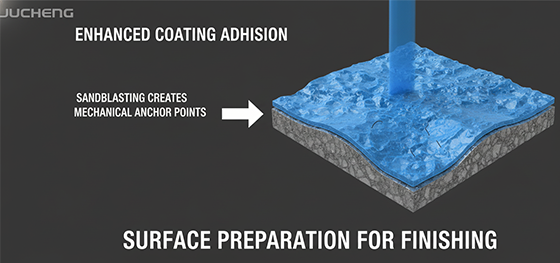
Immediately after blasting, the part's surface is highly active and prone to contamination. A specialized cleaning protocol is mandatory to ensure the part is ready for its final finishing:
Media Residue: Microscopic dust from the blasting media (especially aluminum oxide) can become lodged in the newly created texture. The part must be thoroughly cleaned with high-pressure air and often an ultrasonic bath to remove all traces of residue.
Immediate Coating: Once clean, the part must be coated immediately. Aluminum, in particular, will quickly re-oxidize (form a natural oxide layer) in the open air, which can compromise the adhesion of subsequent finishes like anodizing or powder coating.
Final Inspection: The manufacturer must inspect the surface using specialized equipment to verify the achieved Ra value and ensure all critical masked areas were protected and retain their original dimensional tolerance.
Sandblasting is a Precision Surface Texturing process that requires expertise in both mechanical and chemical control. Jucheng Precision Technology integrates specialized blasting protocols with mandatory masking and final cleaning, guaranteeing your components are perfectly prepared for ultimate coating adhesion and functional performance.
Secure functional surface finishes with guaranteed dimensional control. Contact us today to discuss the optimal blasting and finishing strategy for your precision prototypes and parts.

