


What are the three things your CAD software will never tell you about your sheet metal design? It will not tell you how the material will truly stretch during a bend. It will not tell you how difficult it will be for a machine operator to handle your part. And it will not tell you if your design is secretly driving up the cost.
A design can look perfect on screen. All the lines are straight. All the holes are in place. But a perfect-looking design can be impossible or very expensive to actually make.
This guide will take you "behind the screen." We will look at a few of the most common mistakes in sheet metal design. We will show you how to fix them. This is the knowledge that turns a good designer into a great one.
content:
Mistake 1: Ignoring the Bend Radius
Mistake 2: Placing Features Too Close to Bends
Mistake 3: Overly Complex Designs
The Solution: Prototyping and DFM Feedback
Mistake 1: Ignoring the Bend Radius
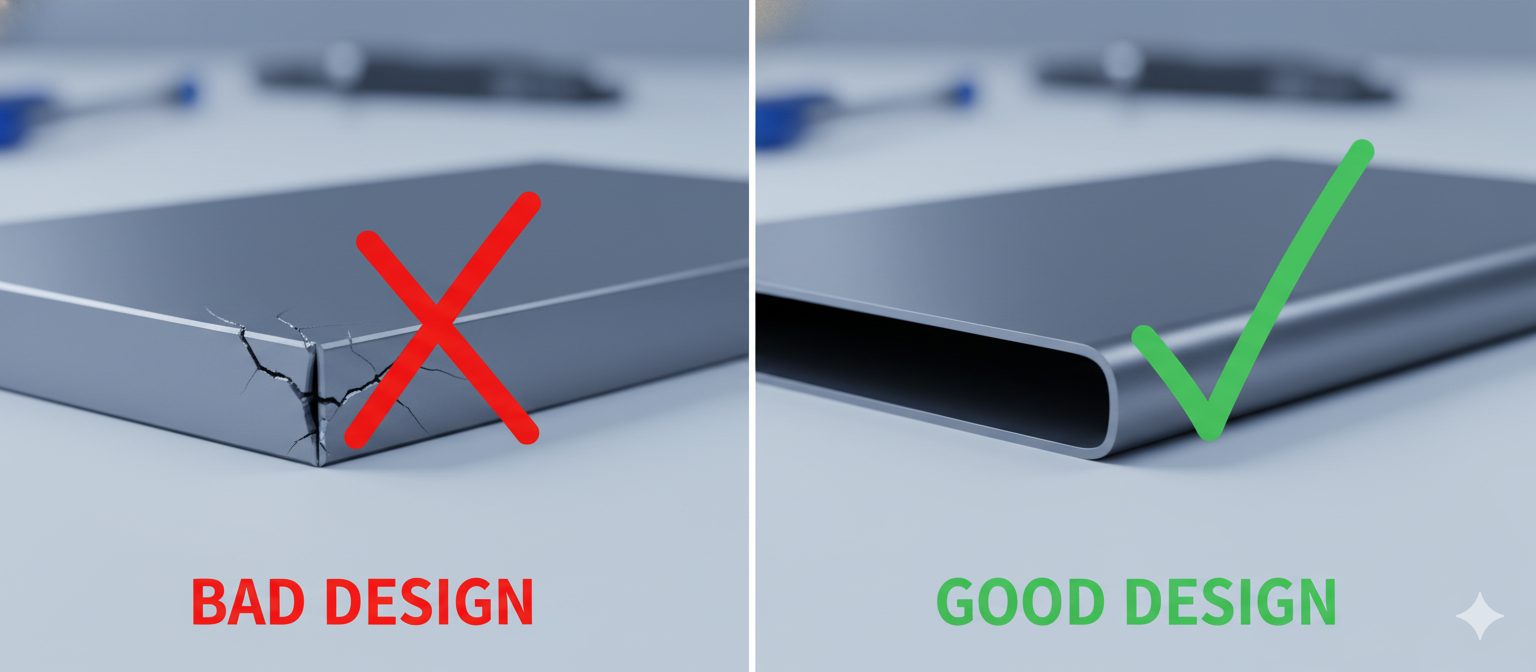
This is the single most common mistake we see. A designer draws a part with a perfect, sharp 90-degree corner. It looks clean in the CAD model.
But in the real world, you cannot bend metal into a perfectly sharp corner. It is physically impossible. When you try to do this, the material on the outside of the bend stretches too much. This can cause cracks and weaknesses. The part can fail under stress.
The Fix: Every bend in your sheet metal design must have an inside bend radius. A good rule of thumb is to make the inside radius at least equal to the thickness of the material. For 1.5mm thick aluminum, the inside bend radius should be at least 1.5mm.
This simple rule prevents material cracking. It makes your part much stronger. It also makes the part easier and more consistent to manufacture.
Mistake 2: Placing Features Too Close to Bends
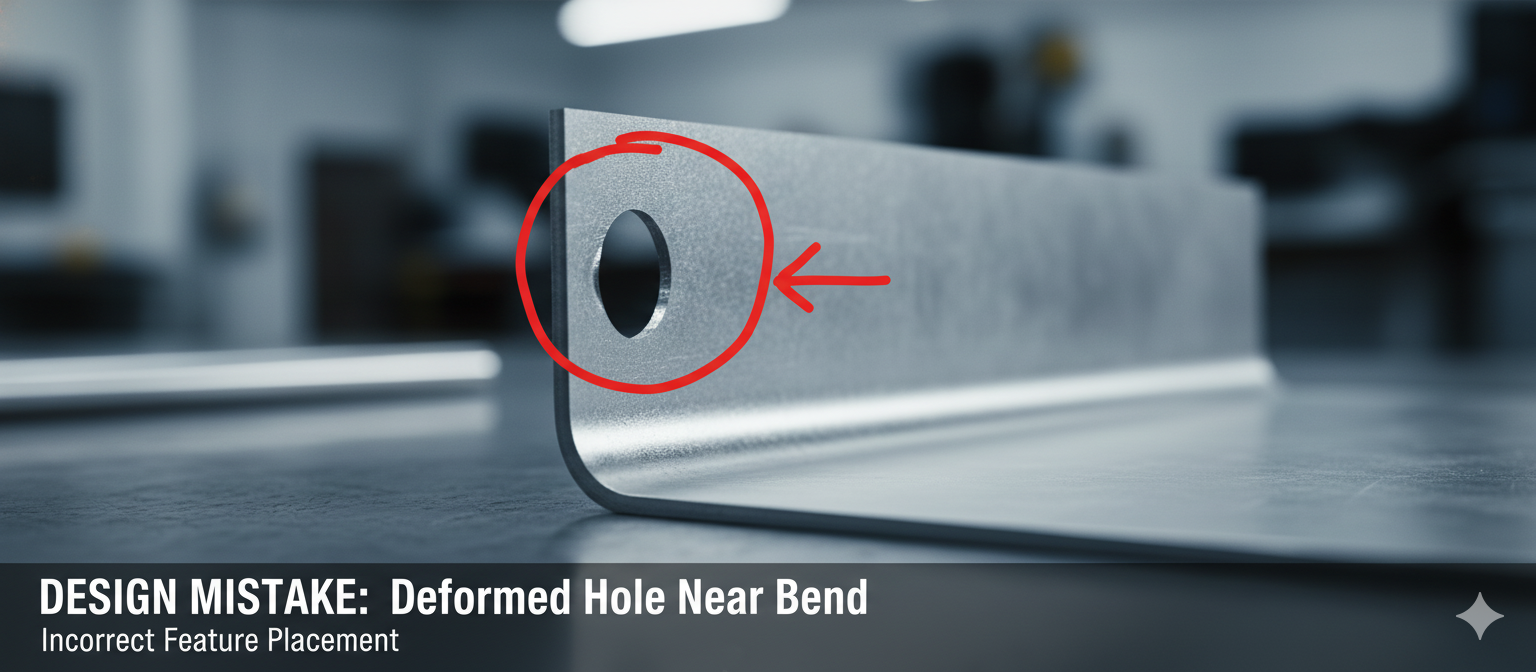
Here is another common problem. A designer places a hole or a slot very close to a bend line. In the flat pattern, it looks fine.
But then the part goes into the press brake machine. As the metal is bent, the material around the bend line stretches and deforms. If your hole is in this deformation zone, the hole will also be stretched out of shape. A round hole can become an oval.
This is a huge problem. It means screws will not fit. Other components will not align properly. The part will not assemble correctly.
The Fix: Keep all features, like holes and slots, a safe distance away from bend lines. A good rule is to keep them at least 3 times the material thickness away from the bend. For 1.5mm material, this means keeping holes at least 4.5mm away from the start of the bend. This simple step ensures your features stay accurate.
Mistake 3: Overly Complex Designs
Sometimes, a designer tries to make one single part do too many things. They create a very complex shape with many small, intricate bends.
This might look clever in the CAD model. But it can be a nightmare to manufacture. Some bends might be impossible to reach with the press brake tooling. Other features might require many, many different machine setups.
The result is a part that is extremely expensive and time-consuming to make. The cost goes way up. The risk of errors also increases.
The Fix: Keep your sheet metal design as simple as possible. Ask yourself: Can I make this with fewer bends? Can I split this one complex part into two simpler parts that are then welded or screwed together? Often, a simpler design is a stronger and more cost-effective design.
The Solution: Prototyping and DFM Feedback
How do you avoid these common mistakes? There are two main tools.
First, you must use sheet metal prototyping. This is the only way to see how your design will behave in the real world. A physical prototype will instantly show you if a bend radius is wrong or if a hole is deforming. It turns a theoretical problem into a physical fact that you can see and touch.
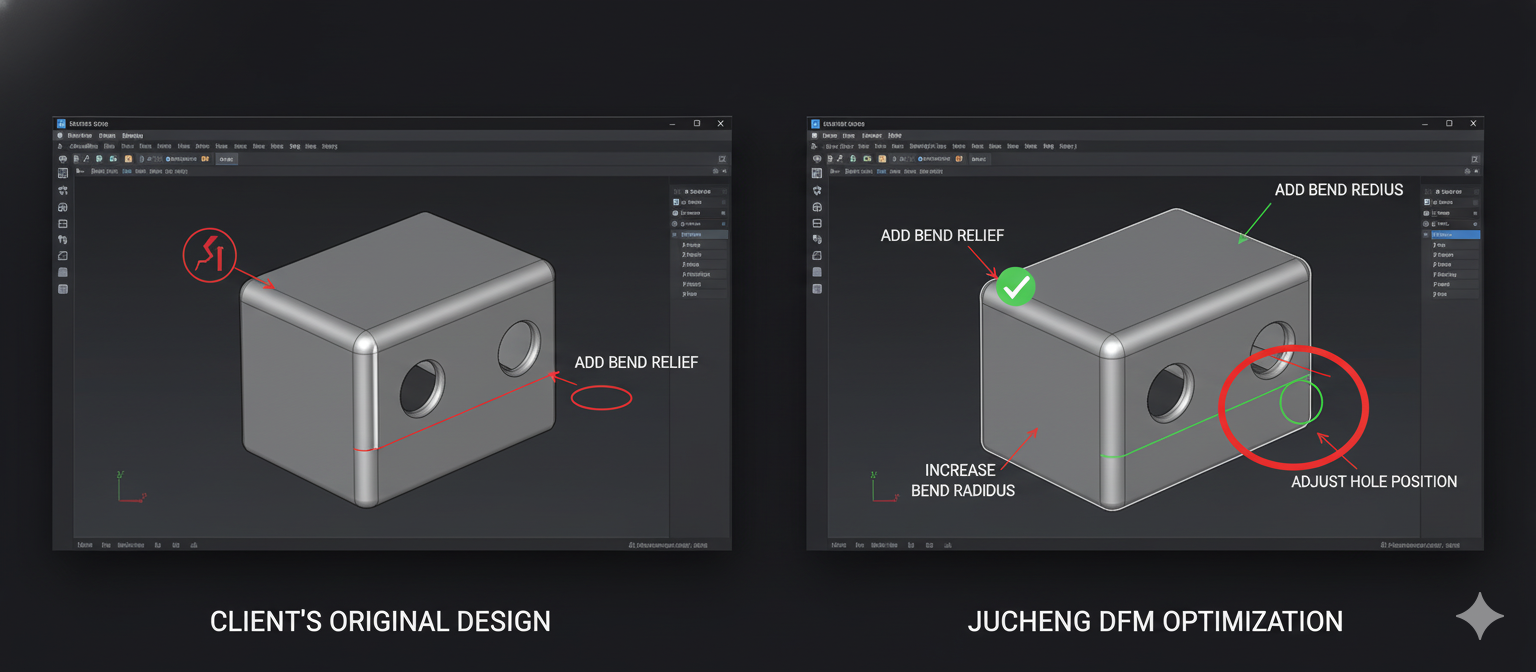
Second, you must work with a true manufacturing partner. Not just a supplier. A good partner, like JUCHENG, will provide detailed DFM (Design for Manufacturability) feedback before they start making your part.
Our experienced engineers will review your sheet metal design. They will use their knowledge to find these common problems. They will send you a clear report with suggestions. "We recommend increasing the bend radius here to prevent cracking." "We suggest moving this hole 5mm away from the bend to avoid deformation."
This partnership between your design and our manufacturing expertise is the key to success. It helps you learn. It improves your design. And it ensures the parts you receive are not just fast, but also right.

