


The art of sheet metal fabrication is not about how many bends you can put into a part. It is about how many you can cleverly remove.
This is a fundamental truth that separates an average designer from a great one. Any machine can bend a piece of metal. But a smart design can make that piece of metal stronger, lighter, and cheaper to produce, all at the same time.
This is a guide to that smarter way of thinking. It is not just about the process of fabrication. It is about the design philosophy that makes the process efficient and successful.
content:
The Common Mistake: Over-Designing the Bends
The First Secret: Design with Stiffening Features
The Second Secret: Let the Machine Do the Work
The Third Secret: Plan for the Final Assembly
The Result: A Smarter, Cheaper, Better Product
The Common Mistake: Over-Designing the Bends
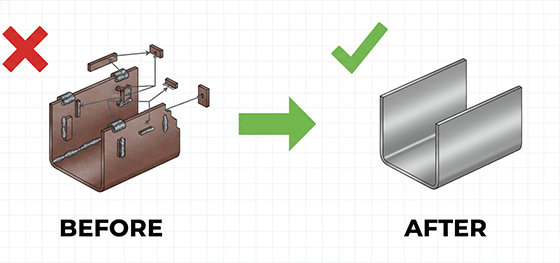
Many designers think in terms of solid objects. They design a complex bracket as if it were a solid block. Then they try to create it by welding many small, simple bent pieces together.
This is almost always a mistake. Every weld is a point of potential weakness. Every weld adds a huge amount of time, labor, and cost to the process.
The philosophy of smart sheet metal fabrication is different. It asks: "How can I design this part so it can be made from a single piece of metal with the fewest possible bends?" This approach leads to a stronger, cheaper, and more consistent product.
The First Secret: Design with Stiffening Features
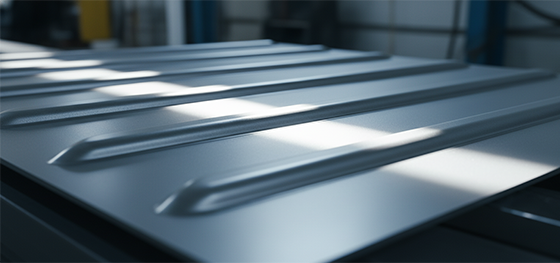
How do you make a large, flat metal panel strong without adding weight or thickness? You do not use a thicker sheet. You use geometry.
A flat sheet of metal is very easy to flex. But if you add a small bend or a rib to it, its stiffness increases dramatically. This is a core principle of smart design.
A skilled designer will add features like stiffening ribs or flanges to their parts. These are small, pressed-in features that act like a skeleton for the panel. They add a huge amount of rigidity with almost no increase in weight or cost.
This is how a modern server chassis can be incredibly strong and rigid, even though it is made from relatively thin steel. It is not about brute force. It is about smart geometry.
The Second Secret: Let the Machine Do the Work
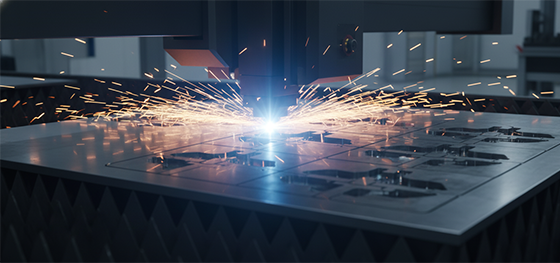
The most expensive part of any manufacturing process is manual labor. The secret to a cost-effective design is to let the automated machines do as much work as possible.
Modern laser cutters can do much more than just cut the outside profile of your part. They can cut intricate patterns, ventilation holes, and even functional features directly into the flat sheet.
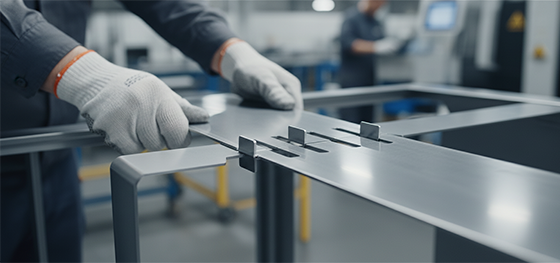
A very clever design trick is to use "tabs and slots." The designer can add small tabs on the edge of one part, and corresponding slots on the part it connects to. The laser cutter can create these features with perfect precision and at no extra cost.
This is a key part of designing for efficient metal working. You are using the machine's capabilities to your advantage, reducing the need for complex jigs or manual alignment later.
The Third Secret: Plan for the Final Assembly
A great design does not just consider how the part is made. It considers how the part will be used. A key part of its use is assembly.
Those tabs and slots we just mentioned? They are a secret weapon for fast and error-proof assembly. The parts can only fit together in one way. They snap into place perfectly, like a puzzle.
This can dramatically reduce the time it takes to assemble the final product on the production line. It reduces the need for complex welding jigs. In some cases, a clever tab and slot design can even eliminate the need for screws or welding entirely.
This is the highest level of design. Thinking about the entire product lifecycle, from the flat sheet to the final assembly line.
The Result: A Smarter, Cheaper, Better Product
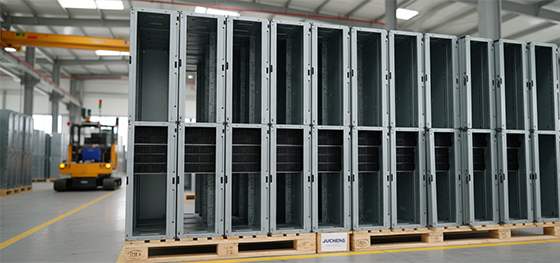
When these design secrets are combined, the result is transformative.
You get a product that is made from fewer individual parts. This means less welding, less assembly, and lower cost.
You get a product that is stronger and lighter, because you have used geometry to create stiffness instead of just using thicker material.
And you get a product that is faster and easier to assemble, which lowers your production costs and improves quality.
This is the true power of professional sheet metal fabrication. It is a partnership between a smart designer and a capable manufacturer to create a truly optimized product.

