


For high-performance applications in Automotive, Aviation Aerospace, and industrial equipment, structural integrity and reliability are non-negotiable. Achieving this often requires combining two distinct metal processes: Die Casting for high-density, complex components, and Sheet Metal Fabrication for lightweight, robust external structures.
Metal engineering is a balancing act between material strength, unit cost, and production volume. Jucheng Precision Technology, a single-source partner in metal molding and advanced sheet metal, provides a unified strategy to leverage the strengths of both Die Casting and Sheet Metal Fabrication, ensuring high quality output for your critical metal parts.
Process Comparison: Density and Geometry
Material Strategy: Selecting the Right Metal Alloy
Structural Function: Where Die Casting Meets Sheet Metal
Precision and Tolerance Control in Metal Engineering
Integrated Finishing for Protection and Aesthetics
Process Comparison: Density and Geometry

Die Casting and Sheet Metal Fabrication are fundamentally different processes serving distinct geometric and structural needs:
Die Casting (Compressive): Ideal for high-volume parts requiring maximum density, thin walls, and complex 3D features (e.g., cooling fins, integrated fastening points). Used for internal chassis and engine parts.
Sheet Metal (Formative): Best for large-area, uniform-thickness parts like enclosures, brackets, and panels. The process involves Laser Cutting, Bending, and Welding, prioritizing large, strong surfaces.
Material Strategy: Selecting the Right Metal Alloy
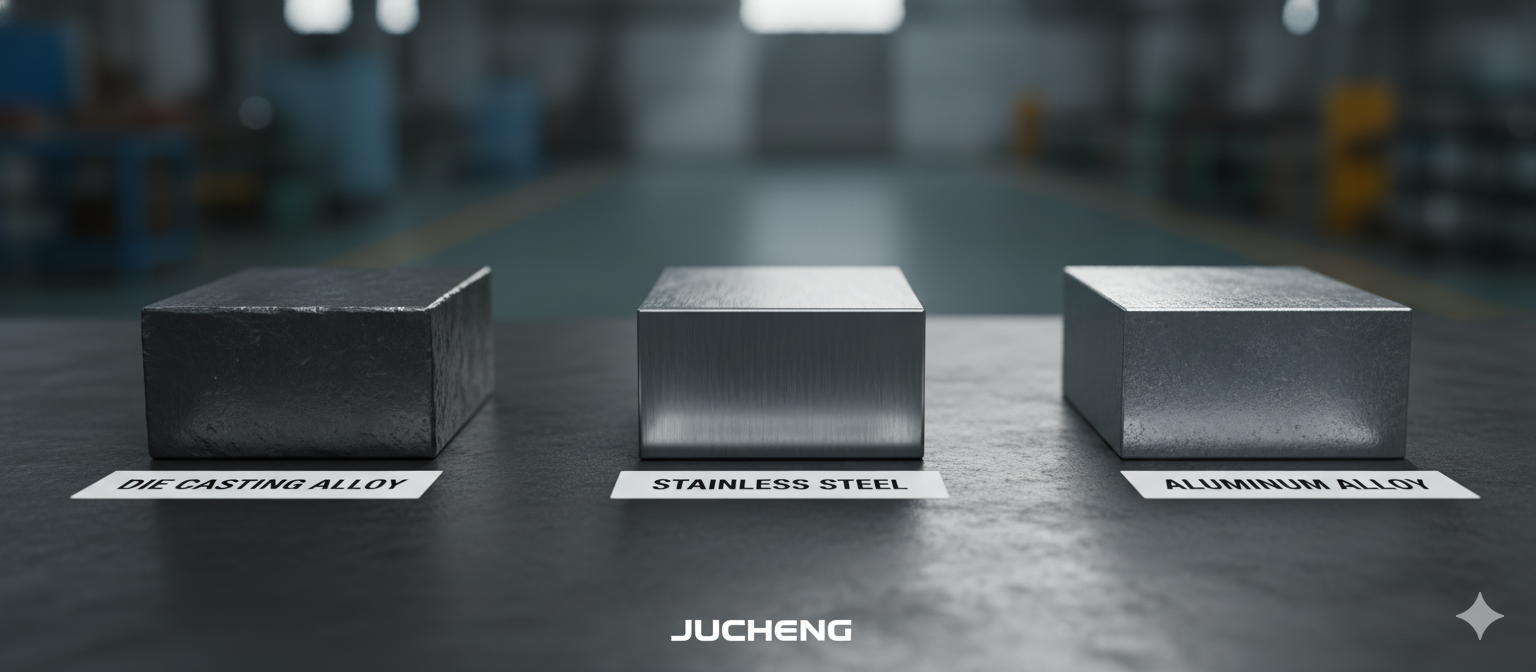
Material selection is crucial, as the performance requirements for Die Casting alloys differ significantly from those used in Sheet Metal:
Die Casting Alloys: Typically Aluminum and Zinc alloys (Cold Chamber, Hot Chamber, Vacuum-Assisted), chosen for their low melting point, excellent flowability, and high density after casting.
Sheet Metal Materials: Focuses on formability and corrosion resistance, including Stainless Steel, Aluminum alloy, Mild Steel, and Cooper, tailored for bending and stamping processes.
Structural Function: Where Die Casting Meets Sheet Metal

The most advanced metal products utilize both technologies to optimize both cost and performance:
Component Roles: Sheet Metal is used for the outer enclosure (protection, aesthetics, mounting), while Die Casting parts are used for internal frames (heat sinking, structural rigidity, precise component mounting).
Joining Methods: The parts are often joined using a combination of Assembly Services, including precision Welding (for permanent joints) or stamping and fasteners (for removable access panels).
Precision and Tolerance Control in Metal Engineering

Achieving precise tolerance in metal assembly requires strict control over both the casting and forming processes:
Die Casting Precision: Requires high-precision Rapid Tooling (Die Casting Dies) to ensure the casting mold itself is accurate, leading to predictable, consistent part dimensions.
Sheet Metal Accuracy: Bending Service relies on advanced machinery and programming to achieve the correct bend radius and angle, preventing cumulative error in large enclosures.
Integrated Finishing for Protection and Aesthetics
Both Die Casting and Sheet Metal parts require finishing to enhance durability, corrosion resistance, and aesthetics for final application:
Die Casting Finish: Often includes powder coating, painting, or electroplating to seal the porous surface and provide a final aesthetic finish.
Sheet Metal Finish: Utilizes Powder Coating, Anodizing (for aluminum), or Chemical Film Conversion Coating, with the choice depending on the required level of protection and aesthetic effect.
Successfully integrating Die Casting and Sheet Metal Fabrication requires a partner capable of managing the entire metal engineering process under one roof. Jucheng Precision Technology offers this unified approach, minimizing tolerance stacking and ensuring superior structural integrity for your most demanding metal applications.
Elevate your metal component quality. Contact us today to secure an integrated solution for your next high-performance metal project.

