


Integrating robust, reusable machine threads into thin-gauge panels without compromising flat panel flatness is a major engineering milestone. Specifying professional sheet metal hardware insertion allows designers to place high-strength mounting points directly into thin sheet stock, bypassing the structural weakness of tapped threads. This cold-joining process represents a critical milestone in custom sheet metal fabrication, ensuring that your delicate printed circuit boards and internal sensors mount securely with zero risk of thread stripping.
Suffer from loose fasteners that spin or pull out of their holes during high-torque screw assembly on your production line? When mounting threads are tapped directly into sheets under 1.5mm, the material lacks the thickness to support enough thread engagements, leading to instant stripping. Moving to a dedicated hydraulic hardware-pressing setup completely eliminates these assembly failures, providing exceptionally high retention force.
Let's explore the physical mechanics of self-clinching fasteners, analyze why hole precision dictates hardware retention, and review the cost-quality trade-offs of installing hardware before versus after surface coating.
The Hardware Insertion Process

How does the mechanical insertion process permanently lock fasteners into sheet metal?
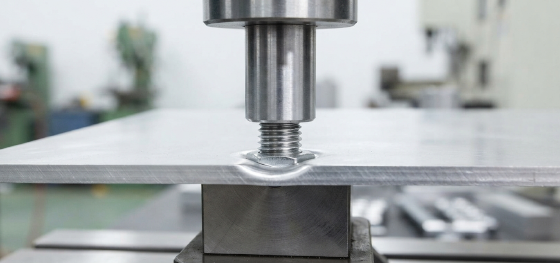
The process utilizes controlled hydraulic force to press a knurled self-clinching fastener into a pre-punched hole, forcing the soft parent metal to cold-flow into the undercut groove of the shank.
To establish high-strength threads on thin-gauge metals, understanding the cold-flow mechanism is essential. This mechanical process relies on placing specialized self-clinching fasteners (including standard PEM nuts, standoffs, and studs) into pre-drilled holes. As the hydraulic press descends, it drives the serrated clinching ring of the fastener into the sheet.
This concentrated force causes the surrounding metal to flow plastically into the undercut groove around the fastener shank, permanently locking it. The serrated clinching ring provides exceptional torque-out resistance, ensuring that the fastener will not spin or loosen during high-torque screw assembly, while the undercut groove provides high pull-out force protection.
Preparing the Holes: Punching vs. Laser Cutting

Why is the dimensional precision of mounting holes critical for successful hardware insertion?
Self-clinching hardware demands extremely tight hole diameter tolerances; oversized holes will drastically reduce hardware retention, while undersized holes cause severe panel buckling.
A common, costly design mistake is neglecting hole diameter tolerances during the cutting stage. Self-clinching hardware relies entirely on a tight metal fit to cold-flow. If the mounting hole is laser-cut even slightly oversized by 0.1mm, there will not be enough sheet metal to flow into the undercut groove, reducing the pull-out strength by up to fifty percent.
To ensure maximum consistency, utilizing CNC punching to pierce mounting holes is highly recommended. While laser cutting can introduce a slight edge taper on thick plates, mechanical punching shears out perfectly vertical, non-tapered holes with extremely tight tolerances (within +0.08/-0.00mm). This dimensional consistency is essential to guarantee a secure, permanent lock under high-volume production runs.
Inserting Hardware Before vs. After Surface Finishing
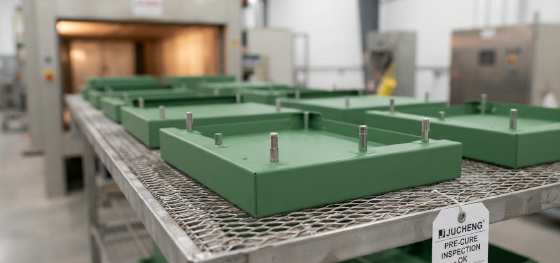
How does the timing of hardware installation affect the cost and quality of custom enclosures?
Installing before finishing ensures complete coating coverage but can clog threads, while installing after finishing protects threads but can crack surrounding coatings.
Managing the exact processing sequence is essential to optimizing your product durability. Installing PEM nuts and studs before electrostatic powder coating or chemical anodizing is highly popular. This pre-coat method ensures that the entire assembly, including the fastener joints, receives complete coating coverage, preventing rust. However, we must use silicone plugs to mask the internal threads to prevent paint clogging.
Conversely, installing hardware after finishing avoids thread masking and delivers clean threads. But pressing fasteners into a pre-painted sheet carries a high risk of cracking the surrounding hard coating. This micro-cracking exposes bare steel to moisture, initiating rust. We help you choose the optimal sequence based on your specific cosmetic and environmental requirements.
Automated Hardware Insertion at Jucheng Precision

How does Jucheng Precision deliver high-speed, tight-tolerance hardware installation?
We operate advanced pneumatic presses integrated with automated bowl-feeders, rapidly inserting hundreds of fasteners per hour with precise perpendicularity control.
Integrating this advanced sheet metal hardware insertion process into your turnkey fabrication flow is the single most effective way to eliminate logistical bottlenecks and double-handling shipping bills. Jucheng Precision houses these high-speed insertion presses inside our 8000-square-meter facility, ensuring that your parts are cut, folded, plated, and assembled under one roof with extreme quality control.
We calibrate our automated insertion systems with precise, material-specific tonnage tables to prevent sheet crushing. Our technical department provides a 24-hour free DFM analysis to check your CAD models, verifying edge distances and hole locations before production. Supported by our no MOQ policy and rapid delivery guarantee, we manage your project from initial flat pattern cutting to final, high-durability packaging and assembly throughout our precision sheet metal fabrication cycles.
FAQ: Critical Questions About Sheet Metal Hardware Insertion
Our engineering team has compiled professional solutions to the most common quality challenges faced during hardware pressing runs:
Does inserting self-clinching hardware deform the sheet metal?
No, provided you use precise hydraulic tonnage and maintain proper edge distances (minimum 2x the hole diameter) to prevent material buckling.How do you test the mechanical strength of inserted hardware?
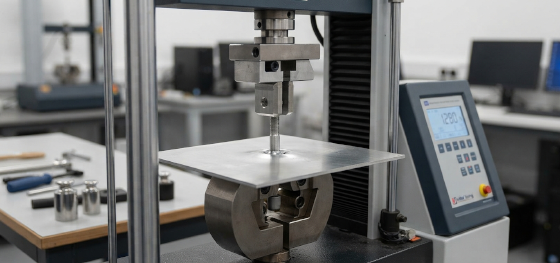
We conduct standardized torque-out and pull-out force tests to verify that the cold-flow locking rings have securely engaged with the metal.What is the standard tolerance required for the mounting hole?
Self-clinching fasteners demand a very tight hole diameter tolerance of +0.08/-0.00mm; oversized holes will drastically reduce retention strength.How does Jucheng Precision ensure that the sheet metal hardware insertion process remains highly consistent?
We utilize automated bowl-feeding pneumatic presses that dynamically calibrate pressure, ensuring perfect perpendicularity and depth control, backed by complete coordinate measuring machine (CMM) dimensional checks on every batch.

