


Designing structural metal enclosures requires more than just precise cutting and bending. The longevity, shielding performance, and mechanical integrity of your hardware depend entirely on how you execute sheet metal joining across different interfaces. Selecting the optimal method prevents unexpected field failures, particularly when assemblies must survive heavy vibration or extreme environmental exposure.
Procurement teams often struggle with high assembly costs and cosmetic damage on pre-finished panels. Using standard fasteners on thin plates can lead to stripped threads and buckling, while choosing the wrong thermal process can warp entire layouts. Moving away from arbitrary fastening and analyzing the specific shear loads of your joints is the best way to secure your product's physical reliability.
Balancing metallurgical welds against mechanical lock-systems dictates both your upfront setup expenses and ongoing unit costs. Let's dive into the physical trade-offs of metallurgical bonding, compare rivets and self-clinching inserts, and review the engineering rules to maintain absolute structural alignment.
content:
Choosing the Right Joining Technique for Your Product
Metallurgical Joining: Welding and Brazing
Mechanical Fastening: Rivets and PEM Hardware
Ensuring Structural Integrity in Sheet Metal Enclosures
FAQ: Critical Questions About Sheet Metal Joining
Choosing the Right Joining Technique for Your Product
How do you evaluate which joining process is best for your metal assembly?
We choose the optimal technique based on the raw material ductility, cosmetic demands of the exterior surface, electrical grounding requirements, and the expected mechanical loads of the application.
Engineers must analyze the raw physical trade-offs of different sheet metal joining pathways before committing to final CAD profiles. If your assembly requires watertight sealing, thermal joining is typically necessary. However, if you are joining dissimilar metals like aluminum to copper, direct thermal welding is impossible due to incompatible melting points, making mechanical fasteners the only viable solution.
Similarly, pre-painted or plated parts cannot survive intense heat without destroying their protective coatings. In these scenarios, utilizing cold lock-systems preserves cosmetic finishes and eliminates the need for expensive post-assembly repainting, dramatically optimizing your manufacturing cost.
Metallurgical Joining: Welding and Brazing
When should you choose metallurgical joints over mechanical fasteners?
Choose metallurgical welds when your product requires permanent, seamless bonds, watertight or gastight seals, and maximum structural strength under extreme continuous stress.
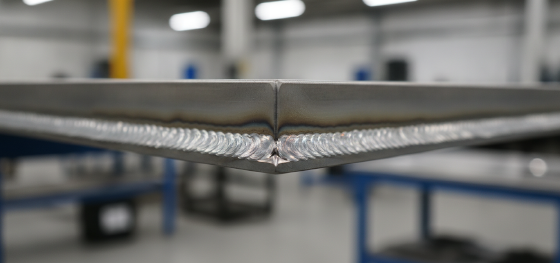
Thermal bonding relies on melting the parent metals to fuse them at the molecular level, creating an exceptionally strong, continuous joint. For heavy-duty brackets and high-strength industrial frames, running clean TIG or MIG welds delivers superior mechanical load distribution.
However, welding thin plates carries a high risk of heat distortion. To prevent thin sheets from buckling under the arc, we utilize high-precision spot welding or localized laser welding, which concentrates energy to minimize the heat-affected zone. For cosmetic joints, secondary grinding is required to polish the weld seams flat, delivering smooth outer surfaces.
Mechanical Fastening: Rivets and PEM Hardware
What are the primary benefits of mechanical fastening over welding?
Mechanical fastening operates entirely at room temperature, completely preventing heat warping and allowing for secure joints between dissimilar metals without thermal damage.
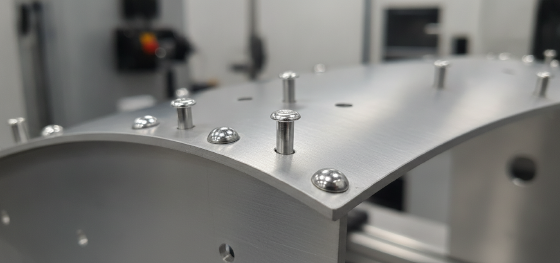
When thermal welding is impractical, mechanical fastening provides an incredibly reliable, modular alternative. Modern shops utilize a variety of specialized hardware to secure thin panels. For permanent joints on lightweight frameworks, installing aluminum or steel pop rivets delivers a solid, rattle-free assembly that resists shear force.
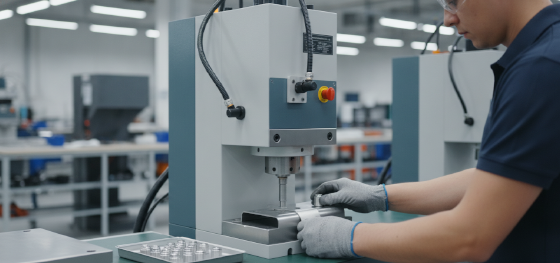
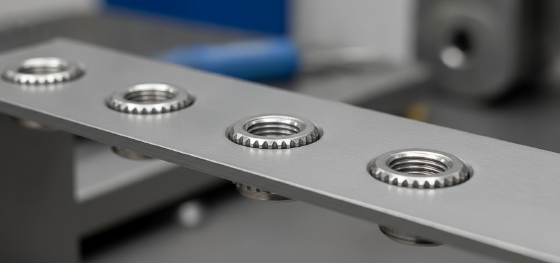
For electronic housings that require secure mounting threads, we utilize self-clinching PEM fasteners, including nuts, standoffs, and studs. Using pneumatic press machines, these hardened steel inserts are forced into laser-cut holes. The metal around the hole cold-flows into the insert's groove, locking it permanently in place to prevent torque-out during assembly. Here is a direct overview of mechanical versus metallurgical variables:
| Joint Variable | Mechanical Fasteners | Metallurgical Welding |
|---|---|---|
| Material Compatibility | Excellent (Dissimilar metals allowed) | Restricted (Compatible alloys only) |
| Heat Distortion Risk | Zero (Cold processing) | High (Requires distortion control) |
| Sealing Capabilities | Poor (Requires seals or gaskets) | Excellent (Hermetic sealing) |
| Surface Aesthetics | Protruding hardware (Unless flush mounted) | Smooth (After secondary grinding) |
Ensuring Structural Integrity in Sheet Metal Enclosures
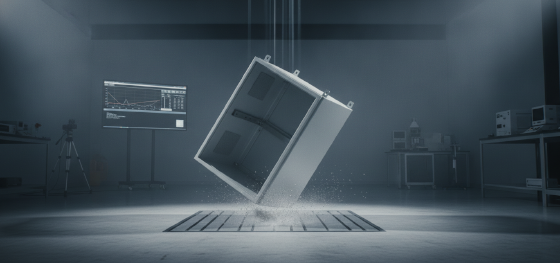
How do designers ensure strong, rigid joints in custom electronic chassis?
We optimize joint strength by placing fasteners away from bend lines, utilizing tabs and slots for structural alignment, and specifying compatible hardware alloys.
As the final assembly phase of the comprehensive sheet metal fabrication process, joint execution dictates the structural rigidity of your finished product. JUCHENG integrates these advanced lock-systems into our production lines, ensuring that your parts align perfectly with the overall enclosure geometry.
We process a wide selection of materials to meet your hardware needs, including lightweight aluminum, high-yield stainless steel, and easily formable carbon steel. Our technical queue provides a 24-hour free DFM analysis to evaluate your CAD models, checking fastener clearances and flange limits before production. Supported by our no MOQ policy and rapid delivery guarantee, we provide agile support for your prototyping runs and volume production demands.
FAQ: Critical Questions About Sheet Metal Joining
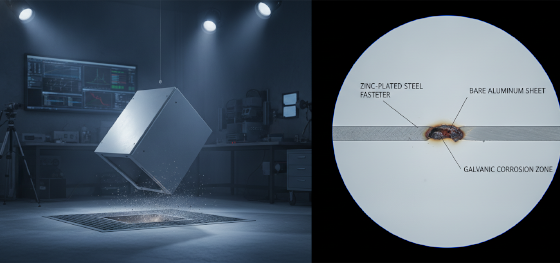
How do you prevent galvanic corrosion when joining dissimilar metals?
Galvanic corrosion occurs when two electrochemically different metals contact each other in the presence of moisture. To prevent this, we utilize zinc-plated or nickel-plated fasteners, apply specialized non-conductive washers, or utilize protective powder coatings to physically isolate the different metals.
Can self-clinching PEM fasteners be installed after powder coating?
We strongly recommend installing PEM fasteners before applying powder coatings. Pressing hardware into a pre-painted sheet can crack the surrounding coating, exposing the bare metal to moisture and initiating localized corrosion around the insert flange.
Why do rivets sometimes loosen over time under heavy vibration?
Rivets can loosen if the raw hole diameter was cut too large, preventing the rivet body from expanding fully to fill the cavity. Precision laser cutting or punching of mounting holes ensures tight clearances, keeping the mechanical joint secure even under severe continuous vibration.
Is a welded joint always stronger than a mechanically fastened sheet metal joining interface?
Not necessarily. While a continuous weld provides high uniform strength, thin-plate welds can easily fail due to heat-induced micro-cracks. A properly engineered mechanical sheet metal joining setup using multiple high-shear PEM studs or rivets can often absorb high dynamic loads more effectively than a brittle weld.

