


Establishing a highly conductive, corrosion-resistant metallurgical barrier over formed carbon steel or copper panels is a critical milestone in custom sheet metal fabrication. Specifying professional sheet metal plating provides your custom brackets, electrical busbars, and electronic enclosures with an ultra-thin, highly uniform layer of electro-deposited metal that far outperforms standard organic paints. This advanced electrochemical finishing process utilizes electrical currents to reduce dissolved metal cations, creating a molecularly bonded skin that prevents rust, enhances solderability, and provides outstanding electrical grounding.

Wasting capital on raw steel components that rust under standard warehouse conditions, or copper parts that tarnish and lose electrical conductivity, is a major setback for industrial hardware rollouts. If your fabrication partner fails to monitor acid bath concentrations or neglects post-plating stress baking, the final parts will suffer from immediate peeling, hydrogen embrittlement, or poor solderability. Transitioning to a high-precision electro-deposition process completely eliminates these joint failures.
Let's explore how the electroplating bath chemically deposits protective metals, analyze the corrosion resistance of zinc galvanization, compare decorative nickel and chrome finishes, and review how conductive plating provides outstanding shielding for high-frequency electronics.
How Electroplating Protects and Enhances Sheet Metal
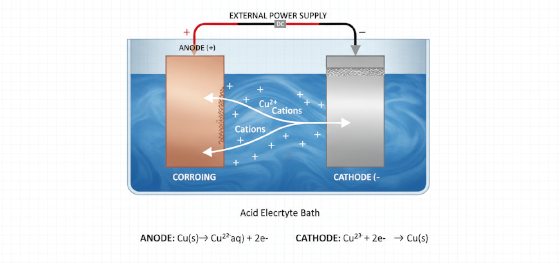
How does the electrochemical plating process molecularly bond metal layers?
The process submerges grounded parts into an aqueous metal salt bath, passing an electric current to reduce metal cations that bond permanently to the raw plate.
Unlike powder coating, which relies on physical melting, electro-deposition grows a new metallic outer skin. To achieve consistent performance, our finishing department executes sheet metal plating using advanced automated control systems. When the current passes through the electrolyte, metal ions (such as zinc, nickel, or copper) migrate to the negatively charged cathode. These ions receive electrons and deposit as a solid, ultra-thin, and highly uniform metal layer across all complex flanges and interior mounting threads.
This ultra-thin thickness control is essential for high-precision components, allowing us to maintain tight thread clearances while providing outstanding environmental protection. Measuring this layer according to ASTM B568 standards using non-destructive X-ray fluorescence (XRF) ensures that the protective deposit meets your exact design tolerances without altering part geometry.
Zinc Plating (Galvanization) for Corrosion Resistance
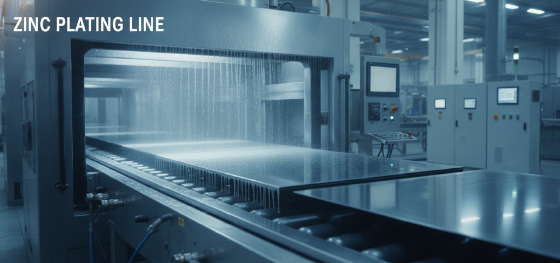
Why is zinc plating considered the most cost-effective anti-rust barrier for carbon steel?
Zinc acts as a sacrificial anode, oxidizing first to protect the underlying steel from atmospheric moisture and environmental rust.
When evaluating raw carbon steel parts, deploying electro-deposited zinc plating is the industry-standard choice for low-cost, high-durability protection. Zinc possesses a higher galvanic potential than iron, meaning it actively sacrifices itself to block oxygen from oxidizing the bare steel. Even if the plated layer is scratched or gouged in the field, the surrounding zinc continues to provide cathodic protection.
To prevent white rust on the zinc layer, the plated parts undergo subsequent chemical chromate conversion washes. This process applies a micro-thin conversion film (trivalent chromium passivation) that seals the zinc, dramatically increasing salt-spray resistance. We offer both clear trivalent zinc (blue-bright) and yellow zinc finishes based on your specific cosmetic and corrosion requirements.
Nickel and Chrome Plating for Wear Resistance and Aesthetics
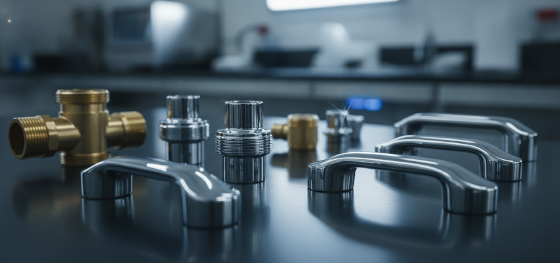
When should a product designer specify nickel or chrome plating over standard zinc coatings?
Specify nickel for high solderability and wear-resistant gear lines; select chrome for high-hardness, low-friction wear limits and brilliant, decorative mirror reflections.
To achieve a premium, highly reflective cosmetic finish, our finishing department executes advanced electro-deposition. Nickel plating provides excellent corrosion resistance and an exceptionally smooth, warm-golden metallic luster. Because nickel is highly solderable, it is heavily specified for electrical contacts, connector shells, and terminal brackets where wires must be soldered directly to the metal.
Conversely, chrome plating (specifically decorative chrome) applies an ultra-thin layer of chromium over a base nickel layer. This delivers a brilliant, cool-silver mirror finish with an exceptionally high surface hardness and low friction coefficient. It provides outstanding resistance to abrasive wear, making it ideal for high-traffic handles, medical rails, and sliding drawer mechanisms.
EMI Shielding Plating for Electronic Enclosures
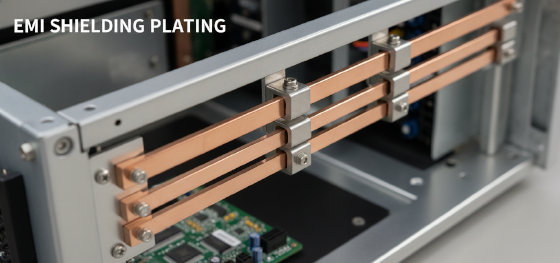
Why is conductive electroplating mandatory for high-frequency shielding cabinets?
Conductive platings like nickel or tin over copper provide high surface conductivity to establish a continuous, low-resistance Faraday cage that blocks electromagnetic signals.
In modern electronics packaging, managing electromagnetic interference is a critical design challenge. While standard plastics require expensive conductive paints, electroplating raw steel or aluminum panels with highly conductive metals builds a robust shield. For high-frequency server enclosures, applying a standard nickel-over-copper plate provides excellent EMI shielding performance.
This conductive barrier reflects and absorbs stray electromagnetic signals, protecting internal circuits from external noise. Additionally, we offer electro-deposited tin plating for electrical busbars. Tin provides outstanding surface conductivity and prevents oxidation on copper plates, maintaining a low-resistance contact point that is essential for grounding high-voltage sub-assemblies inside custom chassis.
Reliable Sheet Metal Plating Solutions at Jucheng Precision
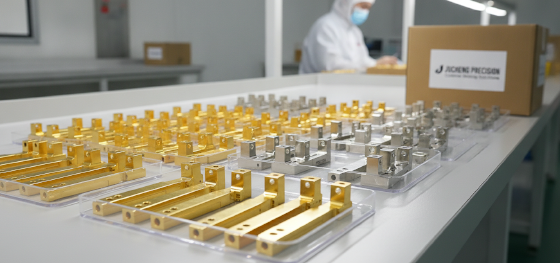
How does Jucheng Precision ensure consistent plating thickness and prevent hydrogen embrittlement?
We operate advanced electro-deposition lines integrated with post-plating baking ovens, checking all alignments before we apply the chemistry.
Integrating this advanced, multi-metal sheet metal surface treatment into your turnkey fabrication flow is the single most effective way to eliminate logistical bottlenecks and double-handling shipping bills. Jucheng Precision houses these advanced chemical lines inside our 8000-square-meter facility, ensuring that your parts are cut, folded, plated, and assembled under one roof with extreme quality control.
We process a wide range of materials, including lightweight aluminum, high-yield stainless steel, and easily formable carbon steel throughout our precision sheet metal fabrication cycles. Our technical department provides a 24-hour free DFM analysis to check your CAD models, checking tolerances and hinge clearances before production. Supported by our no MOQ policy and rapid delivery guarantee, we manage your project from initial flat pattern cutting to final, high-durability electroplating and assembly.
FAQ: Critical Questions About Sheet Metal Plating
Our engineering team has compiled professional solutions to the most common quality challenges faced during electroplating runs:
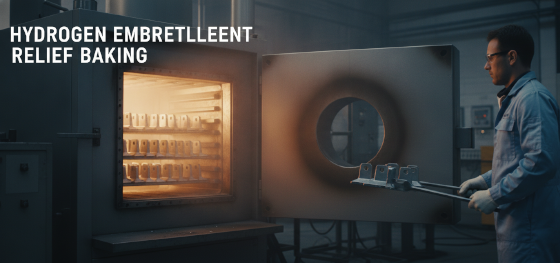
What is hydrogen embrittlement, and how does Jucheng Precision prevent it?
Hydrogen embrittlement refers to a phenomenon where high-strength steels absorb atomic hydrogen during acid pickling and electroplating, causing the metal to become extremely brittle and crack under stress. We eliminate this by executing strict post-plating baking cycles (according to ASTM B850 standards) within four hours of plating. This thermal baking forces the trapped hydrogen to outgas, restoring the material's raw mechanical ductility.Can aluminum sheets be electroplated directly with nickel?
No, aluminum instantly forms a tough oxide layer in air that prevents direct plating adhesion, causing the coating to peel. To plate aluminum successfully, we first apply a zincate chemical immersion layer. This zincate layer dissolves the aluminum oxide and deposits a micro-thin zinc film, which serves as a highly receptive foundation for the subsequent electro-deposited nickel.What causes plating peeling, and how do we prevent it?
Peeling is almost always caused by poor surface cleaning and residual oils on the raw plate. If grease, rust, or laser oxides are not completely removed before plating, the electro-deposited metal cannot bond to the substrate. We prevent peeling by running our parts through an automatic, multi-stage alkaline degreasing and acid pickling wash line, ensuring a clean metallurgical surface.How does Jucheng Precision guarantee consistent thickness in sheet metal plating orders?
We execute rigorous quality control gates across our finishing line, utilizing advanced non-destructive X-ray fluorescence (XRF) thickness testers to measure the deposited metal layers at multiple points. Our technicians monitor bath chemistry and current densities in real time, ensuring that every finished component meets your strict thickness and salt-spray resistance requirements.

