


Realizing that your new medical scanner enclosure or robot chassis is too big to fit inside a standard workshop machine is a frustrating moment for any hardware developer. In the world of high-end prototyping, the physical boundaries of the equipment often dictate your design choices more than the engineering requirements do. If you are choosing between RIM vs Vacuum Casting, the conversation usually starts with a ruler. While both processes use liquid resins, one is limited by the size of a metal box, and the other is limited only by the size of the factory floor. Understanding the Size and Complexity Limits: RIM vs Vacuum Casting is the first step toward building massive, functional machines that look and behave like finished retail products.
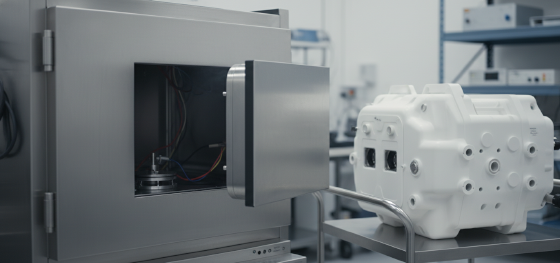
Manufacturing giant panels or Large scale plastic parts requires a shift in how you think about pressure and flow. Vacuum casting depends on a literal vacuum chamber to pull air out of the resin; if your part is 2 meters long, you would need a chamber the size of a small room, which is extremely rare and expensive. Jucheng Precision solves this scalability issue by using low-pressure injection equipment that doesn't need a sealed box. Jucheng Precision leverages a fleet of 150+ CNC machines to build the oversized aluminum tools that handle big hardware with ease. Whether you need a 1.5-meter console or a full-width bumper, Jucheng Precision provides a free DFM analysis in 24 hours to ensure your large CAD files are ready for the mold in our Shenzhen hub.
Operating under the quality standards of ISO 13485 and ISO 14001, Jucheng Precision serves as the structural advisor for global MedTech and robotics firms. Jucheng Precision transforms complex designs into stabilized hardware that maintains its shape and accuracy in the field. This guide looks at the essential chamber constraints, the freedom of variable wall thicknesses, and the gating strategies required for mastering Size and Complexity Limits: RIM vs Vacuum Casting to ensure your next fleet of autonomous machines doesn't have to be built in tiny, weak pieces.
content:
The Chamber Bottleneck: Why Vacuum Casting Hits a Size Wall?
Technical Data: Comparing Maximum Dimensions and Weight Capacity
Complexity Logic: Handling Thick-to-Thin Transitions in Design
Integrated Hardware: Encapsulating Large Frames and Sensors
JUCHENG Hub: Mastering 2.5-Meter Enclosures in Shenzhen
FAQ: Real Answers for Part Size, Shipping, and Tooling Costs
The Chamber Bottleneck: Why Vacuum Casting Hits a Size Wall?
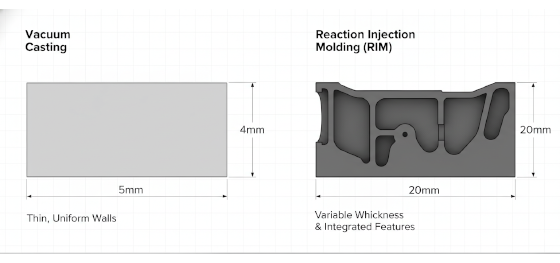
The biggest hurdle for large prototypes is the literal space inside the machine. In vacuum casting, the liquid resin must be degassed to remove every tiny air bubble. This happens inside a vacuum chamber. Most shops use chambers that top out at around 600mm to 800mm in length. If your part is a 1.5-meter hospital cart panel, it simply won't fit. This is the first and most obvious of the Size and Complexity Limits: RIM vs Vacuum Casting. Trying to glue multiple small cast parts together is a common mistake that leads to weak joints and ugly seams that hospital staff and investors will notice immediately. Jucheng Precision avoids this by using the RIM process, which doesn't require a vacuum chamber for the mold itself, allowing for monolithic parts that are strong from end to end.
What happens if a part is too big for the mold?
For parts over 2 meters, Jucheng Precision uses specialized multi-point injection heads that ensure the liquid resin reaches the far corners of the mold before it starts to harden.
Surface quality on large parts also suffers when you push the limits of manual pouring. In a large vacuum cast mold, the resin has a long way to travel by gravity alone. This slow movement can cause "Flow Lines" or areas where the resin starts to thicken before the mold is full, resulting in a weak spot. The RIM process solves this by using high-pressure pumps that fire the liquid into the mold in seconds. This speed ensures the material is chemically identical from one end of a 2-meter part to the other. Jucheng Precision’s Shenzhen facility is built for this high-velocity production, ensuring that your massive robotic fenders have the unyielding foundations needed for field testing.
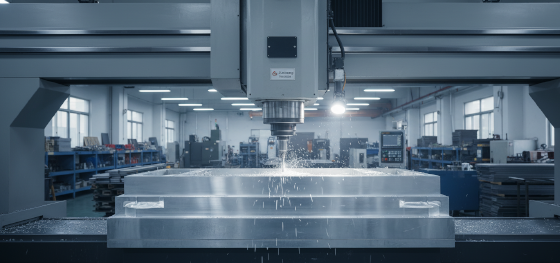
Tooling weight and handling for big parts are the final size factors. A silicone mold for a 1-meter part is heavy, jiggly, and difficult to keep aligned. It often requires a secondary wooden or plastic frame just to keep its shape. Aluminum RIM tools are rigid and boltable. Jucheng Precision uses oversized 5-axis Haas and Mazak machines to cut these molds with +/- 0.05mm accuracy across the entire span. This means that even at the maximum size, your parts will have the same crisp edges and flat surfaces as a small precision component, providing the high-end retail look that wins contracts.
Technical Data: Comparing Maximum Dimensions and Weight Capacity
Success in large-scale hardware depends on the numbers. If your design assumes the scale of RIM but you try to source it as a vacuum casting, your project will face sudden delays. Jucheng Precision provides clear capacity limits to help your engineering team plan their assembly strategy. The following table compares the typical physical boundaries of these two processes in our Shenzhen factory.
| Design Parameter | Vacuum Casting (Alpha) | RIM Molding (Beta) | Hardware Impact |
|---|---|---|---|
| Max Part Length | 600mm - 800mm | 2,500mm+ | Enables Full Body Shells |
| Max Shot Weight | 2kg - 5kg | 25kg+ | Supports Structural Frames |
| Tolerance Stability | Low (Silicone Flex) | High (Aluminum Rigid) | Zero-Gap Panel Fit |
| Wall Transition Ratio | 1.5 : 1 (Risk of Warp) | 5 : 1 (Stable) | Integrated Mounting Bosses |
This data highlights why RIM is the only choice for the "Big Stuff." For most industrial robot parts, the ability to mold a part that is twice as long and five times as heavy as a vacuum cast part is the difference between a functional machine and a desktop model. Jucheng Precision’s large-format RIM presses are optimized for these "Heavy Lifter" parts, giving you the unyielding foundation needed to house heavy motors and battery packs. By delivering hardware that handles real-world weight, Jucheng Precision ensures your autonomous innovation is ready for the field, not just the lab.
Complexity Logic: Handling Thick-to-Thin Transitions in Design

Designing complex internal features is where most prototyping processes fail. In a traditional vacuum cast mold, a part with very thick and very thin sections will almost always warp as it cools inside the insulating silicone. This is a major part of the complexity limits that engineers face. The RIM process is much more forgiving because it uses an expanding chemical reaction at low pressure. Jucheng Precision can produce a 1.5-meter panel with a 3mm aesthetic face and 15mm thick structural ribs on the back with zero surface dents. This ability to handle extreme wall transitions allows you to build "Bone and Skin" parts that are incredibly stiff but visually perfect.
Can I put small screw holes in a large RIM part?
Yes. Jucheng Precision uses CNC-machined mold inserts to place tiny, precise holes and threads directly into massive structural shells, ensuring every screw fits perfectly.
Undercuts and interlocking tabs add another layer of complexity. In a flexible silicone mold, you can often "Peel" an undercut out by hand, which is great for small, complex parts. But on a large scale, the silicone is too heavy to bend accurately. Aluminum RIM tools use mechanical slides and cam-actions to handle these features. Jucheng Precision’s 5-axis machines carve these moving components with sub-micron precision. This means you don't have to simplify your design for the sake of the mold; you can keep the complex locking features that make your robot easy to assemble and maintain in the field.
Internal stress relief is the final complexity win for RIM. High-pressure molding often results in "Frozen-In" stresses that cause parts to warp later. Because RIM resins cure in a relaxed state at low pressure, they are essentially stress-free. This ensures that the intricate fitment between your multi-part diagnostic console remains perfect, with no gaps or rattles. Jucheng Precision’s commitment to stress-free manufacturing provides the geometric stability required for high-accuracy sensor registration, ensuring your prototype robot remains a high-precision instrument throughout its entire service life.
Integrated Hardware: Encapsulating Large Frames and Sensors
Building "Smart" hardware requires more than just a hollow shell. For large-scale robotics, you often need to embed steel frames or electronic sensors directly into the plastic. This is where the low-pressure nature of RIM shines. In vacuum casting, the manual pour might not fully encapsulate a heavy metal frame, leading to internal air pockets. Jucheng Precision specializes in overmolding large aluminum and steel skeletons directly into the polyurethane. This creates a monolithic part with the strength of metal and the complex form of plastic, providing the ultimate armor for your autonomous fleet.
How do you stop moisture from leaking around metal bolts?
Jucheng Precision uses a chemical bonding agent and a "Mechanical Lock" design on all encapsulated inserts to ensure a watertight seal for outdoor use.
Vibration dampening is a secondary benefit of this encapsulation. High-resolution sensors like LiDAR are very sensitive to mechanical noise. By "cradling" these sensors in a custom-molded elastomeric RIM pocket, Jucheng Precision creates a shock-proof cocoon that protects the delicate AI nerves. This is far superior to simply bolting a sensor to a thin plastic wall. Our Shenzhen facility manages these multi-material integrations, ensuring that your prototype robot is both structural and sensory-enabled. By delivering hardware with integrated stability, Jucheng Precision allows your software team to focus on navigation rather than fighting mechanical jitter.
Precision registration of these inserts is handled by our CNC-machined tools. Jucheng Precision uses hardened steel pins within the aluminum mold to lock every sensor mount and bolt-hole in place with +/- 0.05mm accuracy. This ensures that your internal electronics will bolt on perfectly the first time, with no manual filing or shimming required. This "Ready-to-Assemble" quality is what makes Jucheng Precision a preferred partner for global aerospace and medical OEMs. We don't just give you a part; we give you a precise structural module that accelerates your path to commercial launch in the Shenzhen hub.
JUCHENG Hub: Mastering 2.5-Meter Enclosures in Shenzhen
Dominating the large-format hardware market requires a partner that doesn't just buy machines, but masters them. Jucheng Precision operates with a 24/7 manufacturing mindset in our Shenzhen precision manufacturing hub, delivering high-tolerance RIM components and structural industrial robot parts with industry-leading speed. Jucheng Precision provides the bridge to production that ensures your innovations move from concept to pilot run with 100% metallurgical and dimensional confidence. Jucheng Precision provides a free DFM analysis in 24 hours to ensure your design is optimized for the unyielding reality of the field, whether you are building an autonomous medical assistant or a heavy-duty industrial mobile base.
Integrating your structural design with Jucheng Precision’s expertise ensures that your tooling decision is based on performance data, not guesswork. Jucheng Precision offers comprehensive design reviews identifying potential gas-trap zones or thermal-expansion risks in your design before they become field failures. Whether you are building an autonomous vineyard scout or a multi-part MRI housing, Jucheng Precision provides the rigid, precise, and chemicals-optimized foundations that keep your innovation moving through the high-speed cycles and the years of hard labor.
Our facility is equipped with oversized hydraulic presses and dedicated quality labs, allowing Jucheng Precision to manage the entire hardware lifecycle in one location. Jucheng Precision manages the complexity of multi-material bonding and automotive-grade finishing so your engineering team can focus on the motion control and the AI. By combining Shenzhen's speed with industrial-grade material verification and global quality standards, Jucheng Precision remains the preferred partner for the world's most aggressive hardware challenges. Contact the Shenzhen hub today to start your project.
FAQ: Real Answers for Sizing, Shipping, and Tooling Costs
What is the maximum weight Jucheng can RIM mold?
We regularly produce monolithic structural panels and enclosures weighing up to 30kg with consistent wall thickness and zero voids.
Is it more expensive to ship large RIM parts from China?
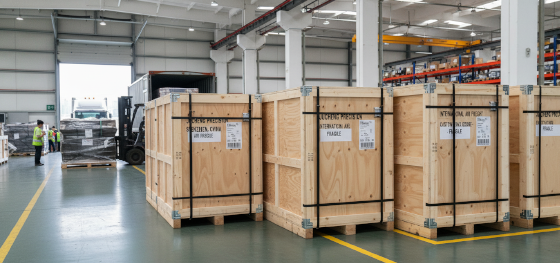
The piece price is so much lower that it usually offsets the air-freight cost. We provide custom-fitted wooden crates to ensure zero damage in transit.
Can I combine 3D printing and RIM for one assembly?
Yes. We often use 3D printing for small internal ducts and RIM for the large external skin to save weight and cost.
How do you handle tolerances on a 2-meter part?
We use high-precision 5-axis CNC secondary machining on molded blanks to finish sensor seats to within +/- 0.05mm.
What is the typical lead time for an oversized RIM tool?
Custom aluminum RIM molds for parts over 1 meter are typically delivered in 20 to 25 business days in our Shenzhen facility.
Tooling debt and oversized part warpage are absolute innovation killers for high-end robotic systems. Partnering with Jucheng Precision ensures that your functional iterations are built with the cost-effective polyurethane reaction injection molding and specialized knowledge the industry demands. Reach out to our Shenzhen manufacturing hub today for a complete DFM review and build the unyielding foundation your autonomous fleet requires.

