


Scaling a hardware prototype into mass commercial production exposes severe manufacturing flaws that look fine on paper. Engineering teams often rely on cheap dirt molds to build their initial beta units, desperately trying to save money on expensive steel tooling during the early testing phases. Moving into high-volume manufacturing with those same crude methods will instantly destroy your profit margins. Comparing the sand casting vs die casting process reveals a brutal financial reality regarding secondary machining labor. Upgrading your supply chain requires understanding exactly when to abandon primitive foundry techniques.
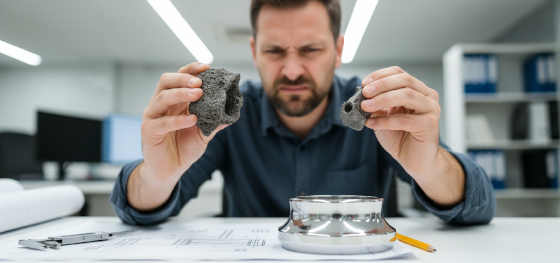
Procurement managers quickly discover that cheap tooling results in incredibly expensive piece prices. Pouring metal into compacted dirt leaves the final product with a terrible, sandpaper-like finish that cannot be painted or sealed properly. Fixing this requires sending thousands of rough parts to a CNC machine shop to have the outside layers literally shaved off, doubling your manufacturing timeline.
Operating directly from our Shenzhen precision manufacturing hub, Jucheng Precision transitions startups away from these outdated methods. By absorbing the upfront tooling investment, we lock in automated repeatability that scales limitlessly. Let's break down the technical limits of dirt molds, explain why steel tooling ultimately saves you money, and define the exact crossover point where you must upgrade your factory strategy.
content:
The Sand Trap: Why Dirt Molds Kill Mass Production?
The Steel Solution: Delivering Near-Net Shape Hardware
Technical Data: Calculating the ROI Crossover Point
Surface Roughness: The Hidden Cost of Secondary CNC
JUCHENG Hub: Shenzhen's Bridge to Volume Manufacturing
FAQ: Honest Answers About Tooling Costs and Tolerances
The Sand Trap: Why Dirt Molds Kill Mass Production?
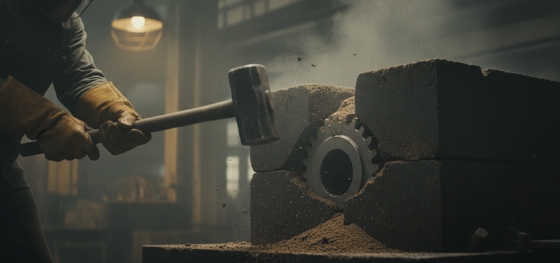
Why is it impossible to automate a traditional foundry effectively?
Because every single metal part requires workers to manually pack a brand new mixture of sand around a wooden pattern, only to physically smash and destroy that mold to extract the frozen metal inside.
Relying on human hands to pack dirt means absolute dimensional chaos. If the worker packs the mixture slightly looser on Tuesday than they did on Monday, your parts will literally change size overnight. This human variable makes achieving strict ISO tolerances mathematically impossible over a long production run.
Heavy industries still use this technique to cast massive, three-ton ship propellers or giant iron engine blocks where surface beauty does not matter. However, if you are trying to build complex aluminum heatsinks or tightly fitted medical device enclosures, this primitive technique will ruin your assembly line.
The Steel Solution: Delivering Near-Net Shape Hardware
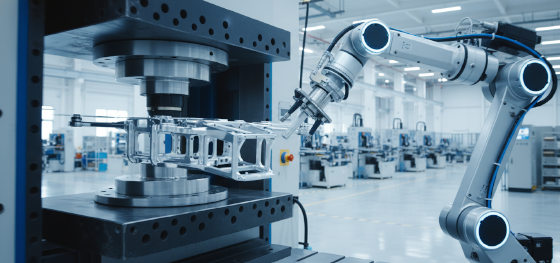
How do modern factories eliminate dimensional variations across thousands of parts?
By utilizing the automated die casting process, which injects molten alloy into an unyielding, CNC-machined hardened steel cavity that never changes shape or degrades during the production cycle.
Investing in heavy steel tooling is the ultimate hack for driving down your per-unit pricing. Once the massive hydraulic press is dialed in, it operates like a massive printing press for metal. You can comfortably walk away from the machine and know that unit number five thousand will be a microscopic digital twin of unit number one.
Pushing aggressive liquid metal into these precise cavities allows engineers to design walls as thin as 1.5 millimeters. You get incredibly complex cooling fins and internal mounting bosses molded directly into the part, eliminating the need for expensive secondary welding or manual assembly.
Technical Data: Calculating the ROI Crossover Point
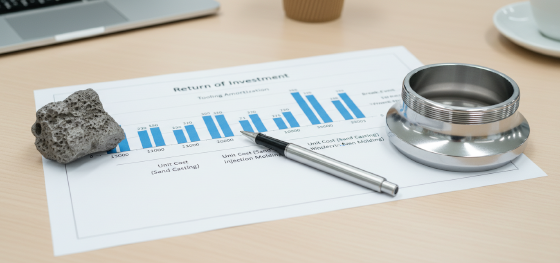
Deciding when to abandon cheap dirt molds requires looking closely at your total required volume. The financial matrix below highlights exactly when the heavy upfront tooling investment actually starts putting money back into your pocket.
| Production Metric | JUCHENG Automated Metal Injection | Traditional Green Sand Foundry |
|---|---|---|
| Upfront Tooling Cost (NRE) | High (Machining hardened steel) | Very Low (Carving wood or foam) |
| Unit Price at Volume | Extremely Low (Pennies per cycle) | Extremely High (Intensive manual labor) |
| Financial Crossover Point | Cost-effective at 500 - 1,000+ Units | Only viable for 1 - 50 Units |
| Production Speed | 1 to 2 parts per minute | Several hours to prepare one mold |
Analyzing the sand casting vs die casting process from a strictly financial perspective makes the decision obvious. Sticking with primitive methods for a batch of 2,000 pieces will financially cripple your supply chain due to the overwhelming labor costs required just to clean up the terrible surface finish.
Surface Roughness: The Hidden Cost of Secondary CNC
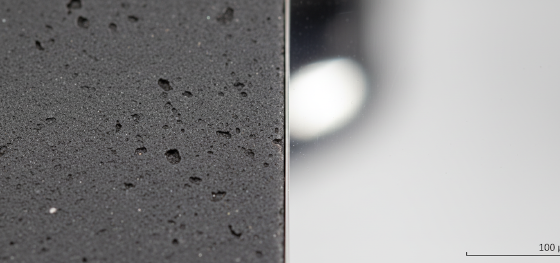
Why does surface roughness drastically increase your manufacturing bill?
Because sealing an O-ring or mounting a delicate PCB requires a perfectly flat surface; rough castings must be bolted into expensive 5-axis CNC machines to mill away the bumps, doubling your processing time.
Pouring metal into packed dirt creates parts that look exactly like packed dirt. You cannot apply high-end automotive paint or smooth powder coats to these surfaces without them looking horribly textured. Your team will waste hundreds of hours manually sanding and grinding the raw metal just to make it presentable.
Evaluating the sand casting vs die casting process usually ends right here. High-pressure injection captures the mirror-like smoothness of the polished steel tool. The parts drop out of the machine looking incredibly premium and ready for immediate aesthetic finishing, entirely bypassing the CNC bottleneck.
JUCHENG Hub: Shenzhen's Bridge to Volume Manufacturing
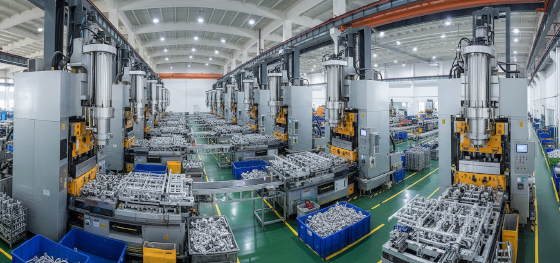
Why partner with Jucheng Precision to upgrade your hardware production?
Because we completely eliminate the risk of transitioning from crude prototypes to massive global rollout, utilizing in-house tooling engineers to build automated steel molds that scale flawlessly.
Managing the leap from fifty test units to fifty thousand commercial units terrifies most hardware founders. If you trust the wrong supplier to cut your steel mold, you will be stuck with a defective tool that leaks and warps. Operating right out of the Shenzhen precision manufacturing hub, we assume complete control over this critical transition.
Stop wasting your budget on manual labor and excessive CNC machining to fix ugly parts. Send your raw 3D CAD files to our engineering team today. We will run a complete DFM analysis and show you exactly how fast you can amortize the cost of a proper steel tool.
FAQ: Honest Answers About Tooling Costs and Tolerances
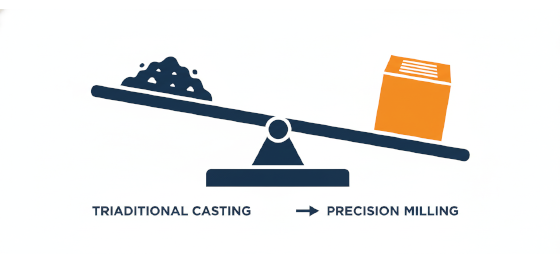
Can I use a traditional dirt mold to make complex, paper-thin heatsink fins?
Absolutely not. The molten metal flows far too slowly through the dirt without hydraulic pressure; it will freeze and block the channels long before it ever fills the delicate cooling fins.
What is the typical lead time for cutting a high-pressure steel mold?
Depending on the geometric complexity of the chassis, engineering, CNC machining, and heat-treating a heavy H13 tool steel mold usually takes between 3 to 6 weeks.
Do I have to pay for the steel mold again if it wears out?
It depends on the metal. Zinc molds last for over a million shots, requiring zero replacement. Aluminum molds wear out faster, but at Jucheng Precision, we handle routine maintenance to extend tool life massively.
Why do some extremely massive engine blocks still use primitive foundry techniques?
Because the physical footprint is simply too massive to fit inside a hydraulic press. For parts weighing several tons, destroying a massive dirt mold remains the only physically viable option.

