


Corrosion is a slow, patient predator that feeds on industrial stagnation. In the high-demand sectors of chemical processing and maritime engineering, standard components often fail because their internal surfaces were never intended to face aggressive reagents. Traditional subtractive methods reach a dead-end when a part requires internal complexity combined with high-purity material integrity. This is where stainless steel 3d printing shatters the limitations of the block. By utilizing high-power lasers to melt micron-sized particles of alloyed steel, we are no longer just making parts; we are engineering biological and industrial survivors. This technology represents the most versatile frontier of metal 3d printing, offering the ability to build components that are as chemically inert as they are geometrically impossible.
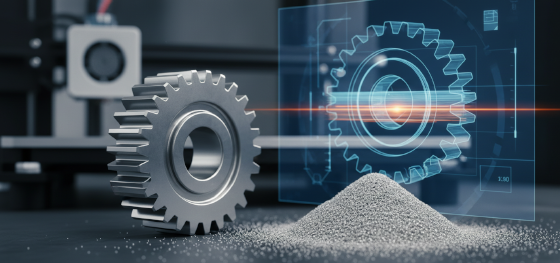
At JUCHENG, we don't just "melt dust"—we manage a high-speed metallurgical event that occurs in a fraction of a second. We understand that a stainless steel component is only as good as its density and its surface integrity. If the build parameters are miscalibrated, the resulting part will suffer from microscopic porosity that acts as an invitation for rust and fatigue. We have centered our DMLS facility around the technical demands of the medical and aerospace industries, delivering 316L and 17-4 PH parts that possess 99.9% theoretical density. This guide moves beyond the corporate gloss to explore the atomic logic of stainless alloys, the engineering miracle of conformal cooling, and why JUCHENG’s integrated approach to CNC post-processing is the mandatory final step in ensuring your steel designs survive the most brutal environments on earth.
Precision in the world of iron and chromium is a struggle against thermal stress. You aren't just building a part layer by layer; you are orchestrating a cooling rate that defines the material’s grain structure and corrosion resistance. Whether you are building a complex fluid manifold for a laboratory or a high-strength bracket for a satellite, the logic of the fusion is your greatest asset. Let us examine the technical pillars of stainless steel additive manufacturing and see how JUCHENG locks the integrity of your next-generation designs into physical reality.
Atomic Armor: Why 316L and 17-4 PH Rule the Bed
Conformal Cooling: Designing the Internal Veins of Industry
Thin-Wall Sovereignty: Pushing the Limits of Geometry
Surface Integrity: Mastering Ra Values for High Purity
Technical Standards: ISO 13485 and Food-Safe Compliance
JUCHENG’s Standard: The Post-Print Metamorphosis
Atomic Armor: Why 316L and 17-4 PH Rule the Bed
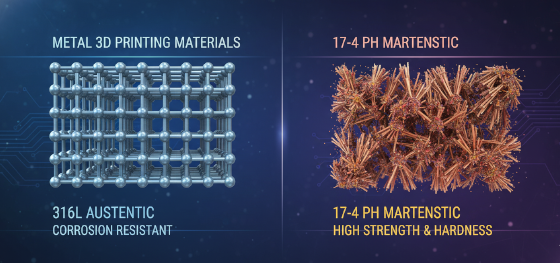
The decision to adopt stainless steel 3d printing often begins with a choice between two distinct metallurgical personalities. At Jucheng Precision, we categorize our steel additive projects based on whether the primary goal is environmental defense or raw mechanical power. Stainless Steel 316L is the undisputed champion of the chemical and medical sectors. Its "L" designation stands for Low Carbon, which minimizes the risk of carbide precipitation during the intense heat of the laser sintering cycle. Enriched with molybdenum, 316L provides an "Atomic Armor" against pitting and crevice corrosion, making it the only choice for components submerged in saline or exposed to harsh pharmaceuticals.
When your design requires the strength of an alloy steel but the protection of a stainless one, we pivot to 17-4 PH. This is a precipitation-hardening grade that achieves a unique synergy of high tensile strength and fracture toughness. Unlike 316L, which remains relatively soft, 17-4 PH can be heat-treated after the 3D build to reach hardness levels up to HRC 45. This makes it ideal for industrial impellers, high-pressure fasteners, and structural aerospace nodes. The rapid cooling rates of the DMLS process actually benefit 17-4 PH by producing a more uniform distribution of alloying elements than traditional casting. We treat these powders as engineered raw materials, ensuring that the specific grain structure formed in the melt pool matches the structural safety factors of your most demanding mechanical assemblies.
Conformal Cooling: Designing the Internal Veins of Industry
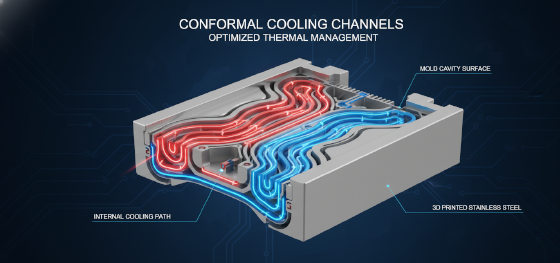
The real profit in stainless steel 3d printing is found in the hidden voids. Traditional toolmaking is handicapped by the straight-line logic of the drill bit; you can only cool a mold cavity as well as a straight hole allows. This results in "hot spots" that lead to part warping and long cycle times. JUCHENG utilizes the geometric freedom of metal additive to engineer "Conformal Cooling" channels. These are internal liquid-carrying veins that follow the exact, complex contours of a mold or a high-performance engine part.
By maintaining a constant distance between the cooling fluid and the surface, we can increase thermal efficiency by up to 40%. This is physically impossible to achieve through any subtractive method. We don't just print tubes; we design high-efficiency heat exchangers integrated directly into the structural frame of the component. This consolidation of thermal management and mechanical support is a cornerstone of JUCHENG’s service to the injection molding and aerospace industries. We help you move past the "drilling dilemma," providing internal labyrinths that ensure your high-heat components run cooler, faster, and longer than any traditional design could ever permit.
Thin-Wall Sovereignty: Pushing the Limits of Geometry
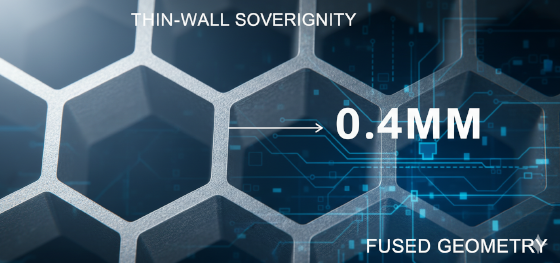
Subtractive manufacturing hates thin walls in stainless steel. The material is tough, gummy, and vibrates aggressively when the thickness drops below 1mm. This leads to poor surface finishes and dimensional warping. Stainless steel 3d printing reverses this struggle. In the powder bed, a wall thickness of 0.5mm is not a problem; it is a standard design feature. This "Thin-Wall Sovereignty" allows JUCHENG to produce lightweight, skeletal structures for satellites and medical devices that maintain the raw strength of steel without the traditional weight penalty.
The secret to achieving these delicate geometries lies in the management of the laser's "Heat-Affected Zone" (HAZ). If the energy is too concentrated, the thin wall will collapse or develop internal stress. We utilize specific scan strategies that alternate the laser's path to ensure the heat remains uniform. This technical discipline ensures that even the most intricate dot-matrix or honeycomb structures are born without internal voids. By eliminating the "cutting pressure" of the mill, we deliver stainless steel components that are lighter and more geometrically ambitious than what was previously considered possible, all while preserving the 100% monolithic density of the alloy.
Surface Integrity: Mastering Ra Values for High Purity
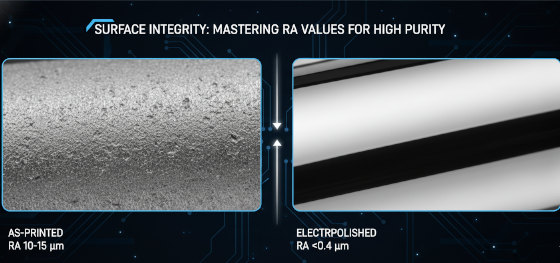
A raw 3D print is a technical preform, not a finished product. Straight off the build plate, stainless steel has a surface roughness similar to a fine-grit casting—typically Ra 5-10 µm. For high-purity fluid systems or surgical tools, this texture is a liability where bacteria or contaminants can hide. Mastering the surface integrity is where JUCHENG’s craftsmanship takes center stage. We don't just ship the output of the laser; we manage a comprehensive post-processing cycle designed to refine the "skin" of the part.
Our workflow includes automated bead blasting to homogenize the surface, followed by specialized chemical passivation to restore the chromium oxide shield. For our most demanding medical and semiconductor clients, we perform Electropolishing Stainless Steel. This electrochemical process removes a microscopic layer of metal, rounding off the peaks of the layer lines to achieve a mirror-like Ra 0.2 µm finish. This level of smoothness is not just for looks; it is a functional requirement for high-vacuum seals and "clean-in-place" food systems. By controlling the final surface energy of the part, we ensure your designs are as aesthetically professional as they are technically sound.
Technical Standards: ISO 13485 and Food-Safe Compliance
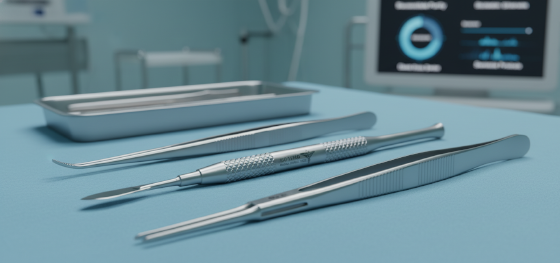
Choosing a partner for metal 3d printing is a move of regulatory trust. In the medical world, a part without a documented history is a dangerous object. Jucheng Precision is an ISO 13485:2016 certified facility, ensuring that every stainless steel print is backed by a risk-based manufacturing culture. We understand that for a surgical handle or a custom prosthetic, the "purity" of the powder and the stability of the build are safety-critical metrics.
We implement strict "Powder Segregation" to ensure that our medical-grade 316L never comes into contact with non-biocompatible alloys. We provide full material lot traceability and certificates of conformance that meet CE MDR and FDA requirements. Furthermore, our 17-4 PH parts are processed through validated vacuum heat-treatment cycles to ensure the final mechanical properties are exactly as specified. We don't just provide a component; we provide a validated engineering solution that has been audited for survival in the human body. This level of technical oversight is essential for the 3D printing materials landscape, where the safety of the user is the ultimate benchmark of quality.
JUCHENG’s Standard: The Post-Print Metamorphosis
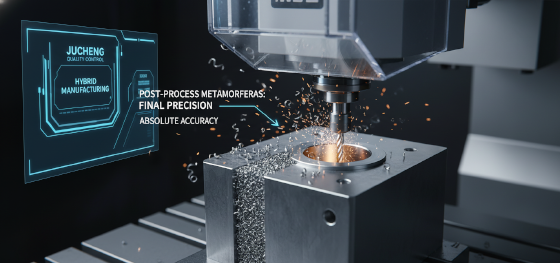
The final hallmark of a professional manufacturing partner is the ability to close the tolerance gap. Additive manufacturing provides the complexity, but CNC machining provides the certainty. Jucheng Precision utilizes a hybrid ecosystem where 3D printers and 5-axis mills work in perfect harmony. We use the laser to build the "Impossible" and the mill to finish the "Critical."
Every high-precision stainless steel part we produce undergoes a "Metamorphosis" after the build. We utilize specialized Wire EDM to cut the parts from the build plate with zero stress distortion. Critical bearing seats and threaded holes are then finished on our high-speed mills to +/- 0.01mm. This integrated approach ensures that when you receive a component from JUCHENG, it arrives verified and ready for assembly. Whether you are building an innovative heart-lung machine or a mission-critical satellite manifold, our expertise in stainless steel 3d printing ensures your vision is delivered with absolute integrity. Contact our engineering team today for a comprehensive technical DFM review and see how our metal additive protocols can clarify and armor your next industrial breakthrough.

