


Stainless steel can rust. For many engineers, this is a shocking and deeply frustrating fact. You choose this expensive, high-performance material specifically to avoid corrosion.
Then, a few weeks after manufacturing, you see it. A tiny, ugly spot of orange rust on your beautiful, brand-new part. How is this possible? Was the material bad?
The material is probably fine. The problem is invisible. It was created during the manufacturing process. And there is a specific chemical solution to fix it. This is the science of the passivation of stainless steel.
content:
The Shock: Rust on a Stainless Part
The Culprit: An Invisible Contaminant
The Solution: A Deep Chemical Cleaning
How Passivation Rebuilds the Armor
The Proof of a Professional Process
The Shock: Rust on a Stainless Part
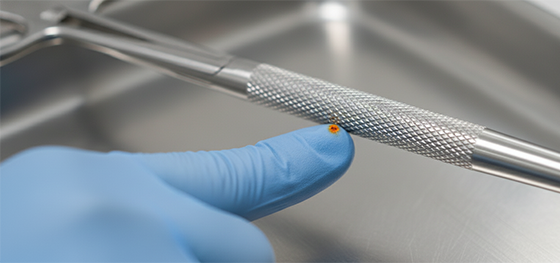
Imagine you are developing a new surgical tool. You choose 316L stainless steel for its excellent corrosion resistance. The first prototypes arrive from the machine shop. They look perfect.
But after being cleaned and sterilized, a small rust spot appears in a crevice. This is a catastrophic failure for a medical device. It is no longer sterile. It is unusable.
What went wrong? The stainless steel itself did not rust. Something on the surface of the stainless steel rusted.
The Culprit: An Invisible Contaminant
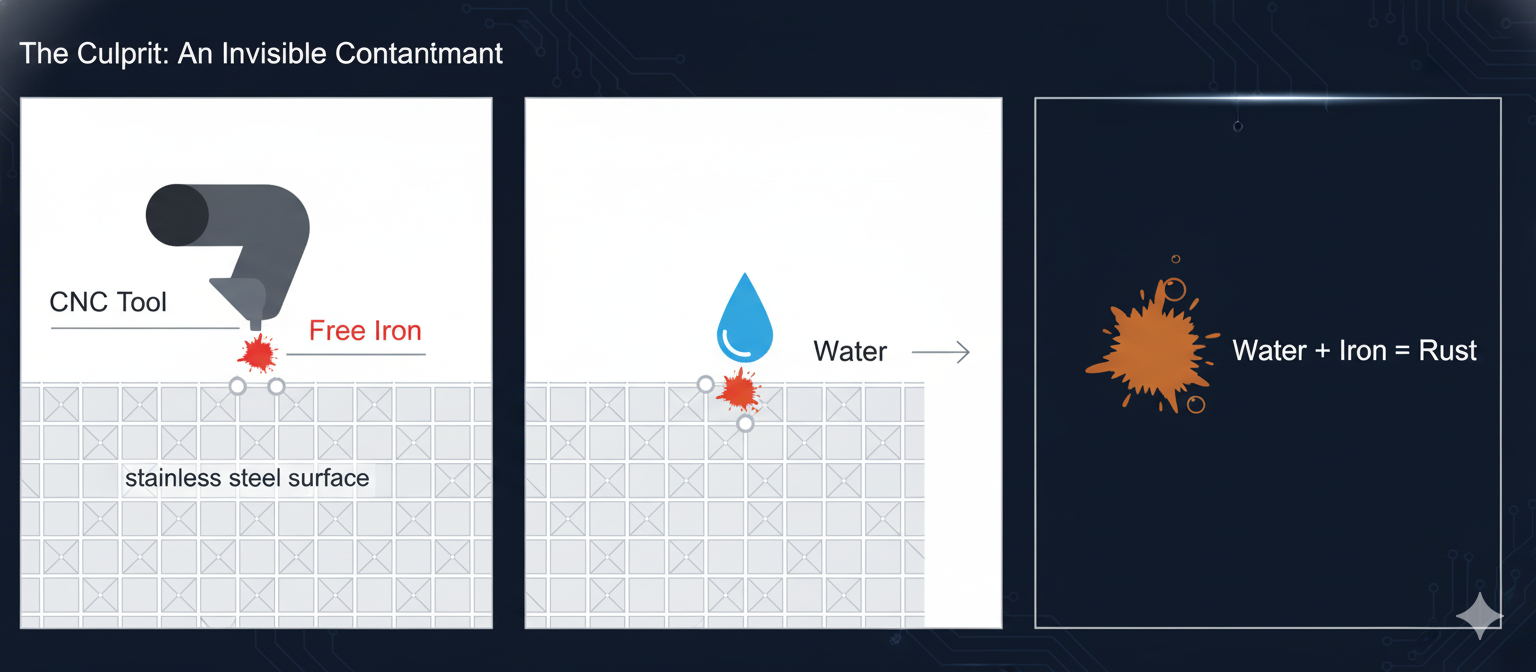
The enemy is called "free iron." It is the main culprit in almost all cases of stainless steel corrosion.
During the metal working process, like CNC machining, the stainless steel part is cut with a steel tool. During this violent process, microscopic particles of the steel cutting tool can break off. They become embedded in the surface of the stainless steel part.
You cannot see these particles. But they are there. They are tiny invaders of plain steel sitting on the surface of your non-staining alloy.
When this contaminated part is exposed to oxygen and moisture, the free iron particles do what iron does. They rust. This is the rust spot you see on your part. Even worse, this rust can break down the protective layer of the stainless steel around it, causing further corrosion.
The Solution: A Deep Chemical Cleaning
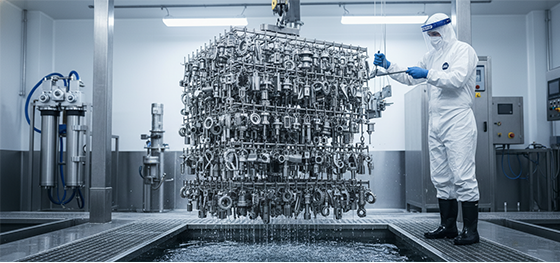
This is where passivation of stainless steel comes in. Passivation is not a coating. It is an advanced and highly controlled chemical cleaning process.
The entire stainless steel part is submerged in a bath of a specific acid solution. Usually nitric acid or citric acid.
This acid is specially chosen because it has a unique property. It aggressively attacks and dissolves the embedded free iron particles. But it only very mildly affects the stainless steel itself.
The part is left in the bath for a precise amount of time. The acid eats away all the contaminants. The part is then rinsed in pure, deionized water. The result is an ultra-clean, contaminant-free stainless steel surface.
How Passivation Rebuilds the Armor
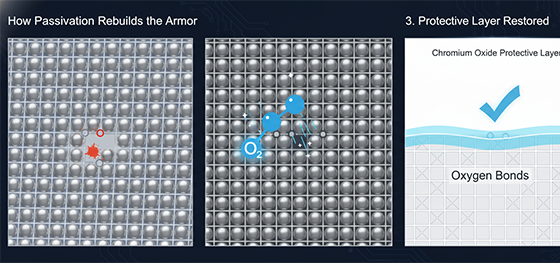
There is a second, magical part to this process.
Stainless steel is "stainless" because it contains chromium. When chromium is exposed to oxygen, it instantly forms a very thin, stable, and invisible layer of chromium oxide on the surface. This is called the "passive layer." It is the steel's armor.
The free iron contamination disrupts this armor. The passivation process, by removing the iron, creates a perfectly clean surface. This allows the chromium to react with the oxygen in the environment and rebuild a much thicker, more uniform, and more protective passive layer than what would form naturally.
So, passivation does two things. It removes the enemy. And it helps the steel build a stronger shield.
The Proof of a Professional Process
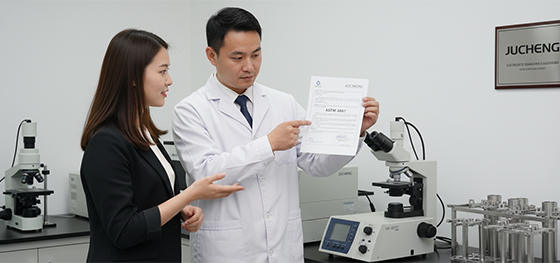
Passivation is a critical step for any high-performance stainless steel component. It is not an optional extra. It is a standard procedure for the aerospace, defense, and medical industries.
A professional manufacturing partner understands this. The process is not just about dipping a part in some acid. It is a tightly controlled process governed by industry standards, such as ASTM A967.
At JUCHENG, our passivation process is rigorously controlled and validated. We can provide full documentation and certification that your parts have been treated to the correct standard.
This is your guarantee. It is the proof that your stainless steel parts are not just clean. They are chemically pure. They are ready to perform in the most critical environments without fail.

