


Surgical latency and positioning drift are the silent saboteurs of modern clinical outcomes. In the hyper-agile landscape of 2026, the transition from manual laparoscopy to robotic-assisted surgery (RAS) requires a violent leap in mechanical stiffness. For hardware engineers, the primary adversary is not the AI vision logic—it is the physical "Backlash" inherent in poorly executed movement centers. If a robotic elbow joint flexes under load or a motor mount exhibits micron-level misalignment, the surgeon’s haptic feedback evaporates, and the patient’s safety is compromised. Navigating this requirement for extreme structural rigidity requires the strategic deployment of Surgical robot joint machining. Jucheng Precision operates as a high-fidelity manufacturing sanctuary in the Shenzhen precision manufacturing hub, providing the technical depth to deliver actuator housings, planetary gear sets, and linkages that possess the mechanical spine needed for sub-millimeter surgical accuracy. Within the broader framework of Medical Robotics, we bridge the gap between "digital intent" and "surgical sovereignty," ensuring your bionic arm maintains its industrial repeatability through millions of high-torque cycles.
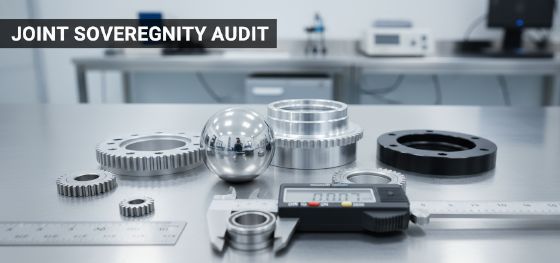
Establishing a resilient MedTech supply chain in 2026 demands the rejection of traditional "general purpose" machine shops. Amateurs often struggle with the "Tolerance Stack-up" of complex robotic assemblies, leading to joints that bind, overheat, or vibrate uncontrollably. Jucheng Precision eliminates these "Mechanical Nightmares" by enforcing a strict "Bore-and-Alignment" protocol. We utilize 5-axis CNC machining to ensure that bearing seats and actuator interfaces are perfectly concentric and orthogonal in a single setup. Whether you are developing a collaborative robot for a surgical suite or a rehabilitation exoskeleton, our integrated facility provides the manufacturing insurance needed to secure market entry. This guide deconstructs the necessity of zero-backlash precision, the physics of exotic alloy selection, and why JUCHENG’s metrological audit is the mandatory foundation for anyone developing high-stakes Surgical robot joint machining projects.
Mechanical Sovereignty: The Physics of Joint Rigidity
Actuator Integrity: Machining for Harmonic Drives
Material Standoff: Titanium vs. 7075 Aluminum
Metrological Sovereignty: Ensuring Zero-Drift Consistency
JUCHENG Protocol: ISO 13485 Certified Joint Machining
Frequently Asked Questions: Robotic Joints
Mechanical Sovereignty: The Physics of Joint Rigidity

Dimensional accuracy in Surgical robot joint machining is a battle won in the sub-micron range. When molten code commands a robotic wrist to perform a tremor-free incision, the hardware must possess absolute flexural stiffness. Any play in the mounting flange results in "Lost Motion," which destroys the precision of the software-driven path. Jucheng Precision eliminates this mechanical slack by utilizing specialized 5-axis CNC machining strategies. By machining the joint housing from a single solid billet of aerospace-grade metal, we ensure the internal bearing seats maintain perfect parallelism. Unlike multi-setup 3-axis processes that introduce "Fixture Drift," our 5-axis workflow finishes all critical bores in a single revolution. This surgical control ensures that your actuators operate in a state of "Pre-aligned Perfection," delivering the high-torque reliability required for 24/7 clinical operation.
Actuator Integrity: Machining for Harmonic Drives
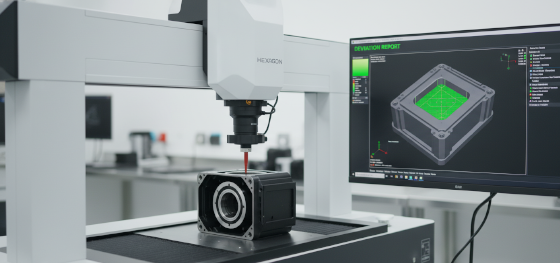
Precision gears demand an uncompromising enclosure. In the world of Medical Robotics, the integration of harmonic drives requires tolerances that are often at the physical limits of CNC technology. Surgical robot joint machining focuses heavily on the "Ovality" and "Concentricity" of the flexspline interface. If the housing is even 0.005mm out of round, the gear teeth will wear unevenly, leading to premature noise and joint failure. Jucheng Precision technicians utilize diamond-tipped cutters and temperature-controlled spindles to manage the thermal expansion of the tool during the final finishing pass. We treat the actuator housing as a precision optical seat, ensuring that every planetary pin and bearing race is located with digital certainty. We turn "metal pockets" into "high-velocity movement hubs," ensuring your robot’s "muscles" operate with zero vibration.
Material Standoff: Titanium vs. 7075 Aluminum
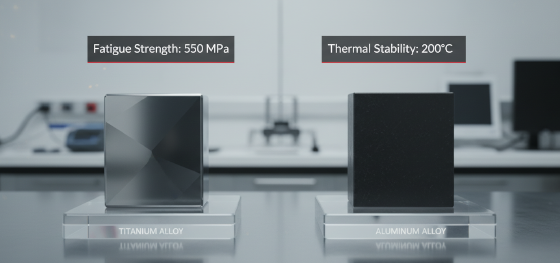
Structural survival in the operating room is dictated by the strength-to-weight ratio. For Surgical robot joint machining, the choice usually narrows down to a clash between Titanium Grade 5 and Aluminum 7075-T6. Titanium offers extreme fatigue resistance and biocompatibility, making it the hero for distal joints that may enter the sterile field. Aluminum 7075, conversely, provides high modulus and superior heat dissipation for motor-heavy proximal joints. Jucheng Precision engineers act as your "Material Navigators," suggesting material switch-outs—such as moving from steel to Titanium—to slash inertial mass by 40% without compromising the flexural modulus. Below is the technical performance matrix utilized by our facility to guide MedTech project routing:
| Metric | Aluminum 7075-T6 | Titanium (Grade 5) |
|---|---|---|
| Yield Strength | 500 MPa | 880 MPa (Winner) |
| Density (g/cm³) | 2.81 (Lighter) | 4.43 |
| Corrosion Resistance | Moderate (Anodize Required) | Extreme (Bio-Inert) |
Metrological Sovereignty: Ensuring Zero-Drift Consistency
Engineering excellence at Jucheng Precision is built on the foundation of relentless verification. We recognize that an actuator housing that fits Monday but drifts Tuesday is a catastrophic clinical liability. Our facility is equipped with Coordinate Measuring Machines (CMM) and non-contact 3D scanners that provide full deviation reports for every Surgical robot joint machining batch. We provide the "Paper Trail of Quality" required for ISO 13485 and IATF 16949 compliance, ensuring that every joint number is backed by a verifiable material certificate and dimensional audit. By identifying potential "Residual Stress" risks through our DFM review, we suggest thermal annealing cycles that lock your dimensions into a state of permanent stability. We turn "raw metal" into "certified robotic anatomy," ensuring your hardware journey is lean, predictable, and market-ready.
JUCHENG Protocol: ISO 13485 Certified Joint Machining
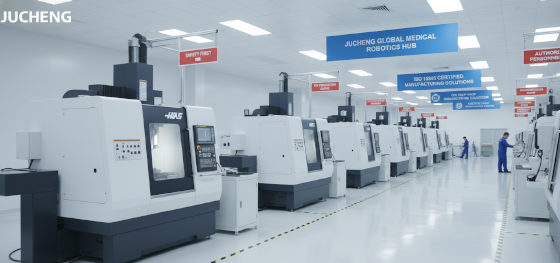
Manufacturing prototypes and production batches for the RAS sector requires a partner who understands the cold reality of regulatory audits. Jucheng Precision eliminates the friction of vendor-hopping by offering integrated 5-axis CNC, precision grinding, and hard-anodizing finishing in our Shenzhen hub. We provide the manufacturing insurance needed to ensure your Surgical robot joint machining results are undeniable during clinical trials. Stop gambling your venture funding on uncertified shops. Leverage our decade of aerospace-grade replication mastery to validate rapidly, scale responsibly, and maintain a zero-defect supply chain. Contact our technical team today for a free DFM review and see how we can turn your digital robotics intent into a structurally sovereign physical reality.
Frequently Asked Questions: Robotic Joints
Question: What is the tightest tolerance you can achieve for bearing seats in robotic actuators?
Answer: Utilizing our 5-axis Haas and Mazak centers, we routinely achieve tolerances of +/- 0.005mm (0.0002") to ensure the perfect interference fit for harmonic drive bearings.
Question: Can JUCHENG handle the machining of large-format robotic pelvic frames?
Answer: Yes. Our facility in the Shenzhen hub features large-bed CNC machines capable of machining structural skeletal frames up to 1.5 meters in length from single billets of aluminum or magnesium.
Question: Do you offer specialized surface finishes for Surgical robot joint machining?
Answer: We provide medical-grade hard-coat anodizing (Type III), PTFE impregnation for low-friction interfaces, and electrolytic passivation for stainless steel joints to ensure biocompatibility.
Question: How do you ensure zero contamination during the CNC process?
Answer: JUCHENG utilizes synthetic, mineral-free coolants and dedicated medical-only cutters. Post-machining, all robotic components undergo multi-stage ultrasonic cleaning in our ISO-compliant facility.

