


Selecting the correct polymer family for a 2-meter long medical scanner shell or a high-torque robotic fender reveals a fundamental divide in material science: the difference between a material that melts and one that reacts. In the current high-stakes world of reaction injection molding vs injection molding, the decision is often driven by the environmental survival requirements of the hardware. While thermoplastics are the standard for small, recyclable consumer items, they often fall short in industrial and medical applications where dimensional stability under heat and chemical assault is a non-negotiable metric. Achieving a zero-failure mission profile for high-value autonomous systems requires a mastery of Thermoset RIM vs Thermoplastic Injection molecular logic to ensure the outer shell does not sag, warp, or crack during its 10-year service life.
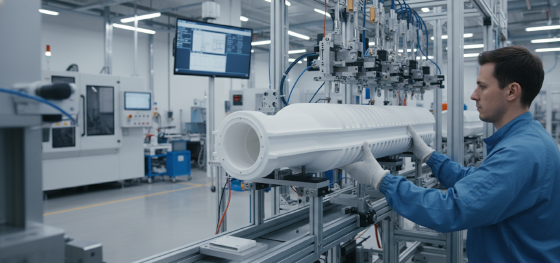
Mechanical integrity in large-format panels depends on the unyielding nature of the polymer bonds. Thermoplastic molding relies on melting solid pellets at high temperatures, resulting in a part that can re-melt if exposed to excessive heat. Jucheng Precision addresses these critical material hurdles by providing high-tier Polyurethane Molding Services that utilize liquid-to-solid chemical cross-linking. Jucheng Precision delivers components that behave more like high-strength composites than traditional plastics, providing the unyielding foundations that surgical robots and industrial AMRs demand in a Shenzhen precision manufacturing hub.
Operating under the strict quality standards of ISO 13485 and ISO 14001, Jucheng Precision acts as the high-tier material engineering partner for global OEMs. Jucheng Precision transforms raw concept CADs into validated structural components in as fast as 15 business days, leveraging a capacity of 150+ CNC machines and 25 5-axis Haas/Mazak units. This guide explores the essential molecular differences, the cross-linked molecular logic, and the impact absorption data required for mastering Thermoset RIM vs Thermoplastic Injection to ensure your next fleet of autonomous machines survives the transition from the laboratory to the sun-scorched field.
content:
Molecular Physics: Cross-Linking vs. Melting Explained
Technical Data: Comparing Heat Stability and Chemical Resistance
Impact Toughness: Why Thermoset RIM Parts Don't Shatter?
JUCHENG Solution: Simulating Standard Plastics with Thermoset PU
FAQ: Real Answers for Heat Resilience and Material Longevity
Molecular Physics: Cross-Linking vs. Melting Explained
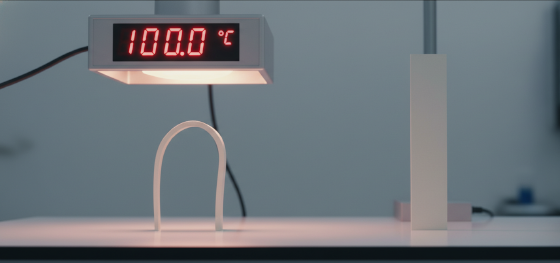
Geometric stability in large-scale plastic parts is governed by the architecture of the polymer chains. In the context of Thermoset RIM vs Thermoplastic Injection, the primary difference is the permanent nature of the chemical bond. Thermoplastics are composed of linear chains that slide past each other when heated, allowing the material to be re-melted and re-molded. While this is beneficial for recycling, it creates a risk of thermal expansion stability issues in high-power robotic applications. Jucheng Precision utilize thermoset polyurethanes that undergo an exothermic reaction to create a three-dimensional network of covalent bonds. Once this cross-linked lattice is formed, the material becomes an unyielding solid that cannot return to a liquid state, providing a zero-melt resilience that protects your internal AI compute stacks from thermal deformation.
How does molecular cross-linking prevent warpage?
The 3D network locks the polymer chains in place during the low-pressure cure, ensuring the part maintains its exact CAD dimensions regardless of subsequent heat cycles or internal mechanical stresses.
Internal stress management is the second pillar of the thermoset advantage. In high-pressure injection molding, the molten plastic is forced into the tool at 15,000 psi, stretching the polymer chains and freezing them in a state of high tension. Over months, these chains want to relax, leading to the "Potato-Chipping" effect that ruins door seals on medical carts. Because JUCHENG’s RIM process occurs as a liquid-to-solid reaction at less than 100 psi, the molecular matrix is formed in a relaxed state. This ensures that a 2-meter long panel remains perfectly flat for its entire life cycle, providing the rigid foundation required for high-accuracy sensor registration in autonomous vehicles.
Surface integrity is further enhanced by this relaxed chemistry. Traditional molding often results in "Knit Lines" where two fronts of molten plastic meet but do not fully fuse at the molecular level. These lines are not just visual defects; they are structural weak points. Jucheng Precision utilize high-pressure impingement mixing to ensure 100% homogenization of the Side A and Side B components before they ever enter the mold. This ensures that the chemical reaction happens uniformly throughout the part, resulting in an isotropic structure where the material strength is identical in all directions, essential for hardware that must survive multi-axis vibrations on an industrial floor.
Technical Data: Comparing Heat Stability and Chemical Resistance

Success in hardware validation depends on the numbers. If your design assumes the thermal limits of a high-end plastic but the material sags at 70 degrees Celsius, your field trial will fail. Jucheng Precision provides free DFM analysis in 24 hours to help your engineering team select the correct resin formulation. The following table compares the essential performance metrics of Thermoset RIM vs Thermoplastic Injection for the current MedTech and robotic markets.
| Property | Thermoset Polyurethane (RIM) | Thermoplastic ABS (Injection) | Engineering Advantage |
|---|---|---|---|
| Melting Point | None (Charring only) | 220°C - 250°C | Prevents Thermal Sag |
| Heat Deflection (HDT) | 95°C - 120°C | 75°C - 85°C | Stability near Motors |
| Chemical Resistance | Exceptional (Cross-Linked) | Poor (Stress Cracks) | Survives Disinfectants |
| ESC Potential | Near Zero | Very High | Safe for High-Use Units |
The data highlights why RIM is the preferred choice for Chemical Resistant Materials in hospital and industrial settings. Traditional ABS or PC parts are highly susceptible to Environmental Stress Cracking (ESC) when exposed to Isopropyl Alcohol or Hydrogen Peroxide. The residual stresses from the high-pressure injection provide the energy for these chemicals to penetrate and shatter the part. JUCHENG’s thermoset parts, cured in a neutral state, are chemically inert to most clinical cleaners, ensuring your medical device prototyping iterations maintain their high-gloss finish throughout thousands of wipe-down cycles.
Impact Toughness: Why Thermoset RIM Parts Don't Shatter?

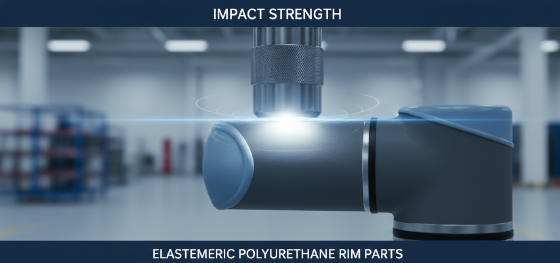
Reliability in the field is dictated by how a material fails under duress. In the comparison of Thermoset RIM vs Thermoplastic Injection, the energy absorption capability of polyurethane is a primary advantage. Many standard thermoplastics become brittle at low temperatures or after long-term UV exposure, leading to "Shatter Failure" during accidental impacts. Jucheng Precision utilize high-performance polyether polyols to achieve superior Impact Strength and flexural memory. If an autonomous tractor fender is hit by a rock, the RIM part will deform elastically to absorb the energy and then snap back to its original CAD dimensions, whereas a standard plastic part would crack or dent permanently.
Can RIM materials simulate the toughness of Polypropylene?
Yes. Jucheng Precision can formulate elastomeric RIM resins that mimic the "Unbreakable" nature of PP while offering the dimensional stability of a thermoset.
Fatigue resistance is another byproduct of the cross-linked matrix. Industrial robots are subjected to reversing torque and high-frequency vibrations thousands of times per day. Traditional plastics often experience molecular sliding, leading to thinning and eventual failure at the mounting joints. Jucheng’s RIM parts maintain their mechanical stiffness through millions of cycles because the covalent bonds do not allow the polymer chains to shift. This ensures your prototype robot remains a high-precision instrument for years, preventing the "Slop" and rattles that signal poor manufacturing quality in lower-tier assemblies.
Bionic sandwich structures can be utilized to further enhance impact resistance. By adding a blowing agent to the resin, Jucheng Precision creates parts with a dense, unyielding skin and a microcellular core. This architecture mimics the structure of human bone—rigid on the outside for load transmission, and porous on the inside for energy dissipation. This technique is a core competency in our Shenzhen hub, allowing us to build robot chassis and medical console shells that are 40% lighter than solid plastic but significantly more resistant to crushing and dropping, providing the ultimate armor for your technology.
JUCHENG Solution: Simulating Standard Plastics with Thermoset PU
Dominating the large-format hardware market requires a partner that doesn't just mold plastic, but understands the chemistry of performance. Jucheng Precision operates with a 24/7 manufacturing mindset in our Shenzhen precision manufacturing hub, delivering high-tolerance Thermoset RIM vs Thermoplastic Injection results with industry-leading speed. we provide a "Bridge to Production" that allows you to move from a single hand-fitted Alpha unit to a commercial deployment of 5,000 units with consistent metallurgical and chemical quality. Jucheng Precision has No MOQ, allowing you to source 1 to 10 units for high-stakes field trials without the crushing cost of mass-production tools.
Integrating your structural design with JUCHENG’s expertise ensures that your material decision is based on performance data, not guesswork. JUCHENG offers a free DFM analysis in 24 hours, identifying potential thermal-expansion risks or machining bottlenecks in your design before they become field failures. Whether you are building an autonomous medical assistant or a heavy-duty industrial mobile base, Jucheng Precision provides the rigid, precise, and chemically optimized foundations that keep your innovation moving through the high-speed cycles and the years of hard labor.
Our facility is equipped with dedicated high-pressure RIM assembly cells and dedicated ISO 13485 quality labs, allowing us to manage the entire hardware lifecycle in one location. JUCHENG manages the complexity of multi-material bonding and automotive-grade finishing so your engineering team can focus on the motion control and the AI. By combining Shenzhen's speed with industrial-grade material verification and global quality standards, JUCHENG remains the preferred partner for the world's most aggressive hardware challenges. Contact the Shenzhen hub today to start your next project.
FAQ: Real Answers for Heat Resilience and Material Longevity
Can I paint thermoset RIM parts like traditional plastics?
Yes. RIM polyurethane is the industry favorite for painting because its high surface energy allows automotive-grade topcoats to bond permanently without peeling.
Is the RIM process energy efficient?
Yes. Operating under our ISO 14001 mandate, our RIM process uses 80% less thermal energy than injection molding because it cures at near room temperature.
What is the maximum thickness for a structural RIM wall?
We regularly mold structural zones up to 25mm thick, provided they use gradual transitions to manage the exothermic heat.
How do you handle design changes in the Alpha stage?
Because we use aluminum molds, JUCHENG can weld and re-machine features in our CNC bay within 48 hours for rapid iteration.
What is the typical lead time for a thermoset Beta fleet?
Aluminum rapid tools and the first set of validated parts are typically delivered in 15 to 20 business days.
Material fatigue and thermal warping are absolute innovation killers for high-end robotic systems. Partnering with Jucheng Precision ensures that your functional iterations are built with the unyielding polyurethane reaction injection molding and specialized Thermoset RIM vs Thermoplastic Injection knowledge the industry demands. Reach out to our Shenzhen manufacturing hub today for a complete DFM review and build the unyielding foundation your autonomous fleet requires.

