


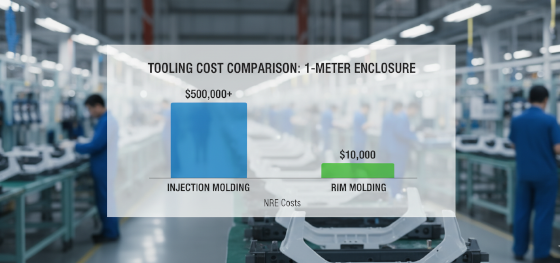
Navigating the financial landscape of large-scale hardware development in the current market often leads to a single, crushing question: how to fund the massive upfront investment for production tooling? In the sectors of autonomous robotics and MedTech, the reaction injection molding vs injection molding debate is primarily driven by the capital expenditure required to move from a CAD file to the first physical unit. While high-pressure molding is the standard for high-volume consumer goods, it forces engineers into a state of "Tooling Debt" when parts exceed 1,000mm in length. Understanding the variables behind RIM vs Injection Molding Tooling Cost is the essential strategy for developers who need production-grade enclosures without the six-figure commitment of traditional steel molds.
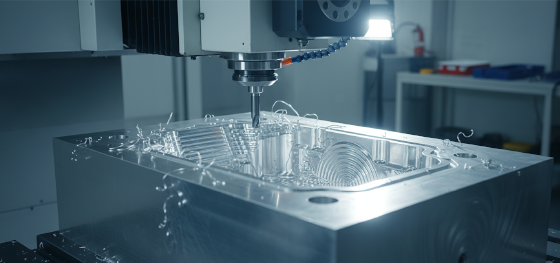
Tooling economics are governed by internal cavity pressure. Because liquid polyurethane reacts at less than 100 psi, the mold does not need to withstand the violent hydraulic forces found in molten thermoplastic cycles. Jucheng Precision addresses these critical budget hurdles by providing high-tier Low Volume Manufacturing solutions that prioritize the use of high-strength aluminum alloys over hardened tool steel. Jucheng Precision utilize a fleet of 150+ CNC machines and 25 5-axis Haas/Mazak units to manufacture rapid aluminum tools that deliver production-representative parts in as fast as 15 business days. Whether you are building an autonomous tractor hood or a surgical console, our Shenzhen hub provides the manufacturing horsepower to scale your innovation on a lean budget.
Operating under a triple mandate of ISO 13485, ISO 14001, and IATF 16949, Jucheng Precision serves as the strategic advisor for global innovation teams. Jucheng Precision delivers a free DFM analysis in 24 hours to ensure your design is optimized for low-pressure tooling, preventing the over-engineering that inflates R&D spend. This guide explores the essential steel vs. aluminum trade-offs, typical cost ratios, and the tooling modifiability required for mastering RIM vs Injection Molding Tooling Cost to ensure your Beta fleet reaches the field without the financial risk of conventional molding.
content:
The Pressure Divide: Why IM Requires Steel and RIM Uses Aluminum?
Technical Data: Comparing Tooling Ratios and Unit Amortization
Agile Tooling: The Ease of Modifying Aluminum vs. Hardened Steel
Infrastructure Costs: Clamping Forces and Machine Overhead
JUCHENG Hub: Rapid Aluminum Tooling Mastery in Shenzhen
FAQ: Real Answers for Budgeting, Mold Life, and Design Changes
The Pressure Divide: Why IM Requires Steel and RIM Uses Aluminum?
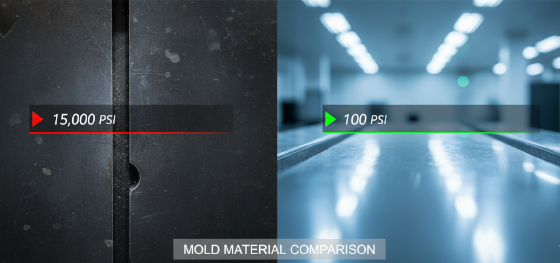
Tooling durability is a direct reaction to the forces applied during the molding cycle. In traditional injection molding, viscous thermoplastic melt is forced into a cavity at pressures exceeding 15,000 psi. To prevent the mold walls from deforming or the parting lines from blowing open, the tool must be machined from massive blocks of P20 or H13 hardened tool steel. This requirement for high-strength material significantly inflates the RIM vs Injection Molding Tooling Cost, as steel is slower to machine and requires expensive electrical discharge machining (EDM) for fine details. Jucheng Precision helps clients avoid this "Steel Trap" by utilizing the low-pressure chemistry of polyurethane.
Why can RIM use aluminum for production runs?
Because the cavity pressure is typically below 100 psi, the mechanical stress on the tool is minimal, allowing aerospace-grade aluminum to maintain sub-millimeter tolerances for up to 10,000 shots.
Machining speed is the primary economic driver of the aluminum advantage. Aluminum 7075-T6 is three to four times faster to mill than hardened tool steel. At our Shenzhen hub, Jucheng Precision utilize 150+ CNC machines to carve large mold cavities in a matter of days rather than months. This reduction in "Spindle Time" is the secret to why a RIM mold for a massive 2-meter panel costs a fraction of an equivalent injection tool. By choosing aluminum-based RIM systems, you are not just saving on material costs; you are eliminating the multi-month lead times that can kill a project's window of opportunity.
Surface finish requirements also impact the choice of tool material. Achieving the high-gloss finish required for medical diagnostic consoles is easier in aluminum because the material is more receptive to polishing and chemical etching. Jucheng Precision applies VDI 3400 textures directly to the aluminum mold surface using 5-axis laser texturing. This integrated finishing capability ensures that your parts look like retail products directly out of the tool, further reducing your total secondary processing budget. This synergy between low-cost tooling and high-end aesthetics is why Jucheng Precision remains the preferred partner for global robotics OEMs.
Technical Data: Comparing Tooling Ratios and Unit Amortization
Success in hardware procurement depends on a clear understanding of the NRE-to-piece-price ratio. While injection molding offers the lowest per-part cost, the amortization of a $100,000 tool over only 500 units results in an effective price that is ten times higher than RIM. Jucheng Precision provides transparent cost modeling to help you calculate your RIM vs Injection Molding Tooling Cost ROI. The following table compares the typical financial variables for a 1.2-meter robotic enclosure for the current MedTech and industrial markets.
| Economic Variable | RIM Tooling (Aluminum) | IM Tooling (Steel) | Budget Impact |
|---|---|---|---|
| Initial NRE Cost | $3,500 - $9,000 | $50,000 - $150,000+ | 70-85% Capital Savings |
| Lead Time to T1 | 12 - 18 Days | 8 - 12 Weeks | Faster Iterative Cycle |
| Modification Cost | Low (Welding/Milling) | High (EDM/New Inserts) | Reduced Design Risk |
| Economic Volume | 100 - 3,000 Units | 5,000+ Units | Ideal for Niche Markets |
The "Capital Savings" data illustrates why RIM is the essential "Bridge to Production" strategy. By utilizing aluminum molds, Jucheng Precision allows you to launch your first 1,000 units with minimal financial exposure. If the market demand explodes, you can transition to high-volume steel tools later, having already validated your design and captured the market. This amortization logic is the cornerstone of Jucheng’s service model, ensuring that our clients can scale their manufacturing without being crushed by the high entry costs of traditional Custom Plastic Molding.
Agile Tooling: The Ease of Modifying Aluminum vs. Hardened Steel
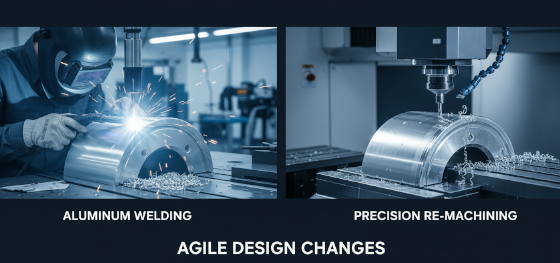
Design changes between Alpha and Beta trials are a statistical certainty in high-tech robotics. In the context of RIM vs Injection Molding Tooling Cost, the ability to modify the tool is just as important as the initial build price. Hardened steel molds are notoriously difficult to change; once the metal is heat-treated, adding a feature often requires slow EDM cycles or the complete replacement of a mold insert. Aluminum molds used in the RIM process offer a level of tooling modifiability that is unmatched. Jucheng Precision can often weld new material onto an aluminum mold face and re-machine it in our CNC bay within 48 hours, allowing your hardware development to move at the speed of software.
Can a RIM mold be updated for new sensor mounts?
Yes. Aluminum's high weldability and machinability allow us to move sensor ports or mounting holes between production batches for a fraction of the cost of steel tool rework.
Complex side-actions and cam-slides are also more affordable to modify in aluminum. For large enclosures with undercuts or integrated cable exits, the mold must move in multiple directions. Jucheng Precision utilize 25 5-axis Haas/Mazak units to machine these interlocking moving parts with +/- 0.01mm precision. If a field trial reveals that an internal rib is interfering with a wiring harness, we can adjust the tool geometry quickly. This flexibility eliminates the "Design Paralysis" that occurs when engineers are afraid to freeze a design because of high steel tooling costs. We provide the mechanical sandbox you need to refine your innovation.
Internal stress relief of the tool itself is managed through Jucheng’s specialized aging cycles. Large aluminum blocks can possess residual stresses from the casting or forging process. Before we finish-machine the critical parting lines and seal tracks, we perform thermal stabilization on the mold bases. This ensures that the precision foundations we achieve in our Shenzhen hub remain stable over thousands of shots. By delivering "Statistically Reliable" tooling, Jucheng Precision ensures that part #100 of your Beta fleet is identical to part #1, providing the geometric evidence required for ISO 13485 and IATF 16949 compliance.
Infrastructure Costs: Clamping Forces and Machine Overhead
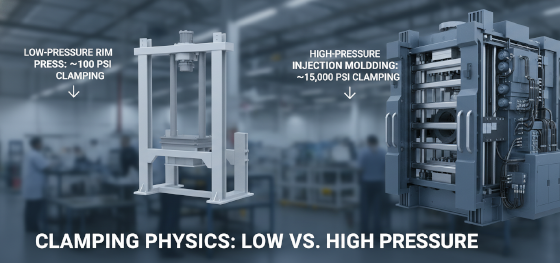
The hidden driver of RIM vs Injection Molding Tooling Cost is the machine required to hold the mold shut. In high-pressure injection molding, a 1-meter long diagnostic shell creates a massive "Projected Area." To prevent the mold from blowing open during the 15,000 psi injection, a press with at least 3,000 tons of clamping force is required. These machines are incredibly expensive to operate and require reinforced concrete foundations. Because the RIM process happens at less than 100 psi, Jucheng Precision utilize low pressure clamping infrastructure—simple hydraulic frames that are 90% cheaper to build and operate than their high-pressure counterparts.
How does machine size affect my part price?
Lower machine overhead and energy consumption allow Jucheng Precision to offer competitive piece prices for oversized parts, even at low volumes.
Energy efficiency is the secondary infrastructure win for the RIM process. Conventional injection machines must keep massive steel barrels at 300 degrees Celsius 24 hours a day. Operating under our ISO 14001 environmental certification, Jucheng Precision’s RIM department utilizes near-room temperature curing. We only heat the aluminum molds to a moderate 50 degrees Celsius to stabilize the chemical reaction. This 80% reduction in thermal energy consumption directly lowers your production overhead and supports the ESG goals of modern MedTech and AgTech corporations. We don't just save you money on tooling; we build your hardware in a sustainable, efficient ecosystem.
Scaling the physical part size is easier with low-pressure infrastructure. Jucheng Precision regularly produce structural fenders and hoods up to 2.5 meters in length. In a high-pressure environment, a part of this scale would be physically impossible or financially ruinous. By utilizing the RIM vs Injection Molding Tooling Cost advantage, we allow you to design massive monolithic panels that reduce the number of individual parts in your assembly. This "Structural Consolidation" is the ultimate weight-saving and cost-saving move for autonomous platforms, ensuring your technology stands as a solid, unyielding unit throughout its entire service life.
JUCHENG Hub: Rapid Aluminum Tooling Mastery in Shenzhen
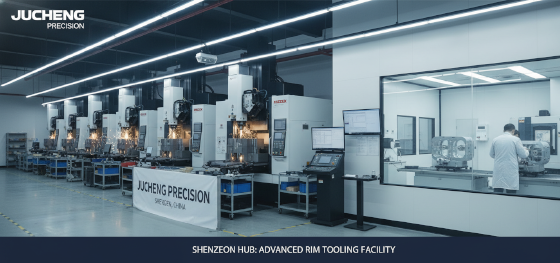
Dominating the large-format hardware market requires a partner that doesn't just buy tools, but masters the engineering of them. Jucheng Precision operates with a 24/7 manufacturing mindset in our Shenzhen precision manufacturing hub, delivering high-tolerance RIM tooling and structural components with industry-leading speed. we provide a "Bridge to Production" that ensures your innovations move from CAD to field trial with 100% metallurgical and chemical confidence. Jucheng Precision has No MOQ, allowing you to source 1 to 5 units for initial tooling validation without the crushing cost of mass-production infrastructure.
Integrating your structural design with JUCHENG’s expertise ensures that your RIM vs Injection Molding Tooling Cost decision is based on performance data, not guesswork. we offer comprehensive DFM reviews within 24 hours, identifying potential gas-trap zones or wall-thickness bottlenecks in your design before they become field failures. Whether you are building an autonomous medical assistant or a heavy-duty industrial mobile base, Jucheng Precision provides the rigid, precise, and chemicals-optimized foundations that keep your innovation moving through the high-speed cycles and the years of hard labor.
Our facility is equipped with dedicated high-pressure RIM assembly cells and dedicated quality labs, allowing JUCHENG to manage the entire hardware lifecycle in one location. we manage the complexity of multi-material bonding and automotive-grade finishing so your engineering team can focus on the motion control and the AI. By combining Shenzhen's speed with industrial-grade material verification and global quality standards, JUCHENG remains the preferred partner for the world's most aggressive hardware challenges. Contact the Shenzhen hub today to start your next 4-day rapid delivery project.
FAQ: Real Answers for Budgeting, Mold Life, and Design Changes
Is the piece price higher if the tooling is cheaper?
Yes. RIM piece prices are typically higher than injection molding, but the 80% savings on tooling often make it the more profitable choice for under 2,000 units.
What is the typical lead time for a 1-meter RIM mold?
Aluminum rapid tools of this size are typically completed and delivering T1 samples in 15 to 20 business days.
How do you handle mold maintenance in Shenzhen?
Jucheng Precision performs 100% in-house tool maintenance, including ultrasonic cleaning and parting-line restoration after every production run.
Can I change the surface texture after the tool is made?
Yes. Aluminum tools can be bead-blasted or laser-etched to update textures between Alpha and Beta builds.
Does JUCHENG provide a guarantee on mold life?
Yes. We guarantee our 7075 aluminum RIM tools for up to 10,000 cycles, providing long-term security for your mid-scale production.
Tooling debt and long lead times are absolute project killers in the robotics and medical sectors. Partnering with Jucheng Precision ensures that your functional iterations are built with the cost-effective RIM vs Injection Molding Tooling Cost and specialized aluminum tooling techniques the industry demands. Reach out to our Shenzhen manufacturing hub today for a complete DFM review and build the unyielding foundation your autonomous fleet requires.

