


Squeezing a poorly manufactured rubber gasket and watching it effortlessly tear apart under minimal finger pressure reveals the harsh reality of amateur elastomer manufacturing. Engineering true flexibility requires completely mastering complex shore hardness variables and understanding brutal thermal extrusion limits. Rigid plastics crack violently under constant harmonic vibration, forcing automotive engineers to hunt desperately for flexible impact absorbers that survive the highway.
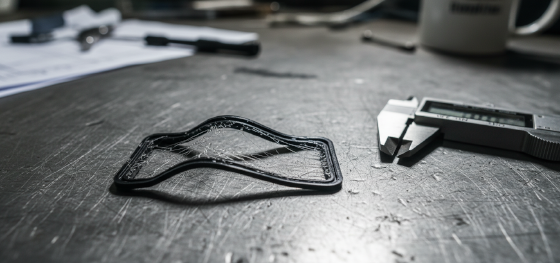
Procuring reliable elastomeric seals traditionally demands cutting heavily customized steel injection molds. Paying tens of thousands of dollars for hard tooling paralyzes cash flow and permanently freezes the design geometry for early-stage hardware prototypes. Evaluating functional soft components on a rapid physical timeline dictates that smart procurement managers must fundamentally bypass this outdated financial trap entirely.
Operating deep inside the Shenzhen precision manufacturing hub, veteran engineers know that eliminating rigid hard tooling is absolutely critical for agile hardware scaling. Mastering the specific thermodynamics behind successful TPU 3D printing completely removes massive assembly line bottlenecks overnight. Executing this flawlessly delivers retail-ready, highly functional soft parts without shedding a single tear over wasted budget.
content:
Conquering the Physics of Soft Polymer Extrusion
Driving Massive NRE Elimination in Rubber Tooling
Surviving the Post-Processing Support Nightmare
Designing for High-Pressure Fluid Environments
Frequently Asked Questions: Elastomer Reality
Conquering the Physics of Soft Polymer Extrusion
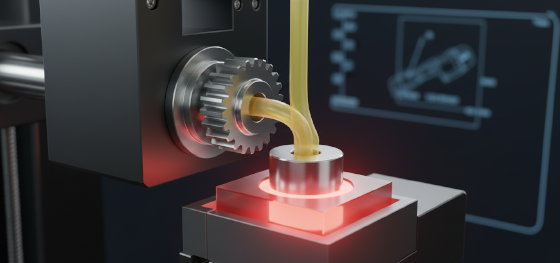
Can you feed flexible industrial polymers through a standard rigid plastic extruder?
Absolutely not. Pushing soft rubber materials through a standard long Bowden tube acts exactly like trying to push a wet noodle, instantly causing the filament to buckle, jam the drive gears, and ruin the entire overnight build.
Direct drive extrusion systems are fundamentally non-negotiable when dealing with ultra-soft elastomeric materials on the shop floor. The mechanical driving gear must physically grip the raw filament mere millimeters away from the boiling hotend. Minimizing this physical gap prevents the stretchy material from escaping sideways under immense extrusion pressure.
Lowering melting temperatures to artificially prevent messy stringing is a famous rookie mistake that permanently destroys critical interlayer adhesion. Factory veterans deliberately maintain incredibly high thermal energy to guarantee absolute molecular bonding between each flexible layer. Wiping away a few extra stringing defects is infinitely better than delivering a weak part that delaminates upon impact.
Polyurethane materials behave exactly like giant chemical sponges, aggressively absorbing ambient atmospheric moisture within hours. Pushing wet, moisture-soaked filament into a scorching hot nozzle causes the trapped water to violently boil off. This chemical reaction leaves microscopic air voids inside the final geometry, completely destroying the tensile strength of your TPU 3D printing project.
Driving Massive NRE Elimination in Rubber Tooling
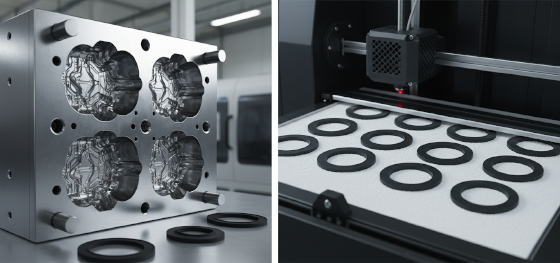
Does low-volume customized gasket production legally require cutting a heavy steel mold?
No. Advanced additive manufacturing entirely bypasses the injection phase, allowing hardware startups to achieve extreme NRE elimination for initial test batches and mid-volume runs.
Prototyping customized automotive dust boots conventionally costs thousands of dollars in upfront hard tooling fees alone. Discovering a fatal dimensional flaw during the first physical fit-test means throwing that expensive steel block straight into the recycling bin. Agile procurement teams refuse to burn their crucial operating budget on unverified geometries.
Utilizing agile digital manufacturing allows mechanical engineers to physically test five totally different Shore hardness variations simultaneously on the exact same print bed. Dropping multiple iterations into a single overnight cycle drastically accelerates the entire R&D timeline. You physically hold the answers tomorrow morning without waiting five weeks for a supplier to ship a mold.
Surviving the Post-Processing Support Nightmare
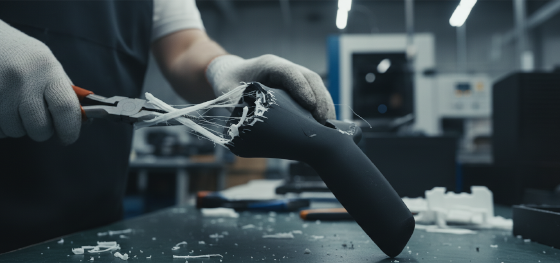
Why do highly complex flexible parts physically tear apart during manual post-processing?
Removing rigid, fused support structures from soft extruded geometries violently rips the fragile layers underneath, permanently destroying the cosmetic finish and ruining any chance of a waterproof seal.
Professional precision facilities heavily abandon basic filament extrusion when commissioned to build highly complex, organic flexible geometries. Upgrading immediately to Selective Laser Sintering (SLS) or Multi Jet Fusion completely changes the physics of creating soft parts. Jucheng Precision leverages these advanced powder-bed technologies to print impossible internal voids flawlessly.
Laser-fused powder beds magically act as their own structural support system during the long heating cycle. Eliminating the physical need for break-away scaffolds means your delicate elastomeric seals emerge from the cooling chamber absolutely pristine. Technicians simply brush away the loose un-sintered powder, leaving zero ugly scarring or tear marks on your premium retail component.
Designing for High-Pressure Fluid Environments
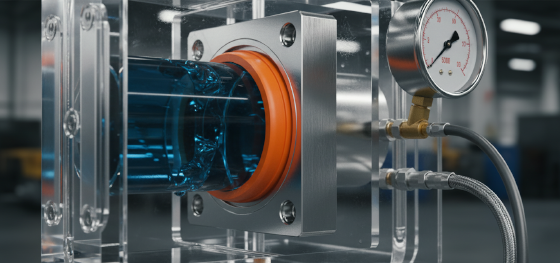
Can additive flexible components truly survive high-pressure industrial fluid environments?
Yes, provided the digital design accounts for proper mechanical compression limits and the polymer is manufactured with absolute 100% internal infill density to block microscopic fluid bypass.
Customized tactile grips deployed on heavy robotic arms require extreme abrasion resistance to survive continuous factory shifts. Specifying the correct durometer ensures the material acts like a shock absorber rather than a rigid braking pad. TPU 3D printing excels in creating customized vibration dampeners that simply refuse to crack under brutal, continuous mechanical punishment.
Manufacturing customized ergonomic wearables or specialized shoe inserts demands a memory-capable material. The printed polymer must return to its exact original geometric shape instantly after absorbing heavy kinetic shock from a human running. Dialing in the specific extrusion multiplier ensures dense, indestructible internal walls.
| Shore Hardness Scale | Tactile Material Feel | Printability Challenge | Best Factory Application |
|---|---|---|---|
| Shore 70A | Extremely Soft (Rubber Band) | Severe (Buckles easily in gears) | Vibration dampeners |
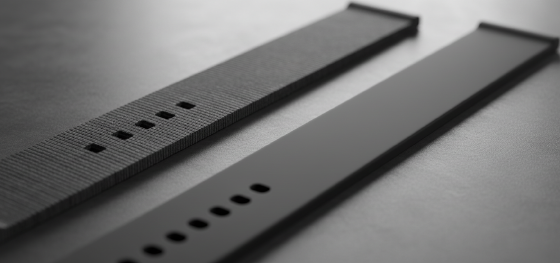
| Shore 85A | Medium Soft (Shoe Sole) | Moderate (Requires slow speeds) | Custom watch straps |
| Shore 95A | Firm (Skateboard Wheel) | Easy (Flows like standard plastic) | Heavy duty drone bumpers |
Frequently Asked Questions: Elastomer Reality
Can chemical smoothing vapor polish flexible printed parts?
Standard acetone vapor has absolutely zero chemical effect on thermoplastic polyurethane. Achieving a perfectly smooth, retail-ready finish requires specialized mechanical tumbling or highly targeted secondary heat-treating processes.
Why does my printed rubber gasket leak under hydraulic pressure?
Hobbyist prints often contain microscopic internal air voids due to poor extrusion math. Failing to deliberately over-extrude the material slightly during the manufacturing cycle prevents the heated layers from forming a watertight, solid block.
Is it possible to paint or glue additive elastomer components?
Securing rigid paint to highly flexible substrates is incredibly difficult because the chemical coating will crack violently when the part stretches. Hardware engineers must physically design mechanical interlocking joints directly into the CAD file instead of relying on weak industrial adhesives.

