


Hydrostatic pressure remains the most unforgiving critic of autonomous hardware design. In the hyper-hostile environment of deep-sea exploration and sub-sea infrastructure maintenance, the transition from a digital CAD intent to an operational underwater robot is a race against catastrophic mechanical collapse. For engineers in 2026, the primary adversary is not the navigation logic—it is the molecular assault of chloride ions and the crushing force of the water column. If a pressure vessel leaks by even a microliter or a titanium seal-face drifts by ten microns, the internal logic boards of a $200,000 ROV are instantly incinerated. Navigating this requirement for hermetic sovereignty requires the strategic deployment of Robotics Automation Manufacturing. Jucheng Precision operates as a high-fidelity manufacturing sanctuary in the Shenzhen precision manufacturing hub, providing the technical depth to deliver hulls, connectors, and thruster housings that possess the mechanical spine needed for sub-surface dominance. We don't just "cut metal"; we engineer life-support systems for electronics, ensuring your fleet scales with absolute dimensional and material certainty.
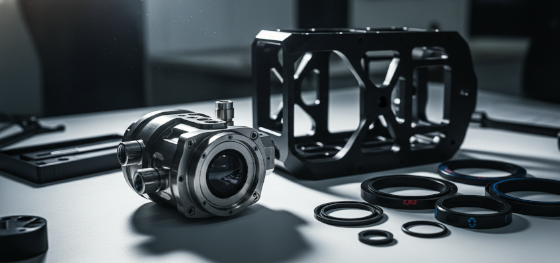
Establishing a resilient deep-sea supply chain demands the rejection of "general purpose" fabrication. Amateurs often treat an underwater housing like a standard electronic box, unaware that galvanic corrosion and "O-ring extrusion" can destroy an assembly at depth. Jucheng Precision eliminates these "Atmospheric Failures" by offering an integrated multi-process ecosystem of 5-axis CNC machining, polyurethane vacuum casting, and overmolding. Whether you are developing a prototype robot for coral reef monitoring or a heavy-duty work-class ROV, our facility provides the material science and metrological rigor required for 2026 market entry. We turn "leak-prone concepts" into "hermetically sealed assets," delivering parts that survive where standard hardware fails. This guide deconstructs the necessity of 316L alloy selection, the physics of sub-micron sealing surfaces, and why JUCHENG’s "Pressure Protocol" is the mandatory foundation for anyone developing an underwater robot for global deployment.
Chemical Sovereignty: Machining 316L and Titanium for Saltwater
Sealing Integrity: Sub-Micron CNC for O-Ring and Gasket Interfaces
Encapsulated Defense: Overmolding and Insert Molding for Depth
Structural Dynamics: Balancing Wall Thickness and Buoyancy
JUCHENG Protocol: Zero-Leak Metrology and Pressure Audits
Frequently Asked Questions: Underwater Robot Hardware
Chemical Sovereignty: Machining 316L and Titanium for Saltwater
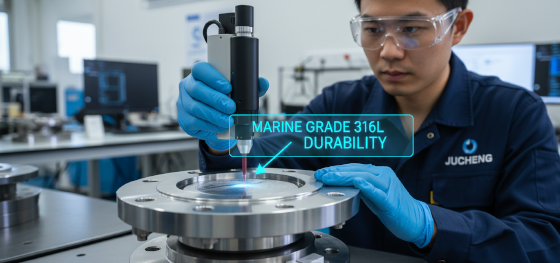
Molecular survival in the abyss begins with the absolute rejection of corrosive alloys. For an underwater robot, the hull and external thruster mounts are under constant chemical siege. Jucheng Precision utilizes 5-axis CNC machining to carve these components from Marine-Grade 316L Stainless Steel and Titanium Grade 5. 316L possesses high molybdenum content, providing the critical resistance to "Pitting and Crevice Corrosion" that destroys standard 304 steel in saltwater. For ultra-deep ROVs where weight is as critical as strength, we pivot to Titanium. Titanium offers a superior strength-to-weight ratio and is entirely immune to saltwater degradation. Our facility manages the unique challenges of machining these work-hardening materials, utilizing high-pressure through-spindle coolant to prevent "Thermal Smearing" of the surface finish. By achieving an SPI B-1 or better finish on all sealing faces, we minimize biofouling and ensure that your metallic assets remain pristine through years of deployment.
Sealing Integrity: Sub-Micron CNC for O-Ring and Gasket Interfaces
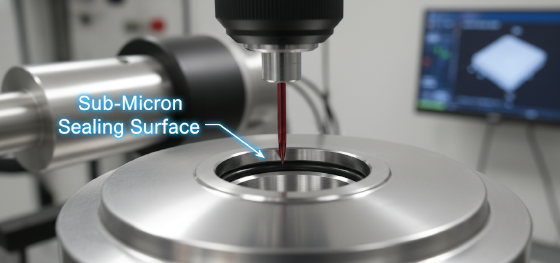
Manufacturing "Seam Discipline" is the hallmark of deep-sea engineering. The primary failure point of any underwater robot is the O-ring interface. If the CNC-machined groove is even 0.05mm off in depth, or if the surface roughness (Ra) exceeds 0.8µm, the seal will "weep" or fail catastrophically under pressure. Jucheng Precision utilizes specialized diamond-tipped cutters to achieve +/- 0.01mm tolerances on all gland geometries. We understand that in an industrial robot parts assembly, the "Seal-Face" is a technical contract of performance. We provide profilometer reports for every machined groove, ensuring that the rubber gasket can achieve 100% surface contact. By eliminating the microscopic peaks and valleys that act as "Leak Highways," we provide the manufacturing insurance needed to secure an IP68+ rating for your most sensitive optical and electronic payloads.
Encapsulated Defense: Overmolding and Insert Molding for Depth
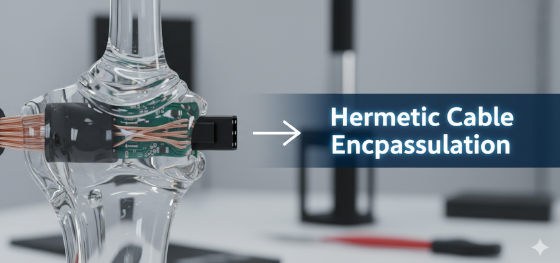
Electrical failure is often the result of "Pore Migration"—moisture traveling along a cable jacket into the electronics bay. Jucheng Precision eliminates this risk through advanced polyurethane overmolding casting. We bond soft Shore A elastomers directly onto the rigid underwater robot bulkheads and cable entry points. By creating a chemical cross-link at the interface, we ensure the seal is monolithic and permanent. This is far superior to traditional mechanical cable glands which can loosen under vibration. For internal sensors and battery packs, we utilize "Vacuum Encapsulation," where the entire component is submerged in specialized thermoset resins within a vacuum chamber. This process removes 100% of the air voids, preventing the "Internal Implosion" that occurs when trapped air bubbles collapse under the pressure of the deep sea. We turn "vulnerable electronics" into "solid-state assets," armored for survival in the abyss.
Structural Dynamics: Balancing Wall Thickness and Buoyancy
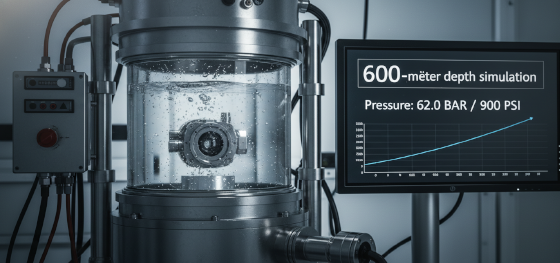
Weight management dictates the payload capacity of an autonomous ROV. In underwater robot design, thick walls are required to resist pressure, but every kilogram of mass must be offset by expensive buoyancy foam. Jucheng Precision engineers act as your "Mass Navigators," utilizing Finite Element Analysis (FEA) to identify where material can be removed through "Pocketing" and "Rib-Reinforcement." We utilize 5-axis CNC to machine non-linear wall thicknesses—putting the mass only where the stress vectors demand it. For drone/uav parts machining that must transition to underwater applications, we suggest material switch-outs to high-modulus reaction injection molding materials (SRIM). These continuous-fiber composites provide the structural spine of aluminum but with a density that improves the bot's natural buoyancy. We turn "heavy anchors" into "neutrally buoyant explorers," ensuring your ROV fleet maximizes its mission endurance.
JUCHENG Protocol: Zero-Leak Metrology and Pressure Audits
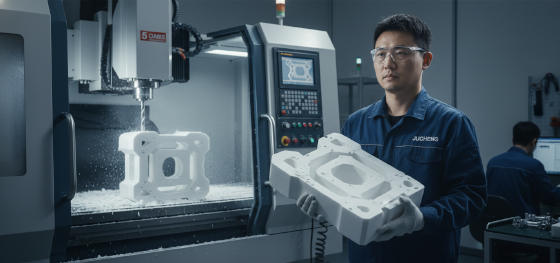
Manufacturing excellence at Jucheng Precision is built on the foundation of predictive validation. We don't believe in "Hoped-for Sealing"; we prove it with spectral and metrological data. Our facility, housing over 150 machines and specialized pressure labs, is optimized for the high-requirement standards of the sub-sea industry. We provide full material lot traceability and CMM dimensional inspection reports for every underwater robot batch, providing the "Paper Trail of Quality" required for deep-sea research and naval contracts. Stop gambling your mission’s success on vendors who don't understand chloride stress or gland tolerances. Leverage our decade of extreme-environment replication mastery to validate rapidly and scale profitably. Contact our technical team today for a free DFM review and see how we can turn your digital underwater intent into a structurally sovereign physical reality.
Frequently Asked Questions: Underwater Robot Hardware
Question: What is the best material for deep-sea ROV hulls?
Answer: For 2026 designs, we recommend Titanium Grade 5 for depths exceeding 1,000 meters due to its high yield strength and zero corrosion. For shallower depths, 316L Stainless Steel or Glass-Filled Nylon Injection molding materials are cost-effective alternatives.
Question: Can JUCHENG help with the assembly of waterproof cable assemblies?
Answer: Yes. We specialize in overmolding liquid polyurethane around industrial cables and connectors, creating a hermetic, chemically bonded seal that prevents moisture ingress at high pressures.
Question: How do you ensure the precision of O-ring grooves in underwater robot parts?
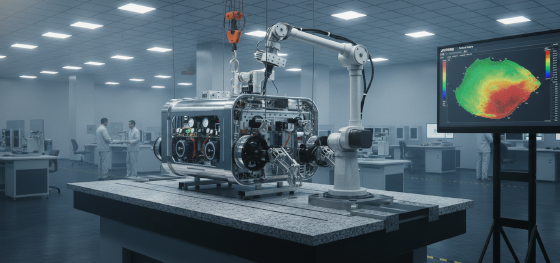
Answer: We utilize 5-axis CNC machining followed by a mandatory metrological audit using non-contact laser scanners to verify groove depth and surface Ra, ensuring zero-leak performance.
Question: What is the lead time for a custom titanium ROV camera housing?
Answer: Utilizing our high-speed 5-axis CNC fleet, JUCHENG can deliver a fully machined and tested titanium ROV housing in as fast as 10 to 14 business days for prototype robot programs.

