


Bridging the high-stakes gap between a single desktop model and a full-scale production run is the most dangerous phase for a prototype robot project. In the [2026] hardware market, investors and field testers no longer accept "rough" 3D prints that leak moisture or crack under stress. However, committing $20,000 to a steel mold for a design that might change next month is financial suicide. Utilizing Vacuum casting for robot enclosures provides the only logical solution, delivering injection-molded quality and production-grade aesthetics at a fraction of the traditional tooling cost.
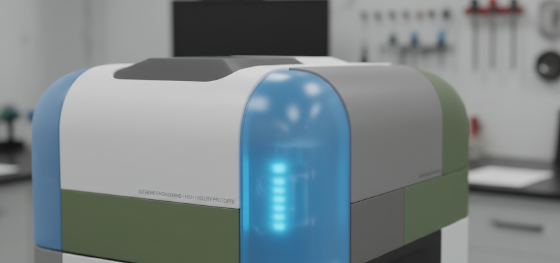
Robotic enclosures serve as the "Skin" and "Shield" of the machine. They must provide structural mounting points for sensors, manage internal heat, and maintain hermetic seals against dust and rain (IP67/IP69K). While 3D printing is excellent for form-checks, its inherent porosity and layering make it unsuitable for environmental testing. Jucheng Precision addresses these critical validation hurdles by leveraging advanced silicone tooling and polyurethane resins that simulate production plastics with 99% accuracy.
Operating out of the Shenzhen precision manufacturing hub, JUCHENG serves as the technical bridge for global robotics OEMs transitioning from Alpha to Beta phases. We transform high-fidelity master patterns into fleets of 10 to 50 functional shells in as fast as 10 business days. This guide explores the "Bridge to Production" logic, the science of material simulation, and the aesthetic standards required for manufacturing Vacuum casting for robot enclosures hardware that survives the scrutiny of the boardroom and the chaos of the field.
The Bridge to Production: Why 10-50 Units Rule R&D
Technical Data: Simulating Production Plastics with PU Resins
Simulating Performance: From ABS-like to High-Friction Rubber
Surface Aesthetics: Achieving VDI Textures and Pantone Precision
JUCHENG: Mastering Oversized and Multi-Material Shells
FAQ: Small-Batch Plastic Parts for Robotics
The Bridge to Production: Why 10-50 Units Rule R&D
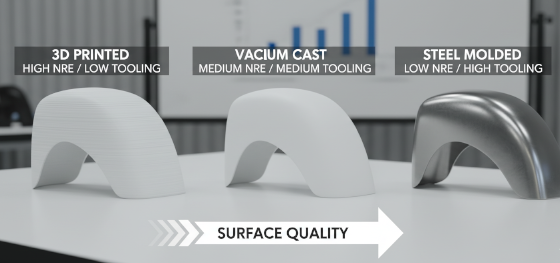
Robotics startups often hit a wall after their first Alpha prototype robot. To prove their technology, they need a fleet of 20 machines for multi-site field trials, but their design is not yet "frozen" for mass production. In Vacuum casting for robot enclosures, the silicone mold is the hero of this "pre-series" phase. Unlike steel tools that take 6 weeks to cut, a silicone mold is cast around a 3D-printed master in 24 hours. JUCHENG utilizes this speed to deliver 20 sets of IP-rated enclosures in the time it takes most shops to simply quote an injection mold.
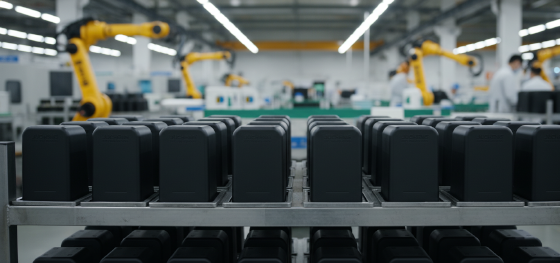
Part consistency is non-negotiable for fleet testing. If you rely on 3D printing for 50 units, the dimensional variance between machine batches can ruin your sensor calibration. Vacuum casting ensures that part #1 is identical to part #50, as they all share the same mold cavity. JUCHENG holds tolerances of +/- 0.3mm over a 500mm span, providing the geometric reliability needed for consistent gasket compression and sensor alignment across your entire test fleet. This consistency is vital for the [2026] data-driven R&D cycle.
NRE (Non-Recurring Engineering) cost optimization is the primary driver for casting. For a mid-sized robot shell, an aluminum rapid injection mold might cost $12,000, while a silicone vacuum casting tool costs less than $1,500. JUCHENG helps procurement managers maximize their R&D budget by suggesting vacuum casting for any quantity between 5 and 100 units. This allows the engineering team to "save" their budget for more expensive items like high-torque actuators or high-resolution LiDAR units while still receiving production-quality skins.
Risk mitigation is the third pillar of the casting strategy. If a field trial reveals that the robot's "nose" needs to be 20mm longer to accommodate a new camera, changing a silicone mold is trivial. Changing a steel or aluminum injection mold is a multi-thousand dollar setback. JUCHENG’s "Agile Tooling" mindset ensures that your prototype robot development remains fluid. We provide the manufacturing flexibility to pivot your design mid-season without the crushing financial penalties of hard tooling.
Technical Data: Simulating Production Plastics with PU Resins
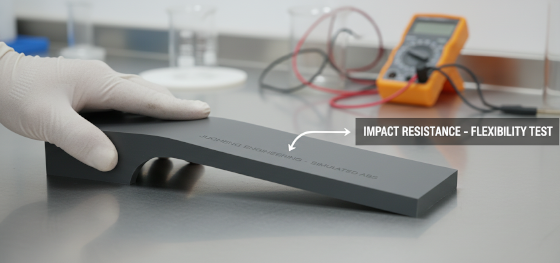
Functional testing requires materials that do not lie. If your production intent is ABS+PC, your prototype robot cannot be tested using brittle PLA. Jucheng Precision sources high-performance polyurethane (PU) resins that are chemically engineered to match the Shore hardness, impact strength, and heat deflection of commercial thermoplastics. The following table illustrates how JUCHENG simulates production materials for the [2026] robotics market.
| Simulated Material | PU Resin Type | Shore Hardness | Key Property |
|---|---|---|---|
| ABS / High Impact | Hei-Cast 8150 | 80 - 85 D | Structural Rigidity |
| Polycarbonate (PC) | Axson PX 5212 | 82 D (Clear) | Optical Clarity |
| Soft TPU / Rubber | Hei-Cast T0387 | 40 - 90 A | Impact Absorption |
| Glass-Filled Nylon | Custom Reinforced | 88 D | High Temp / Stiffness |
Environmental resilience is a standout feature of these resins. Many AgTech robots require enclosures that resist high-intensity UV radiation and corrosive fertilizers. JUCHENG utilizes specialized UV-stable resins that do not yellow or embrittle during 24/7 outdoor field trials. By choosing Vacuum casting for robot enclosures, you ensure that your hardware validation data is representative of how the robot will perform after three years of service, preventing the "surprise" material failures that can lead to expensive mass-market recalls.
Simulating Performance: From ABS-like to High-Friction Rubber
Multi-material functionality is the next frontier of Vacuum casting for robot enclosures. Modern robots often feature a rigid main body with integrated soft-touch bumpers or grippers. JUCHENG specializes in "Overmolding via Casting," where we place a rigid 3D-printed or CNC-machined skeleton into the silicone mold and cast a soft PU rubber layer around it. This creates a monolithic, multi-durometer component with zero risk of delamination. This technique is essential for collaborative robots (cobots) that must be "soft-to-the-touch" for human safety.
Hermetic sealing capability is a core advantage of cast shells over 3D prints. Because vacuum casting utilizes a liquid resin that solidifies under vacuum, the resulting parts are 100% dense with zero internal air pockets. This allows JUCHENG to produce robot enclosures that easily achieve IP67 ratings. We machine the gasket grooves into the master pattern with +/- 0.05mm precision, ensuring that the final cast parts provide the uniform compression required to keep moisture away from the robot's AI brains and high-voltage batteries.
Weight management is optimized through variable wall thicknesses. In Vacuum casting for robot enclosures, we can easily add internal reinforcement ribs or thicken high-impact zones without the "sink marker" issues that plague injection molding. This allows JUCHENG to deliver lightweight shells for flying drones or agile harvesters that are structurally reinforced only where the stress analysis demands it. Every gram saved on the enclosure is a gram added to your robot’s payload or battery life, a critical factor for the autonomous missions of [2026].
Insert encapsulation is standard practice at our Shenzhen hub. We can place threaded brass bushings, steel mounting plates, or even flexible antennas directly into the silicone mold before casting. The resin flows around these inserts, locking them into the material matrix. This eliminates the need for post-casting ultrasonic welding or heat-staking, reducing assembly time and providing a much stronger mechanical connection for high-vibration environments like autonomous tractors or mining robots.
Surface Aesthetics: Achieving VDI Textures and Pantone Precision
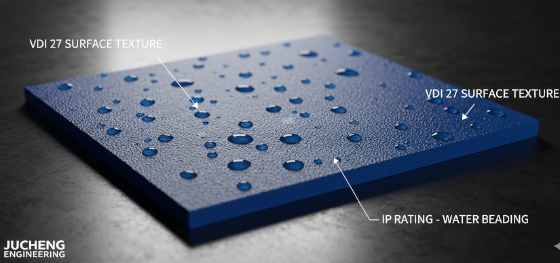
Visual identity is vital for investor confidence and trade show demos. A prototype robot that looks "homemade" will struggle to secure funding compared to one that looks like a finished consumer product. Vacuum casting for robot enclosures allows JUCHENG to replicate the exact surface texture of an injection-molded part. We can apply VDI 3400 standardized grains or high-gloss "Apple-style" finishes to the master pattern. The silicone mold picks up every microscopic detail, ensuring that each of your 50 beta units possesses a retail-ready aesthetic.
Pantone color matching is integrated directly into the resin mixing process. Unlike painting—which can scratch off during rugged field trials—vacuum cast parts are "color-through." JUCHENG utilizes high-precision pigments to match your corporate branding exactly. If your robot is destined for a muddy farm, we can suggest matte, "dirt-hiding" colors; if it’s for a sterile hospital, we provide high-gloss, medical-white finishes that are resistant to alcohol-based sanitizers. This level of aesthetic control ensures your Beta fleet is an effective marketing tool as well as a technical one.
Optical clarity for sensor windows is another JUCHENG specialty. Many robots require clear covers for cameras or infrared sensors. Standard 3D printing results in "milky" or distorted windows. JUCHENG utilizes optics-grade PU resins (like PX 5212) and vacuum-polishing techniques to create crystal-clear cast enclosures. These parts offer 90%+ light transmission, ensuring your computer vision algorithms receive clean, undistorted data. We provide the "Eye-Shields" that allow your AI to navigate without the optical interference caused by inferior prototyping processes.
Laser marking and branding can be integrated into the mold geometry or applied as a secondary process. For large-scale industrial robot parts, JUCHENG often casts the company logo directly into the shell for a premium, embossed look. We also provide laser-marked serial numbers for each unit in your Beta fleet, facilitating easier maintenance and bug-tracking during multi-site field trials. This attention to detail is what makes JUCHENG a preferred partner for the world’s most sophisticated robotics firms in [2026].
JUCHENG: Mastering Oversized and Multi-Material Shells
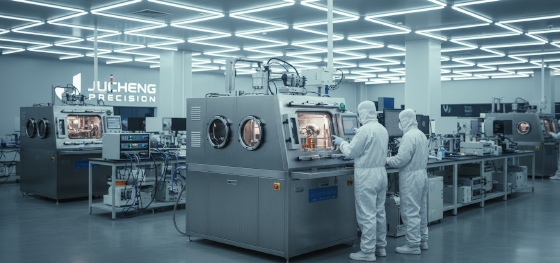
Dominating the [2026] robotics market requires a partner that can handle the physical scale of modern automation. Jucheng Precision operates with a 24/7 manufacturing mindset in our Shenzhen precision manufacturing hub, delivering oversized cast enclosures—some exceeding one meter in length—with lead times as fast as 15 business days. We provide a "Bridge to Production" that allows you to move from your first CAD file to a commercial fleet of 50 Beta robots with consistent tactile and dimensional quality.
Integrating your enclosure design with JUCHENG’s expertise ensures that your prototype robot survives the "First-Field Season" and moves into mass adoption. We offer comprehensive DFM reviews within 24 hours, identifying potential parting-line issues or "thin-wall" risks in your design before they become field failures. Whether you are building an autonomous tractor hood or a humanoid torso, Jucheng Precision provides the unbreakable, high-finish shells that keep your innovation moving through the mud, the sun, and the years.
Our facility is equipped with oversized vacuum chambers and dedicated silicone-tooling cells, allowing us to manage the entire enclosure lifecycle in one location. We manage the complexity of multi-material bonding and custom textures so your engineering team can focus on the autonomy and the AI. By combining Shenzhen's speed with industrial-grade resin verification, JUCHENG remains the preferred partner for the world's most aggressive Vacuum casting for robot enclosures challenges. Contact us today to start your next project.
FAQ: Small-Batch Plastic Parts for Robotics
When is vacuum casting better than 3D printing for robot shells?
When you need 10+ units with IP67 sealing, color-through aesthetics, and production-grade impact strength.
What is the maximum part size JUCHENG can vacuum cast?
We regularly cast structural enclosures up to 1,200mm in length using oversized silicone tools.
Can I use real injection-molding resins in vacuum casting?
No, but we use high-performance PU resins designed specifically to simulate ABS, PC, and POM properties.
How long does a silicone mold last?
A typical mold lasts for 20 to 25 shots, after which we can rapidly create a duplicate mold for higher quantities.
What is the lead time for a set of 10 robot enclosures?
We typically deliver fully finished, color-matched enclosure sets in 12 to 15 business days.
Surface failures in AgTech or industrial robotics are absolute project killers. Partnering with Jucheng Precision ensures that your Beta iterations are built with the production-quality resins and specialized Vacuum casting for robot enclosures techniques the industry demands. Reach out to our Shenzhen manufacturing hub today for a complete DFM review and build the field-ready foundation your autonomous fleet requires.

