


Your prototype looks right. It has the correct shape and size. But when you hold it, something is wrong. It feels like a cheap imitation. The texture is off. The color is dull. The weight is wrong.
This is the "uncanny valley" of product development. A prototype that is close, but not close enough. It fails to inspire confidence. It fails to get real user feedback. It fails to feel like your final product.
How do you cross this valley? How do you create a prototype that is indistinguishable from the real thing? The answer lies in a process designed for perfect replication. The world of vacuum casting plastic parts.
content:
The 'Uncanny Valley' of Prototyping
Replicating Reality: The Power of the Silicone Mold
A Rainbow of Possibilities: Intrinsic Coloring
From Glossy to Matte: Mastering the Finish
Building Confidence Before Committing
The 'Uncanny Valley' of Prototyping
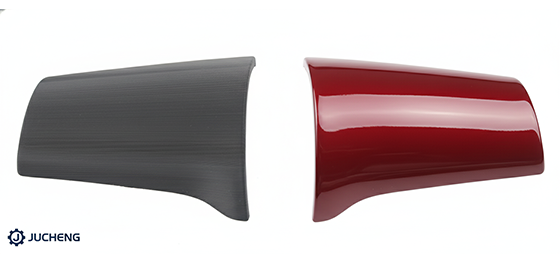
Processes like FDM 3D printing are fast. But they leave behind evidence of their creation. The layer lines. The slightly rough surface. Our brains are hardwired to notice these imperfections. We instantly perceive them as "not real."
This is a huge problem for late-stage prototyping. For a final design review, a marketing photoshoot, or a user feedback session, you need the prototype to be a perfect stand-in for the final product. You need to eliminate any hint of "fakeness." This is the specific problem that vacuum casting was designed to solve.
Replicating Reality: The Power of the Silicone Mold
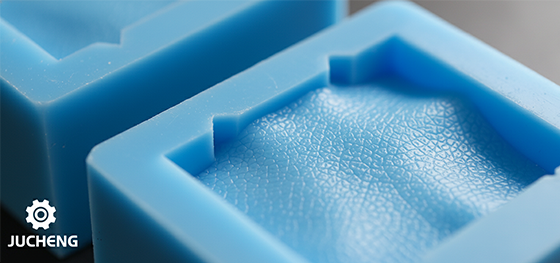
The secret to the realism of a vacuum casting plastic part lies in the silicone mold.
The process starts with a flawless master pattern. This master is sanded, polished, and textured to be a perfect representation of the final surface you desire. If you want a leather texture, we apply that texture to the master.
The liquid silicone that is poured around this master is like a liquid mirror. It captures every single microscopic detail. Every pore of a leather grain. Every fine line of a brushed texture. The fidelity is incredible.
When the polyurethane resin is then cast into this mold, it creates a perfect replica of that original texture. It is not an approximation. It is an exact copy.
A Rainbow of Possibilities: Intrinsic Coloring
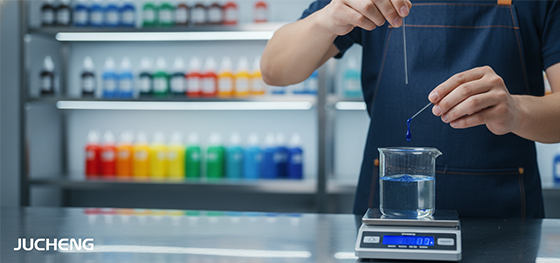
A painted prototype can look good. But if it gets scratched, you will see the white plastic underneath. It breaks the illusion.
Vacuum casting offers a superior solution: intrinsic coloring. Before we cast the part, we mix a precise amount of color pigment directly into the liquid polyurethane resin.
This means the color is not just on the surface. It is through the entire part. If the part gets a scratch, the color underneath is the same. This makes the prototype much more durable and realistic.
A professional manufacturer can match your brand's specific Pantone, RAL, or Munsell color standards. This ensures your prototype perfectly represents your final brand identity.
From Glossy to Matte: Mastering the Finish
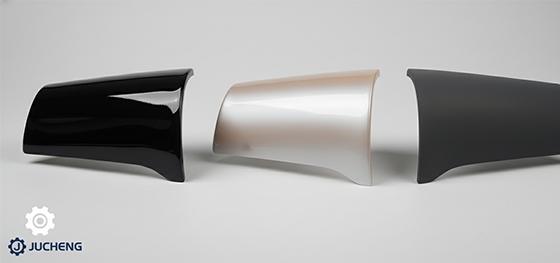
The final piece of the realism puzzle is the surface gloss level. A high-gloss part feels very different from a matte one.
The beauty of vacuum casting is that this is also controllable. The gloss of the final vacuum casting plastic part is a direct copy of the master pattern's gloss.
If you want a high-gloss final part, we will polish the master pattern to a mirror finish. If you want a deep, non-reflective matte finish, we will bead blast the master pattern to create a fine texture. If you want a semi-gloss satin finish, we will sand the master to a specific grit.
This level of control allows you to test the exact look and feel you want for your product, long before you commit to the expensive process of texturing a steel mold.
Building Confidence Before Committing

This is the ultimate value of vacuum casting. It allows you to create a small batch of visually and texturally perfect prototypes.
You can make five different versions of your product. One in red with a glossy finish. One in blue with a matte finish. One with a rubbery, soft-touch feel.
You can then put these identical-looking, but different-feeling, parts in the hands of your customers. You can get real, unbiased feedback. Which one do they prefer? Which one feels more premium?
This process removes the guesswork. It gives you the confidence to make the right final design decisions. It is the bridge that takes you across the uncanny valley, from a simple model to a product that is truly believable.

