


Navigating the complex economics of custom prototype development requires much more than simply uploading files to a generic algorithm. Utilizing an instant, automated sheet metal cost estimator is a common first step during the design phase, allowing product developers to rough-out their baseline material bills. However, in custom sheet metal fabrication, relying solely on automated scripts often leads to significant pricing discrepancies once the drawings are released to actual shop floor operators.

Wasting time on automated web portals that fail to capture the physical complexities of tight-tolerance folding, manual deburring, and specialized welding is a major bottleneck for hardware teams. While instant calculators can estimate raw material weight and cutting perimeter lengths in seconds, they are fundamentally blind to post-processing labor and complex tooling setups. Moving to a human-led engineering review is the only way to secure a guaranteed, production-ready quote.
Let's explore how online estimators calculate basic geometry, analyze why automated tools fail to price complex mechanical assemblies, and review the DFM variables that human engineers analyze to reduce your actual manufacturing expenses.
How Online Cost Estimators Work
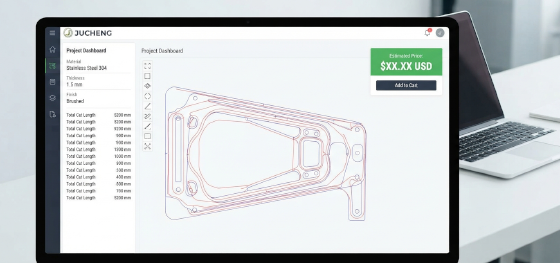
How do automated web tools calculate sheet metal prices in seconds?
Online calculators analyze uploaded 3D CAD files to extract simple geometric vectors, multiplying the raw material volume by weight indexes and adding basic cutting and bending rates.
Most instant web tools utilize basic heuristic algorithms to parse your uploaded 3D CAD models. The software unfurls the 3D model into a virtual flat layout, calculates the surface area to estimate material weight, and extracts the total laser cutting path length. It then multiplies these measurements by pre-programmed per-meter cutting and per-bend rates, adding a generic markup for shop-floor overhead.
This simple geometric parsing works beautifully for flat brackets with standard 90-degree bends and simple outer profiles. However, these algorithms operate under the assumption of ideal shop conditions with zero manual processing. They cannot account for raw stock nesting inefficiencies or custom press brake setups, often resulting in highly inaccurate estimates for non-standard hardware.
Why Instant Calculators Fail for Complex Parts
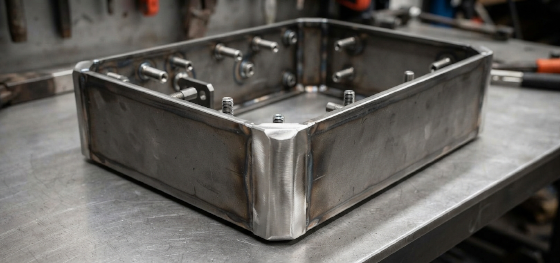
What critical manufacturing steps are automated sheet metal cost estimators blind to?
Instant calculators cannot evaluate the manual labor required for structural welding, aesthetic grinding, multi-color masking, or high-precision mechanical assembly.
An instant web-based sheet metal cost estimator is physically blind to the manual touch required to finish high-end hardware. While the software can easily calculate the time required for a fiber laser to slice a 1.2mm aluminum plate, it cannot determine whether a welder can physically access an internal joint, or how much manual grinding is needed to polish a weld seam flush.
When your custom box or chassis requires structural MIG/TIG welding, manual deburring, self-clinching hardware insertion, or electrostatic powder coating, automated calculators fail. They often apply flat-rate markups that are either too low (leading to supplier rejection later) or too high (inflating your budget unnecessarily), making them highly unreliable for complex, multi-part integrations.
Factors a Human Engineer Considers for DFM Cost Reduction
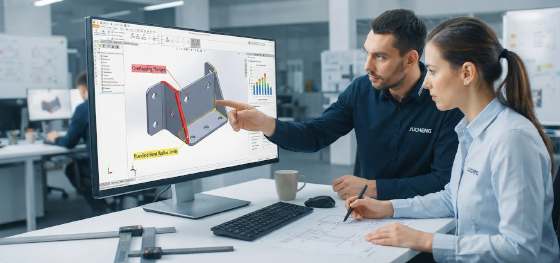
How does a professional manufacturing engineer help reduce your custom part costs?
A human engineer analyzes your design for manufacturability, suggesting modifications like standardizing bend radii and optimizing nested layouts to reduce material waste.
Unlike a rigid algorithm, a skilled human estimator conducts a thorough Design for Manufacturability (DFM) review. If your design features multiple different bend radii, the engineer will suggest standardizing them to use a single press tool set, eliminating multiple machine setups. This simple geometry standardization reduces your actual labor expenses.
Furthermore, the engineer will analyze your flat pattern nesting layouts to maximize material yield. By nesting smaller brackets inside the hollow cutouts of larger enclosures, we minimize raw scrap waste, driving down the base material cost of every single component. This human-led optimization delivers value-engineered solutions that web calculators are programmed to ignore.
Bypass the Estimator: Get a Real Quote from Jucheng Precision
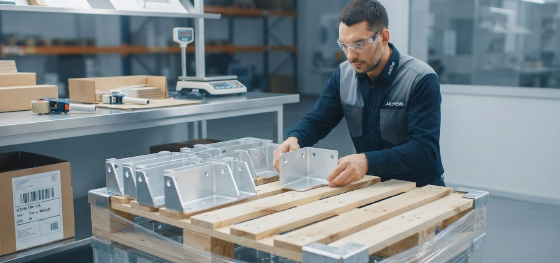
How does Jucheng Precision deliver precise, guaranteed quotes within twenty-four hours?
We bypass automated web estimators, utilizing our experienced engineering team to manually review your CAD files and provide accurate, production-ready estimates.
Why risk your project budget on inaccurate automated estimators? At Jucheng Precision, we review your 3D STEP or IGES files manually, matching your tolerances to our active press lines and clean finishing booths. This human-led review ensures that your overall sheet metal fabrication cost remains remarkably low while guaranteeing 100% manufacturability.
We process a wide range of materials, including lightweight aluminum, high-yield stainless steel, and formable carbon steel during high-precision sheet metal fabrication cycles. Our technical department provides a 24-hour free DFM analysis to check your CAD models, checking tolerances and hinge clearances before production. Supported by our no MOQ policy and rapid delivery guarantee, we manage your project from initial flat pattern cutting to final, high-durability powder coating and assembly.
FAQ: Critical Questions About Sheet Metal Cost Estimator
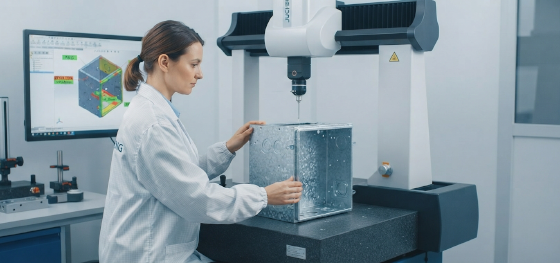
Our engineering team has compiled professional solutions to the most common budgeting challenges faced during industrial finishing runs:
What files do I need to get an accurate sheet metal quote?
We require 3D CAD files in STEP or IGES formats for automatic flat-pattern unfolding, alongside a 2D PDF drawing. The 2D drawing is essential to specify critical tolerances, threaded insert locations, cosmetic face requirements, and post-treatments like anodizing or plating, which are invisible in 3D solid models.Why do different fabricators return different quotes for the same CAD file?
Pricing varies based on each shop's internal tooling capacities, automated setups, and whether they manage finishing in-house. Jucheng Precision manages cutting, bending, and powder coating under one roof, eliminating the middle-man markups and shipping costs common when using fragmented suppliers.Does a smaller bend radius increase custom manufacturing costs?
Yes, if the radius is set below the material's physical ductility limit. Forcing hard tempers into extremely sharp bends concentrates tensile stresses, causing micro-cracking and material failures. This increases scrap rates and forces the shop to run secondary annealing, driving up your final unit cost.How does Jucheng Precision avoid the inaccuracies of a standard sheet metal cost estimator?
We bypass the inaccurate automated estimators completely. Our technical department reviews your 3D files manually and delivers an extremely precise, guaranteed manufacturing estimate within twenty-four hours of submission, including a complimentary DFM feasibility review.

