


Holding a freshly molded medical enclosure feels completely different than touching a cheap extruded prototype. Delivering premium aesthetics to demanding beta testers requires eliminating every single microscopic layer line visible to the naked eye. Relying purely on basic desktop additive technologies guarantees your high-paying investors will instantly perceive your hardware as structurally fragile and unprofessional.
Hardware procurement managers must ruthlessly evaluate the exact financial threshold where printing individual parts incinerates the tooling budget. Navigating the brutal debate of vacuum casting vs 3d printing forces executives to confront physical cosmetic realities head-on. Handing an enterprise client a drone chassis covered in rough plastic ridges violently destroys your brand equity before the device even turns on.

Operating within the highly competitive Shenzhen precision manufacturing hub teaches veteran engineers to exploit both technologies simultaneously. Creating flawless polyurethane resin casting batches actually requires printing an absolutely perfect master model first. Understanding this deeply symbiotic relationship completely changes how you calculate your product launch timeline.
Slashing unnecessary overhead during the aggressive field-testing phase dictates your ultimate hardware survival rate. Mastering low-volume production economics means knowing exactly when a soft silicone tool becomes financially mandatory. Breaking down the hidden physics, thermal limitations, and real-world costs separating these two rapid manufacturing giants exposes the truth behind scaling operations.
content:
Eradicating Brittle Layer Lines for Monolithic Strength
Master Pattern Degradation and Silicone Lifespans
Achieving Retail Aesthetics Without Secondary Paint
JUCHENG Hub: Dominating Hardware Scaling Economics
Frequently Asked Questions: Chemical Realities
Eradicating Brittle Layer Lines for Monolithic Strength
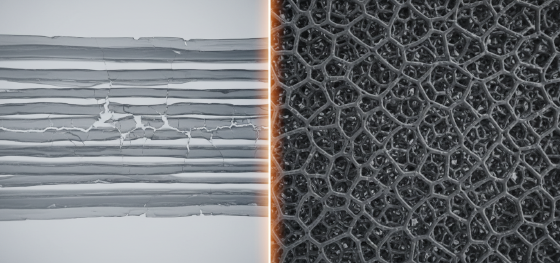
Can standard additive polymers match the isotropic tensile strength of poured liquid resins?
Never. Extruded filaments naturally suffer from anisotropic weakness along the Z-axis, whereas liquid resins chemically cure into a completely dense, indestructible monolithic solid.
Subjecting an extruded motor bracket to sheer mechanical torque violently exploits the weak thermal bonds hiding between the printed layers. Poured liquid materials cure under immense pressure, actively cross-linking their molecules to form a continuous isotropic structure. Surviving brutal drop tests on the factory floor absolutely requires this raw monolithic density.
Injecting deep internal features like threaded brass inserts proves dangerously unreliable in layered plastics. Pushing a heated metal insert into a printed hole often splits the fragile polymer walls apart instantly, ruining hours of machine time. Casting allows technicians to over-mold solid metal inserts directly inside the liquid vat, permanently locking them in place.
Achieving true waterproof sealing for marine enclosures demands zero microscopic voids. FDM printing naturally leaves tiny air gaps where the filament lines fail to overlap perfectly, causing catastrophic leaks under high pressure. Liquid polyurethane fills every microscopic crevice of the silicone cavity, guaranteeing a flawless, airtight barrier for your sensitive internal electronics.
Master Pattern Degradation and Silicone Lifespans
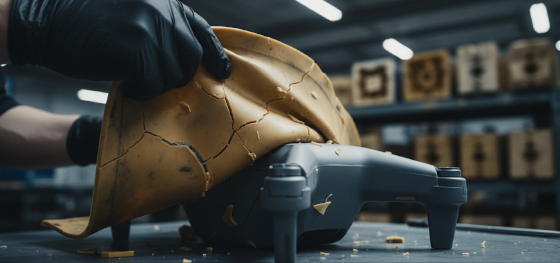
Will a single soft silicone mold last for thousands of high-speed production cycles?
Absolutely not. The aggressive chemical curing process causes severe master pattern degradation, typically destroying the soft tooling permanently after twenty to twenty-five heavy shots.
Pouring highly reactive liquid plastics into soft molds generates intense exothermic heat during the hardening phase. Experiencing this harsh thermal cycling repeatedly causes the silicone rubber to physically shrink, bake, and ultimately tear apart along the parting line. Factory veterans strictly monitor this dimensional decay to prevent supplying warped, out-of-tolerance components.
Printing the initial highly detailed master model using Stereolithography (SLA) guarantees absolute micron-level geometric perfection. Sanding and vapor-polishing this SLA master to a mirror finish dictates the final cosmetic quality of every subsequent poured copy. Any microscopic scratch left on the master transfers permanently to the cured silicone wall.
Replacing a dead silicone mold takes mere hours, drastically outpacing the brutal weeks required to machine heavy steel injection molding tools. Calculating accurate low-volume production economics requires factoring in the operational cost of pouring fresh silicone every twenty parts. Scaling past three hundred units mathematically forces hardware teams to abandon soft tooling altogether.
| Manufacturing Metric | Industrial 3D Printing (SLS/SLA) | Polyurethane Resin Casting | Financial Impact on Scaling |
|---|---|---|---|
| Unit Volume Sweet Spot | 1 to 10 Units | 20 to 300 Units | Casting wins heavily in mid-volume batches |
| Cosmetic Surface Finish | Visible layer lines require sanding | Retail-ready smooth directly from mold | Eliminates expensive secondary painting labor |
| Material Versatility | Limited to specific filament spools | Infinite custom pigment and shore mixing | Custom resins mimic expensive engineered plastics |
| Setup & NRE Costs | Near zero setup overhead | Moderate (Requires SLA master creation) | Silicone molds amortize quickly over 50 parts |
Achieving Retail Aesthetics Without Secondary Paint
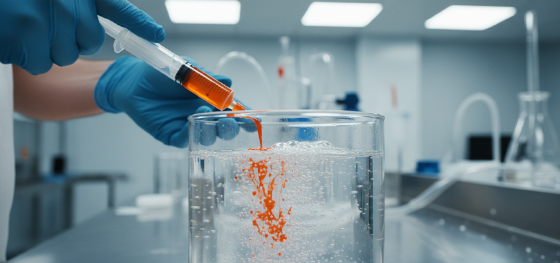
Do poured resin components require expensive secondary painting to look professional?
Rarely. Mixing specific color pigments and functional additives directly into the raw liquid vat ensures the parts cure with retail-ready aesthetics straight out of the pressure chamber.
Mimicking the specific tactile feel of expensive thermoplastic elastomers proves virtually impossible with standard rigid filament spools. Technicians actively inject customized foaming agents and UV stabilizers directly into the polyurethane vat before curing begins. This advanced chemical mastery perfectly simulates rigid ABS, flexible rubbers, or heavily glass-filled nylons.
Achieving absolute optical clarity for custom automotive headlight lenses demands completely eliminating trapped atmospheric gases. Pumping the casting chamber down to an extreme negative pressure aggressively forces microscopic air bubbles out of the thick liquid polymer. Pulling these components from the mold reveals flawless, glass-like transparency that layered plastics cannot replicate.
Matching exact Pantone brand colors prevents massive headaches during corporate hardware presentations. Painting printed plastics often results in chipping and peeling under heavy handling. Incorporating the dye directly into the liquid resin guarantees the color penetrates the entire solid wall thickness, rendering deep scratches practically invisible to the end user.
JUCHENG Hub: Dominating Hardware Scaling Economics
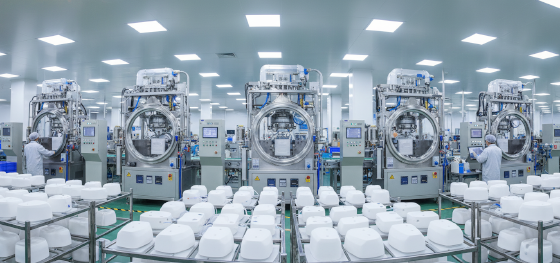
How do factory managers determine the exact financial crossover point between printing and casting?
Producing fewer than ten individual units heavily favors direct printing, but demanding twenty to three hundred identical retail-grade parts makes silicone molding dramatically cheaper and faster.
Jucheng Precision aggressively eliminates the dangerous guesswork from your low-volume production economics. Sending our engineering team your digital CAD model triggers an immediate, hardcore Design for Manufacturing analysis. We calculate your exact financial trajectory, ensuring you never burn budget on inappropriate manufacturing methods.
Managing massive fleets of automated printers directly alongside advanced pressure chambers allows us to execute your entire project under one unified roof. We physically print the master, pour the silicone, and cast your beta run flawlessly in days. Protecting your intellectual property remains paramount throughout this entire localized supply chain process.
Frequently Asked Questions: Chemical Realities
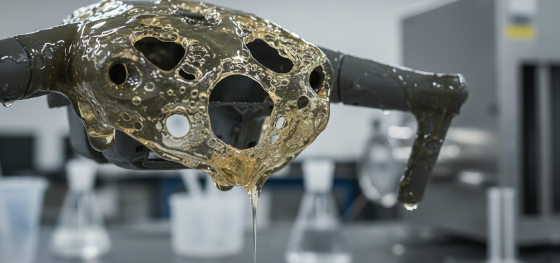
Can extreme vacuum pressure crush delicate internal mold features?
Yes, drawing a vacuum too rapidly can violently collapse thin-walled silicone sections. Operators must carefully modulate the atmospheric pressure drop to protect fragile internal shut-offs and tiny core pins during the aggressive degassing phase.
Why does my cast polyurethane prototype feel sticky weeks after leaving the factory?
Experiencing sticky surfaces indicates a catastrophic failure in the chemical mixing ratio or severe moisture contamination during the pouring phase. Precision facilities utilize automated mixing nozzles to prevent this unpredictable human error entirely.
Is it possible to cast two entirely different materials into the same part simultaneously?
Executing multi-material overmolding is highly effective using this technology. Technicians easily suspend a rigid cast chassis back into the silicone mold and pour a soft elastomeric grip entirely around it, brilliantly simulating advanced two-shot injection tooling.

