


Tooling debt is the silent killer of hardware innovation. When an engineer moves past the visual mockups of 3D printing and toward functional testing, they often encounter a financial wall: the six-figure cost of a steel injection mold. What is Vacuum Casting Process represents the technical sanctuary for the middle-market—the critical zone where you need fifty parts that look, feel, and perform like production plastic, but you cannot justify the lead time or the capital of a hard tool. It is an exercise in high-fidelity replication, utilizing flexible silicone molds and advanced polyurethane resins to turn a single master pattern into a small-batch production run. Within the broader vacuum casting process, success is not found in the pour, but in the management of the vacuum and the precision of the master's DNA.
JUCHENG operates a specialized replication facility where the focus is on "Molecular Mimicry." We understand that for a medical diagnostic manifold or an automotive light pipe, a "mostly clear" part is a total failure. By integrating our 5-axis CNC machining centers to create absolute master patterns with our vacuum-assisted casting chambers, we eliminate the air bubbles and surface noise that plague lower-tier bureaus. We don't just "copy" parts; we engineer a transition from digital data to physical reality that respects the laws of thermodynamics and fluid viscosity. This guide moves past the basic tutorials to explore the four-stage evolution of the cast, the economic logic of silicone tooling, and why JUCHENG’s technical rigor ensures your prototypes are born with production-grade integrity.
Profitability in the prototype stage is won by removing the unknown. You aren't just buying a plastic component; you are buying the verified relationship between material properties and geometric accuracy. Let us break down the mechanical pillars of vacuum-assisted polymer replication and see how JUCHENG locks the soul of your design into reality.
Master Pattern Genesis: Defining the DNA of the Part
Silicone Encapsulation: Building the Flexible Tool
Atmospheric Void: Why the Vacuum Stage is Non-Negotiable
Curing and Demolding: Managing the Chemical Transition
Economic Sweet Spot: Bridging the Gap to Production
JUCHENG’s Integrated Protocol: Validation via 5-Axis Precision
Master Pattern Genesis: Defining the DNA of the Part
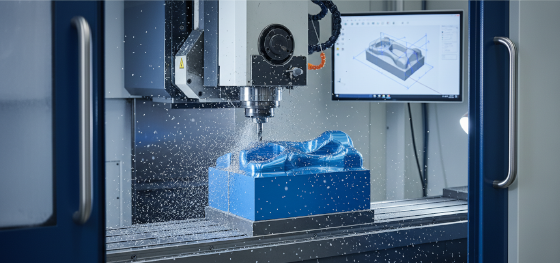
The first law of What is Vacuum Casting Process is that the copy can never be better than the original. Every detail, every tool mark, and every micron of deviation present on the "Master Pattern" will be perfectly captured by the silicone and replicated in the final resin part. If you start with a 3D printed master that hasn't been sanded, your cast parts will have visible layer lines. If your master has a warp, your entire batch of fifty parts will have a warp. This is why the genesis of the part is the most critical technical phase.
At Jucheng Precision, we advocate for CNC Machining as the primary method for creating master patterns. While SLA 3D printing is fast, only a 5-axis mill can provide the raw surface integrity (Ra 0.8 or better) and dimensional lock needed for high-stakes assemblies. We machine the master from stable materials like aluminum or high-density tooling board to ensure it doesn't flex during the silicone pour. Once the master is verified on our CMM, it is hand-finished to the exact aesthetic required—be it a mirror polish for an optical lens or a VDI texture for a consumer electronic housing. This technical rigor ensures that the "Replication DNA" is perfect from day one, allowing the vacuum casting process to deliver components that look and feel like they came from a multi-million dollar steel mold.
Silicone Encapsulation: Building the Flexible Tool

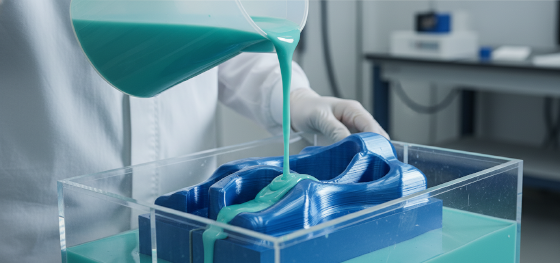
Once the master is perfected, we must build the "Vessel" for the reaction. Silicone molding is an art of liquid logic. We suspend the master pattern inside a casting box and pour a specialized two-part liquid silicone rubber around it. The technical challenge here is the "Parting Line." Our engineers strategically design the mold to split in a way that hides the inevitable seam on a non-critical or hidden surface of your design. We also calculate the placement of "Risers" and "Vents"—the internal chimneys that allow the resin to enter and the remaining air to escape.
The flexibility of silicone is its greatest technical superpower. Unlike a rigid steel tool, a silicone mold can be manipulated to release complex undercuts and internal features without the need for expensive mechanical slides. This "Geometric Freedom" is why the vacuum casting process is favored for complex housings with internal mounting bosses. After the silicone has cured in a stabilized oven, we surgically cut the mold open and extract the master. What remains is a high-fidelity negative cavity, ready to reproduce your design with absolute consistency. At JUCHENG, we manage the life-cycle of these flexible tools meticulously; we know that a silicone mold begins to lose its surface detail after 20 to 25 shots. We track every "cycle" to ensure your 20th part is as sharp and professional as the first.
Atmospheric Void: Why the Vacuum Stage is Non-Negotiable
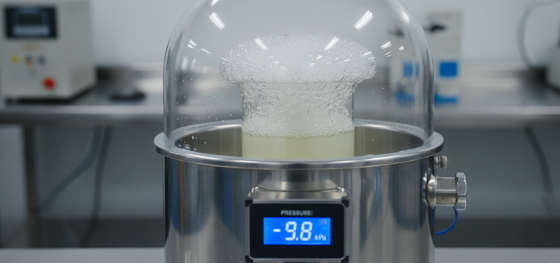
The "Vacuum" in the name is not a marketing term—it is a physical requirement for bubble-free integrity. When two-part polyurethane resins are mixed, they naturally trap microscopic air bubbles. In a standard gravity pour, these bubbles would rise slowly and become trapped against the mold walls, resulting in surface pits and internal weak spots. What is Vacuum Casting Process is essentially the science of managing pressure differentials to ensure the resin is the only occupant of the mold cavity.
The process takes place inside a dual-chamber vacuum system. First, the resin components are mixed and "degassed"—the negative pressure forces the trapped air to expand and explode out of the liquid. Second, the resin is poured into the silicone mold while the vacuum is still engaged. This ensures that the low-viscosity liquid is drawn into every microscopic detail of the texture—even the fine "grain" of a leather-effect surface. Once the pour is complete, the chamber is returned to atmospheric pressure. This "Positive Push" forces the resin even deeper into the mold, ensuring 100% volumetric fidelity. At JUCHENG, we monitor the "Gel Time" of the resin against the vacuum levels to ensure the chemical reaction isn't disrupted by the atmospheric shift. This precision is what allows us to produce clear parts with zero internal cloudiness and structural parts with 100% density.
Curing and Demolding: Managing the Chemical Transition
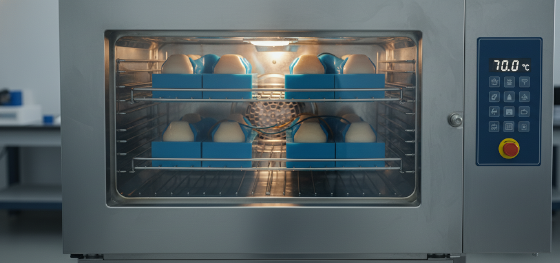
The transformation from a liquid resin to a solid engineering component is a thermodynamic event. Polyurethane resins are exothermic; they generate their own heat as they cure. If this heat isn't managed, the part can warp or develop internal stresses that lead to "delayed cracking" weeks later. Jucheng Precision utilizes programmable thermal ovens to manage the "Cure Profile" of every batch. We maintain a constant temperature—typically around 60°C to 70°C—to ensure the polymer chains cross-link uniformly from the skin to the core.
Once the resin has reached its peak mechanical hardness, the mold is carefully opened and the part is "demolded." This is a manual task that requires the steady hand of a master technician. For complex parts with thin walls, we utilize specialized release agents to ensure the silicone doesn't tear or stick to the part. The raw part then undergoes final finishing, which may include removing the risers (the material in the "chimneys") and performing light sanding on the parting lines. Because the material was born in a vacuum, the internal structure is as stable as a molded part. We treat this "Metamorphosis" as an engineered cycle, ensuring that the vacuum casting process delivers parts that are not just visual surrogates, but functional components ready for real-world mechanical stress.
Economic Sweet Spot: Bridging the Gap to Production
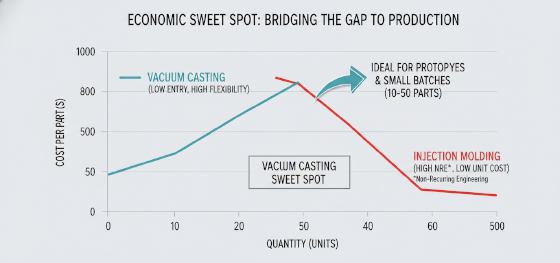
Every manufacturing technology has an "ROI Peak." When answering What is Vacuum Casting Process, we must address the financial logic. For a single prototype, 3D printing is cheaper. For 10,000 parts, injection molding is cheaper. But for the "Grey Area" of 10 to 100 units, vacuum casting is the strategic king. It provides a level of material realism that 3D printing cannot match—such as exact Shore A hardness for rubber parts or high-heat resistance for engine bay components—without the $20,000 entry fee of a steel mold.
This "Economic Sweet Spot" is vital for market validation. We help our clients launch "Pre-Series" products where they can fulfill early orders with production-quality parts while their mass-production tools are still being built. The ability to use over twenty different urethane resins—including those that simulate ABS, Polycarbonate, and TPE—allows you to perform functional field trials with absolute confidence in the data. You aren't just testing a shape; you are testing a performance reality. JUCHENG helps you navigate this economic chasm, ensuring your R&D budget is spent on high-fidelity validation rather than expensive, static tooling.
JUCHENG’s Integrated Protocol: Validation via 5-Axis Precision
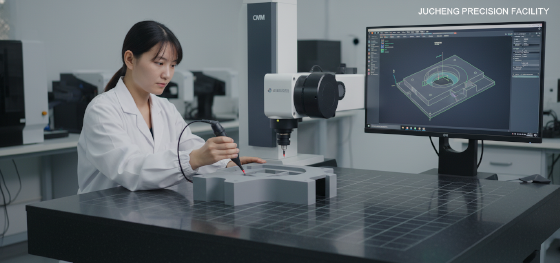
The final hallmark of a world-class replication facility is the refusal to accept "visual quality" as a proxy for technical precision. A part that looks like it came from an injection mold must also measure like one. At Jucheng Precision, we have integrated our casting lab with our elite metrology department. We don't just ship your cast parts; we prove their dimensional integrity. Every batch of parts produced via the vacuum casting process is audited against the original digital STEP file.
We utilize Coordinate Measuring Machines (CMM) and high-resolution video measurement systems to verify critical assembly features. If your part features a bearing seat or a precision thread, we ensure the shrinkage of the resin has been accounted for during the master-pattern phase. This level of technical oversight is essential for the medical and aerospace sectors where a single millimeter of drift is a failure. When you receive a shipment from JUCHENG, you are getting the benefit of a unified ecosystem that understands both the agility of casting and the certainty of CNC machining. We don't just pour resin; we manufacture trust. Contact our engineering team today for a comprehensive technical DFM review and see how our What is Vacuum Casting Process protocols can clarify and elevate your next manufacturing breakthrough.

