AGV drive wheel and suspension machining: Zero-Backlash Guide
Views: 5 Author: Allen Xiao Publish Time: 2026-04-08 Origin: Site
Navigational precision in autonomous logistics is an absolute hostage to mechanical alignment. In the hyper-agile environment of 2026, when an Autonomous Mobile Robot (AMR) attempts to execute a sub-millimeter dock with a charging station, the primary adversary is not the SLAM algorithm—it is the "Wheel Wobble" inherent in poorly machined drive components. If a wheel hub exhibits even ten microns of eccentricity or a suspension arm flexes under a heavy payload, the robot’s odometry data drifts, rendering the expensive internal sensors useless. Navigating this requirement for extreme kinetic stability requires the strategic deployment of AGV drive wheel and suspension machining. Jucheng Precision operates as a high-fidelity subtractive sanctuary in the Shenzhen precision manufacturing hub, providing the 5-axis CNC depth needed to deliver shafts, hubs, and linkages that possess the mechanical spine needed for 24/7 warehouse operation. Within the broader framework of AGV and AMR Parts, we bridge the gap between "prototype motion" and "industrial sovereignty," ensuring your mobile fleet maintains its positioning accuracy through millions of revolutions.
Establishing a resilient robotics supply chain in 2026 demands the absolute rejection of "general-purpose" machine shops. Amateurs often treat a robotic drive shaft like a standard axle, ignoring the intense shear forces generated by high-torque stepper and servo motors. Jucheng Precision eliminates these "Kinematic Failures" by enforcing a strict "Zero-Backlash" protocol across our 150+ CNC machine campus. We recognize that AGV drive wheel and suspension machining is a metrological exercise where concentricity and perpendicularity are the only metrics that matter. Whether you are developing a low-profile sorter or a heavy-duty fork-bot, our integrated facility provides the manufacturing insurance needed to secure market entry. This guide deconstructs the necessity of high-torque alloys, the physics of sub-micron hub alignment, and why JUCHENG’s "Drivetrain Protocol" is the mandatory foundation for anyone developing autonomous mobile hardware.
Mechanical Standoff: Handling High Torque and 24/7 Operational Stress
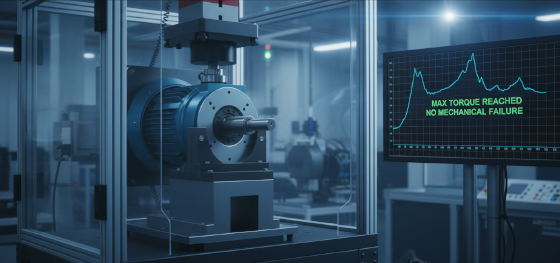
Rotational endurance represents the ultimate filter for robotic drivetrain success. Modern warehouse robots are designed to operate around the clock, subjected to continuous start-stop cycles that place immense fatigue stress on every mechanical joint. AGV drive wheel and suspension machining must account for the "Stall Torque" of powerful brushless motors. If a suspension swing arm lacks the necessary flexural modulus, it will eventually work-harden and fracture, leading to a catastrophic field recall. Jucheng Precision engineers utilize Finite Element Analysis (FEA) to identify these high-stress zones in your CAD files. We don't just "cut metal"; we engineer a structural symphony that allows your drive system to absorb the kinetic energy of a 1,000kg payload without permanent deformation. By focusing on the "Fatigue Sovereignty" of the linkage, we ensure your robot fleet remains operational in the field, not waiting for repairs in the maintenance bay.
Concentricity Sovereignty: Machining Drive Shafts and Hubs to +/- 0.005mm
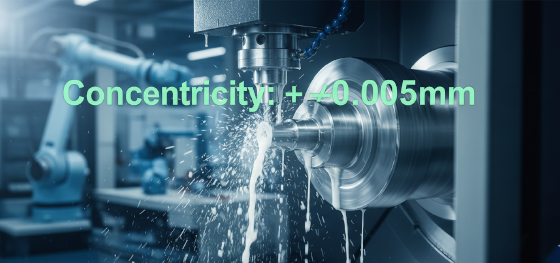
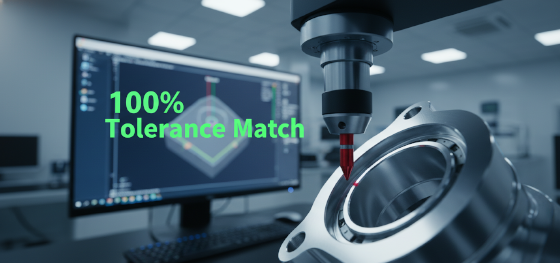
Dimensional truth in the drivetrain begins at the rotational center. The primary challenge in AGV drive wheel and suspension machining is achieving sub-micron concentricity between the motor mounting flange and the wheel interface. If the shaft is misaligned by even 0.02mm, it creates a rhythmic vibration that travels through the entire robot, blurring LiDAR data and causing "Sensor Noise" that disrupts the AI navigation. Jucheng Precision utilizes elite Mill-Turn CNC centers to machine these components in a single setup. By eliminating the manual "Flip" of the part, we ensure that the bearing seats on both ends of a suspension hub share the exact same axis. We routinely hold tolerances of +/- 0.005mm, guaranteeing that your drive wheels spin with zero wobble. This mechanical perfection is the secret to "Predictable Navigation," allowing your robot to follow its digital path with 100% fidelity.
Metallurgical Logic: Why 4140 Steel and 7075 Aluminum Rule the Drivetrain
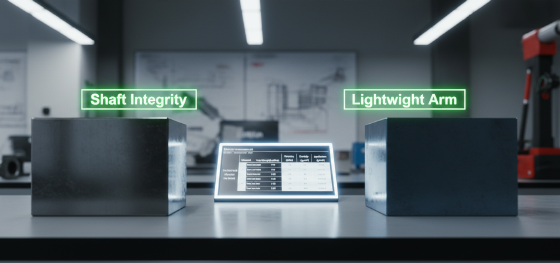
Molecular strength dictates the weight-to-performance ratio of bionic and mobile limbs. Selecting the correct substrate for AGV drive wheel and suspension machining is a balance between "Inertial Mass" and "Shear Resistance." Jucheng Precision recommends Hardened Alloy Steel (specifically 4140) for main drive shafts. After machining, we utilize vacuum heat-treatment to reach HRC 28-32, providing the core toughness needed to resist the twisting force of a high-torque motor. For the suspension arms and wheel hubs where weight reduction is a priority, we pivot to Aerospace-Grade 7075-T6 Aluminum. 7075 offers a yield strength (500 MPa) that rivals many mild steels but at 33% of the weight. By matching the alloy to the specific mechanical load, we deliver a drivetrain that is light enough for battery efficiency yet rigid enough for industrial abuse, ensuring your hardware journey is both high-performance and capital-efficient.
JUCHENG Protocol: Zero-Backlash Engineering and CMM Verification
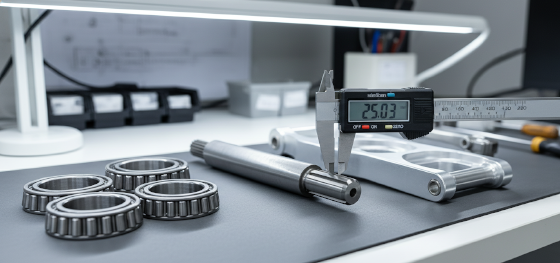
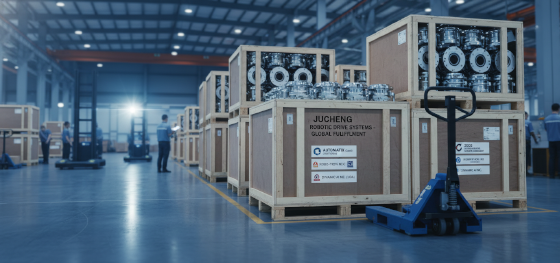
Manufacturing excellence at Jucheng Precision is built on the foundation of the metrological audit. We don't just "mold and machine"; we verify every motion center against your digital CAD intent. Our facility, housing over 150 CNC machines and 25 high-precision 5-axis centers, is optimized for the tight tolerances required by the Robotics Automation Manufacturing sector. We provide full material lot traceability and dimensional inspection reports for every AGV drive wheel and suspension machining batch, providing the "Paper Trail of Quality" required for Tier-1 supply chains. Stop gambling your robot's agility on inaccurate vendors. Leverage our decade of high-performance replication mastery to validate rapidly and scale profitably. Contact our technical team today for a free DFM review and see how we can turn your digital movement intent into a structurally sovereign physical reality that is documented for success.
Question: How do you prevent the drive shaft from slipping in high-torque robot applications? Answer: We utilize high-precision CNC broaching to cut keyways or splines into the shaft, ensuring a positive mechanical interlock with the motor hub. We also provide "interference fit" tolerances for press-fit assembly.
Question: Can JUCHENG handle the machining of large-scale planetary gear carriers? Answer: Yes. Our 5-axis machining bays specialize in complex gear components for industrial robot parts, achieving the micron-level concentricity needed for zero-backlash power transmission.
Question: What surface treatments are recommended for robotic suspension links? Answer: For aluminum suspension parts, we recommend Type III Hard Coat Anodizing. This creates a sapphire-hard surface that resists the gravel and debris impacts common in industrial warehouse environments.
Question: What is the lead time for a custom set of robotic wheel hubs? Answer: Utilizing our expedited CNC workflow, JUCHENG can deliver a fully machined and inspected set of drivetrain prototypes in as fast as 5 to 7 business days.
ㆍFill in your requirements and upload your 2D&3D file, we will feedback your project quotation and DFM within 24 hours.
ㆍFile types: STEP, STP, IGES, IGS, SLDPRT, 3DM, SAT or X_T files File size: < 128 MB Part size: < 1500*1500*1500 mm ㆍPrivacy: We respect your privacy. Here you can find an example of a non-disclosure agreement. By submitting this form, you agree to our terms & conditions and privacy policy.