


In the realm of precision measurement, the term "μm" holds significant importance. Short for micrometer, a μm represents one-millionth of a meter (0.000001 meters). This unit is indispensable in fields requiring extreme accuracy, such as engineering, manufacturing, and scientific research. Understanding what a μm is and how it is applied can enhance quality control, improve product design, and ensure compliance with international standards. This article delves into the intricacies of the micrometer unit, its relevance in metric system, and practical examples of its use in industry.
content:
What is a Micrometer (μm)?
Micrometer Unit of Measure
μm Metric System Integration
What μm Means in Practice
Understanding Um Length
Interpreting Micrometer Readings
Real-World Application: Automotive Part Inspection
What is a Micrometer (μm)?
The μm meaning is rooted in the metric system, where "μ" (mu) is the Greek letter denoting "micro," meaning one-millionth. Thus, a micrometer equals 1/1,000,000 of a meter. This unit is crucial for measuring microscopic distances, such as the thickness of coatings, the diameter of fibers, or the precision of mechanical parts. Without the micrometer, many advancements in technology and manufacturing would be impossible, as it allows for tolerances that are vital to functionality and safety.
Micrometer Unit of Measure
The micrometer unit of measure is a standard in the International System of Units (SI) for expressing very small lengths. Unlike imperial units, the metric system simplifies conversions because it is based on powers of ten. For instance, 1,000 micrometers make up 1 millimeter. Micrometers are typically measured using tools like calipers or optical instruments, but the most accurate device is the micrometer screw gauge, which can measure down to 0.001 mm. This tool consists of several micrometer parts, including a frame, anvil, spindle, and thimble, each contributing to its precision.
μm Metric System Integration
The μm metric integration highlights the coherence of the SI system. Since the metric system is decimal-based, converting between units—such as meters to micrometers—is straightforward. This uniformity reduces errors in calculations and communications across global industries. For example, in semiconductor manufacturing, chip features are often measured in micrometers to ensure consistency in production processes worldwide. This standardization supports interoperability and quality assurance in international trade.
What μm Means in Practice
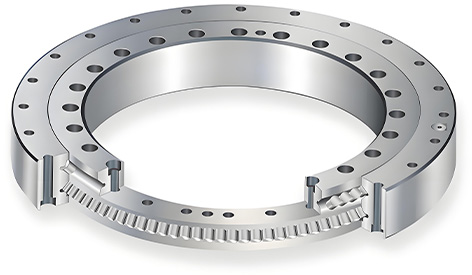
In practical terms, μm means the difference between a part fitting perfectly or failing entirely. Consider a bearing in an automotive engine: if its diameter deviates by even a few micrometers, it could lead to excessive wear or engine seizure. Similarly, in aerospace, turbine blade thickness must be controlled within micrometer tolerances to withstand high stresses. These examples underscore how micrometer-level precision impacts durability, efficiency, and safety in real-world applications.
Understanding Um Length
When discussing um length, it is essential to note that "um" is often a typographical shorthand for μm, though technically, "μm" is the correct symbol. Measurements in this range are common in materials science. For instance, a human hair is approximately 50–100 micrometers thick, and red blood cells are around 7 micrometers in diameter. In manufacturing, controlling the um length of materials—like plastic films or metal foils—ensures product consistency and performance.
Interpreting Micrometer Readings
Accurate micrometer readings are vital for quality assurance. A typical micrometer screw gauge has a scale that requires interpretation: the main scale provides millimeter measurements, while the thimble scale adds hundredths of a millimeter. For example, a reading of 5.5 mm on the main scale and 0.25 mm on the thimble gives a total of 5.75 mm or 5,750 micrometers. Training personnel to read these tools correctly prevents defects and ensures compliance with design specifications.

Real-World Application: Automotive Part Inspection
In automotive manufacturing, micrometer measurements are routine. Suppose a technician inspects a piston ring's diameter. Using a micrometer, they might find it measures 74.50 mm, or 74,500 micrometers. If the specification requires 74,500 ± 10 μm, any reading outside this range would reject the part. This level of precision ensures engine components operate smoothly, reducing emissions and improving fuel efficiency. Such applications demonstrate the micrometer's role in maintaining high standards in mass production.
The micrometer (μm) is a foundational unit in precision measurement, bridging gaps between design, production, and quality control. Its integration into the metric system facilitates global collaboration, while its applications span from microscopic research to industrial manufacturing. By understanding μm meaning, micrometer units, and their practical implications, professionals can drive innovation and maintain excellence in their fields. Whether measuring microns or interpreting micrometer readings, accuracy at this scale is not just beneficial—it is essential.

