


An engineer asks: "I need to protect my aluminum part. Should I anodize it or plate it?" This is a very common question. And a very important one.
Many people use the terms interchangeably. But anodizing and plating are fundamentally different processes. They have different goals and produce very different results.
Choosing the wrong one can mean your product fails to perform. This guide will clarify the confusion. It will explain what aluminum plating is, why you would use it, and how it differs from other types of Aluminum surface treatment.
content:
A Common Point of Confusion: Plating vs. Anodizing
Why Would You Plate Aluminum?
The Challenge: Making it Stick
Common Types of Plating on Aluminum
Choosing the Right Process
A Common Point of Confusion: Plating vs. Anodizing
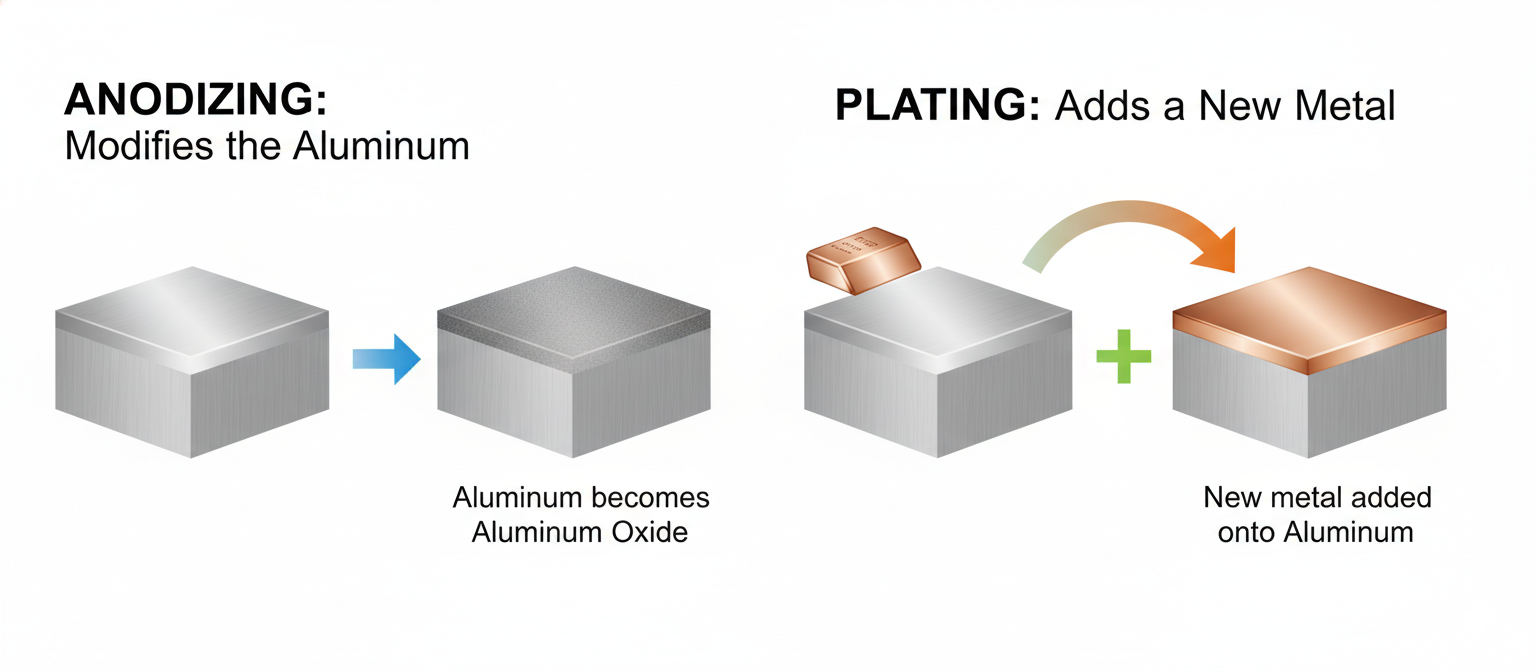
Let's make this very clear. Anodizing is not plating.
Anodizing is a "conversion coating." It takes the existing aluminum on the surface of your part and chemically converts it into a hard, protective layer of aluminum oxide. You are not adding a new material. You are modifying the existing one.
Aluminum plating, on the other hand, is an "additive process." It involves depositing a layer of a completely different metal (like nickel, copper, or gold) on top of the aluminum surface. You are adding a new material to gain its unique properties.
This is the most important difference to understand. Anodizing enhances the properties of aluminum. Plating gives aluminum the properties of a completely different metal.
Why Would You Plate Aluminum?
If anodizing already provides good protection, why would you go through the complex process of plating? Because sometimes, you need a property that aluminum and its oxide simply do not have.
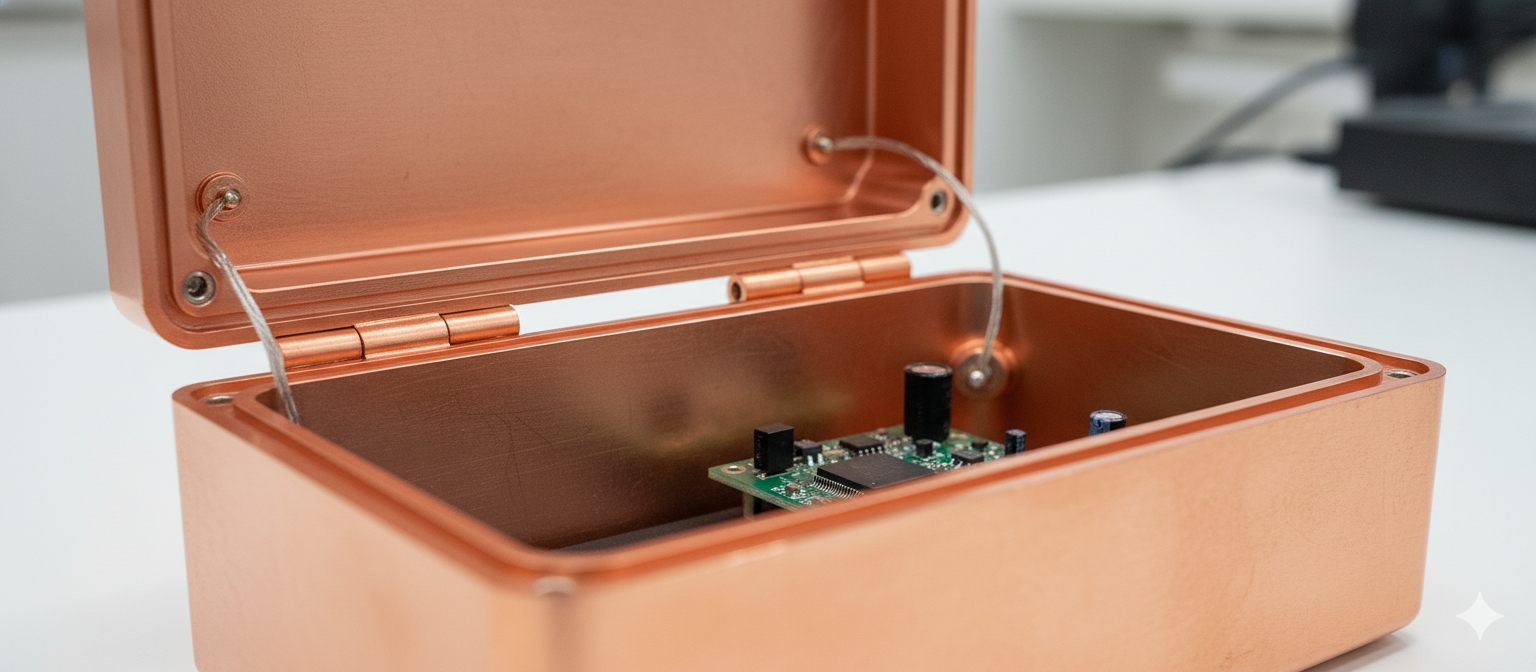
A key reason is for electrical performance. The aluminum oxide layer from anodizing is an electrical insulator. This is a problem if you need your part to conduct electricity or provide EMI/RFI shielding. By plating the aluminum with a conductive metal like copper, you can create a highly effective shield for a high-frequency electronics enclosure.
Another reason is for extreme hardness and wear resistance. While anodizing is hard, it is not as hard as a layer of nickel. For a part that will experience a lot of sliding or friction, a nickel plating provides a much more durable surface.
Other reasons include solderability (plating with tin or gold makes it easy to solder wires to) and specific decorative appearances (like a chrome or gold finish).
The Challenge: Making it Stick
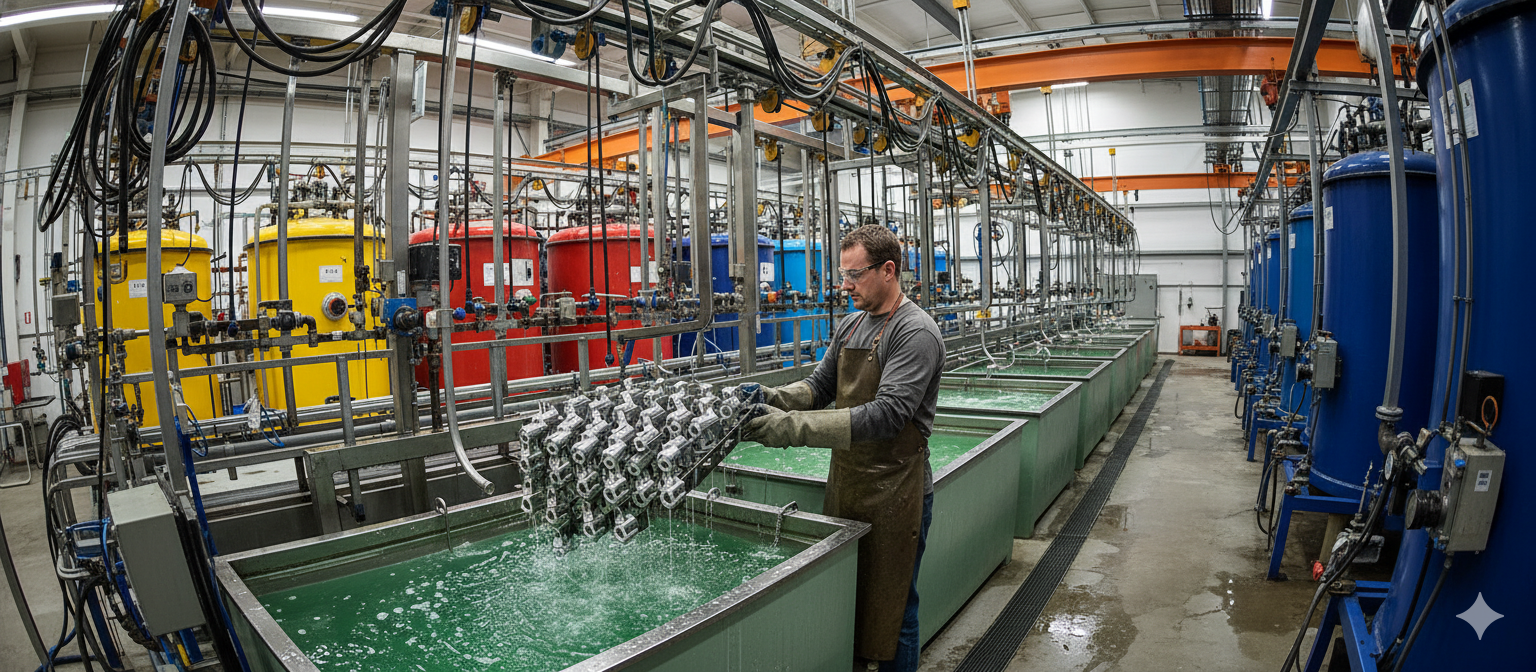
The process of aluminum plating is very complex. This is because of aluminum's natural enemy: its own oxide layer.
The moment you clean a piece of aluminum, it instantly reacts with the air and forms that invisible oxide film. Other metals will not stick to this film. If you try to plate directly onto it, the plating will just peel off.
A professional plating process for aluminum requires a special multi-stage pre-treatment. The most common is a "zincate" process. The part is first cleaned. Then it is dipped in a zincate solution. This removes the oxide and deposits a very thin layer of zinc.
Then, a thin layer of copper or nickel is often plated onto the zinc. This is called a "strike." This strike layer acts as a stable and adherent base. Finally, the final desired metal layer can be plated on top of the strike. This complex process is the only way to ensure a strong, permanent bond.
Common Types of Plating on Aluminum
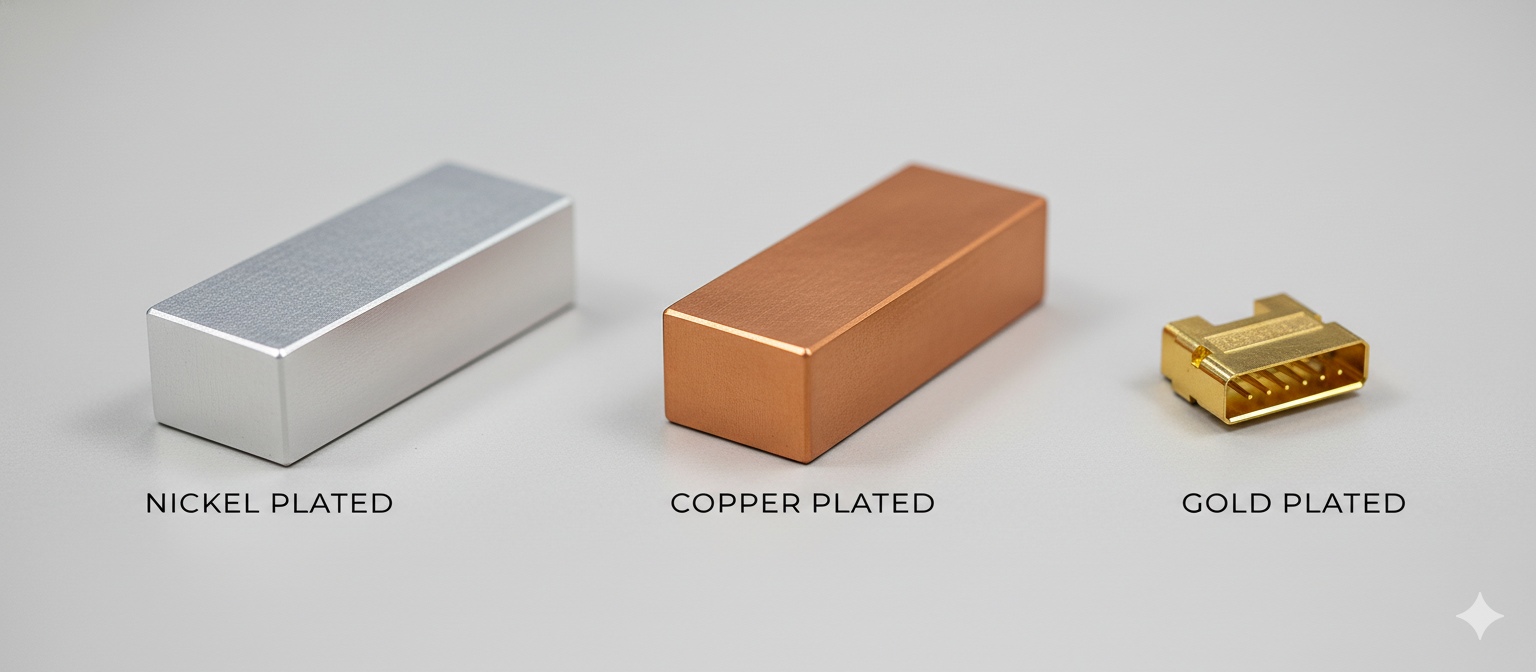
Several types of plating are commonly used.
Nickel Plating is very popular. It provides excellent hardness, wear resistance, and corrosion protection. Electroless nickel plating is a special type that can create a very uniform layer, even inside complex parts.
Copper Plating is used when high electrical conductivity or EMI shielding is needed. It is also often used as an undercoat for other types of plating.
Gold and Silver Plating are used for their excellent conductivity and corrosion resistance in high-end connectors and electronics.
Tin Plating is a cost-effective way to provide good corrosion resistance and a solderable surface.
Choosing the Right Process
How do you choose between anodizing and plating? You must ask yourself: What is the primary goal of the finish?
If you need good durability, a beautiful color, and good corrosion resistance, anodizing is an excellent and cost-effective choice. It is the default for most high-quality aluminum parts.
But if you need a property that aluminum itself does not have—like electrical conductivity, extreme surface hardness, or solderability—then you need aluminum plating.
This is an engineering decision. A good manufacturing partner can help you make it. By understanding your product's requirements, we can recommend the specific Aluminum surface treatment that will deliver the performance you need.

