


Securing expensive motherboards inside flimsy plastic guarantees catastrophic field failures. Procurement managers constantly battle thermal throttling and electromagnetic interference when launching high-performance hardware systems. Relying on cheap injection molds for low-volume commercial equipment traps boiling heat inside the device, instantly frying delicate processors. Specifying Custom electronic enclosure CNC machining eliminates these devastating liabilities completely. Subtractive milling transforms raw metallic billets into indestructible physical armor, providing absolute environmental protection and military-grade thermal management.

Engineers desperate to pass strict FCC compliance testing cannot afford microscopic manufacturing errors. Leaking radio frequencies will instantly trigger regulatory failures, delaying your product launch indefinitely. Mating metallic surfaces with zero-gap tolerances creates an impenetrable Faraday cage that blocks all external and internal radio noise completely.
Navigating this brutal hardware lifecycle requires aligning your CAD geometry with the exact right factory equipment. Let's dissect why cutting solid metal beats pouring plastic, how integrated heatsinks prevent chip burnout, and why turnkey assembly prevents massive supply chain bottlenecks.
content:
Justifying Subtractive Milling for Hardware Shells
Navigating the Hardware Manufacturing Lifecycle
Engineering Crucial Thermal and EMI Defenses
Bending Sheet Metal for Massive Hardware Racks
Specifying the Perfect Industrial Alloy
Consolidating Assembly and Finishing at JC Rapid
FAQ: Honest Answers About Tolerances and Costs
Justifying Subtractive Milling for Hardware Shells
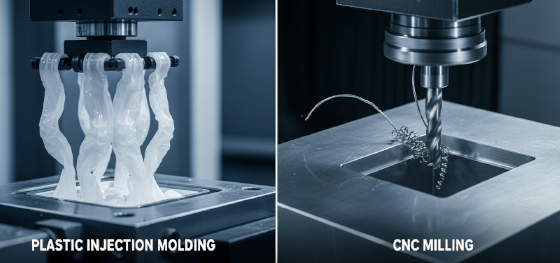
Pouring liquid plastic into molds works fine for cheap toys but destroys high-end industrial electronics. Shrinkage warps the plastic rapidly, leaving massive geometric gaps where dust, saltwater, and humidity flood the internal circuitry.
Utilizing advanced CNC machining guarantees absolute zero-gap fitment. Your delicate circuit boards slide perfectly into the precision-machined mounting standoffs on the very first try without requiring any aggressive manual rework or sloppy chemical adhesives.
Budgeting for massive steel injection molds makes zero financial sense for low-volume commercial runs. Direct milling completely bypasses those catastrophic NRE tooling fees, allowing your team to iterate the chassis design daily without paying penalty charges.
Navigating the Hardware Manufacturing Lifecycle
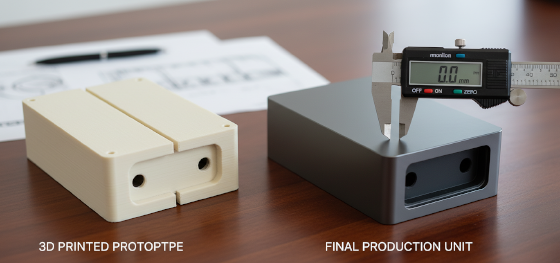
Freezing your CAD design without holding a physical model is a massive financial risk. Ordering a fast prototype enclosure allows your team to verify PCB clearances, USB port alignments, and button tactility long before mass production begins.
Transitioning from early testing into a full commercial rollout requires extreme supply chain agility. Hardware founders need a vendor capable of scaling seamlessly from ten beta test units directly to ten thousand final assemblies.
Consolidating this entire journey inside our Shenzhen facility destroys logistical friction. We mill the early test units and instantly lock in the optimal cutting pathways for massive, highly automated global production runs.
Engineering Crucial Thermal and EMI Defenses
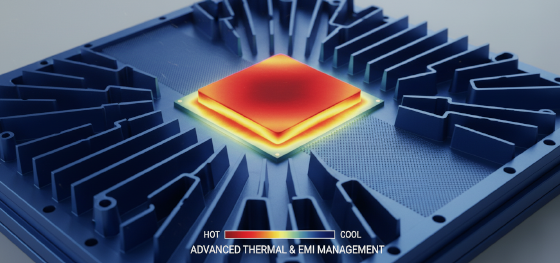
Heat destroys processing power rapidly. High-performance computing requires pulling thermal energy away from the microchips instantly. Integrating a cnc machined heat sink directly into the exterior wall acts as a massive thermal exhaust, radically improving processor lifespan.
Electromagnetic radiation ruins medical and telecommunications equipment simultaneously. Machining a precise shielded enclosure solves this regulatory nightmare. Mating perfectly flat metallic surfaces together creates an impenetrable barrier that traps internal radio noise completely.
Extreme outdoor environments demand aggressive weatherproofing geometry. Designing a Rugged enclosure prototype validates your microscopic O-ring compression grooves, ensuring tactical field gear remains completely watertight during violent rainstorms.
Bending Sheet Metal for Massive Hardware Racks

Milling a massive server tower out of a solid block of aluminum wastes incredible amounts of material and machine time. Massive data center banks require a completely different fabrication strategy to remain commercially viable.
Executing Rackmount chassis fabrication blends precise laser cutting with heavy hydraulic bending brakes. This hybrid method builds massive structural sheet metal frames at a fraction of the cost of solid billet milling.
Engineers constantly combine both technologies to achieve ultimate cost efficiency. They utilize folded steel for the main storage body and bolt on heavily milled aluminum front panels for rigid mounting integrity and premium server-room aesthetics.
Specifying the Perfect Industrial Alloy
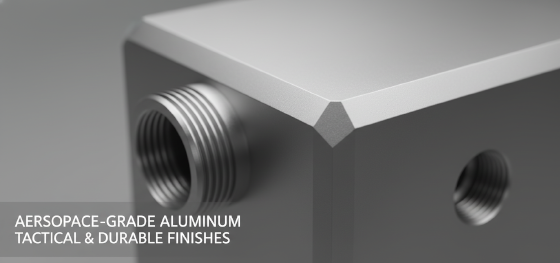
Picking the wrong raw material sabotages both your milling budget and your product lifespan. Engineers must carefully balance thermal conductivity, raw billet pricing, and aesthetic plating capabilities before locking in the blueprint.
| Material Choice | Primary Engineering Advantage | Best Hardware Application |
|---|---|---|
| Aerospace Aluminum (6061) | Ultimate balance of lightweight strength and rapid heat dissipation. | High-end commercial routers and camera bodies. |
| Stainless Steel (316L) | Extreme chemical immunity against harsh sterilization bleach. | Surgical monitors and food-processing controls. |
| Engineering Plastics (PEEK/POM) | Zero electrical conductivity, allowing radio frequencies to pass through. | GPS tracking domes and internal sensor brackets. |
Specifying an Aluminum electronics housing absolutely dominates the commercial tech sector. This specific metal sheds heat brilliantly, weighs very little, and accepts breathtaking cosmetic anodizing effortlessly.
Medical diagnostics demand sterile, highly cleanable surfaces. Engineering an Instrument enclosure custom unit out of stainless steel guarantees absolute chemical resistance against the harshest hospital cleaning protocols.
Consolidating Assembly and Finishing at JC Rapid
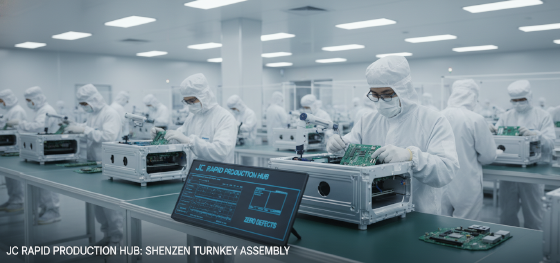
Shipping raw machined parts to a separate paint shop invites massive transit damage. Fragmented supply chains guarantee your pristine metal will suffer deep scratches before the protective coatings are ever applied.
Sourcing reliable Custom electronic enclosure CNC machining eliminates the toxic finger-pointing between disjointed vendors. Operating our massive Shenzhen hub allows us to execute the milling, bead blasting, anodizing, and final silk-screen branding under one single roof.
Stop risking your flagship product launch on cheap plastic shells. Send your complex CAD files to our engineering team at JC Rapid today for a rigorous DFM analysis and secure indestructible, fully assembled commercial hardware.
FAQ: Honest Answers About Tolerances and Costs
Does machining thick walls drastically increase the final unit cost?
Heavy material removal requires extended spindle time. We aggressively utilize topological optimization to hollow out unnecessary mass, dropping both the weight and the machining invoice simultaneously.
Can I request custom threaded inserts installed after the milling phase?
Absolutely. Our assembly technicians regularly press-fit durable brass inserts and specialized grounding studs directly into the metallic shell before final delivery.
Will applying a thick powder coat ruin my zero-gap mating surfaces?
Heavy polymers add measurable thickness. We strategically mask all critical interior joints and tapped screw holes to guarantee perfect mechanical alignment during final assembly.
Does subtractive milling support complex curved aerodynamic geometries?
Running advanced 5-axis mills allows our cutters to attack the metal block from any angle, executing breathtaking organic curves and complex aerodynamic profiles effortlessly.

