


For industrial or outdoor equipment, electronic enclosure assembly must account for dust and water ingress, electrical bonding and heat dissipation. These requirements affect sheet metal fabrication and should be checked on the representative assembled unit.
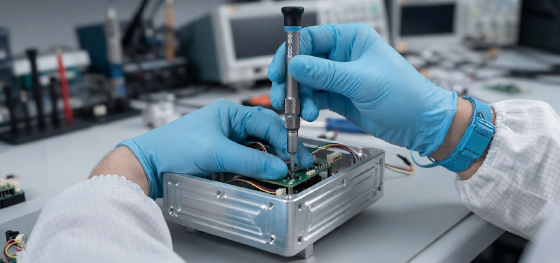
Define the exposure, component loads and operating temperature before selecting the seals, cable entries, vents and mounting features. Each requirement needs its own acceptance check.
This guide covers ingress classifications, shielding across joints and openings, and the thermal path from components to the surrounding air.
Achieving IP65 to IP67 Waterproof Ratings in Sheet Metal
How do you design a sheet metal cabinet to satisfy strict dustproof and waterproof ratings?
Agree on the required enclosure classification before choosing the gasket, flange and latch arrangement. Verify the assembled enclosure with the intended closures, cable entries, vents and connectors.
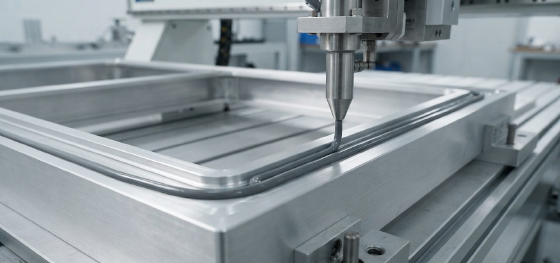
For enclosure waterproofing, overlapping flanges and a compressed gasket can help keep water out of seams. IEC 60529 IP65 includes a water-jet test, while IP67 includes temporary immersion. Neither establishes airtightness. NEMA Type 4 is defined separately; verify against whichever standard the project specifies.
Continuous silicone gaskets can be part of the seal design. Check compression around the perimeter and validate the assembled configuration. A gasket material or dispensing method does not establish an enclosure rating on its own.
EMI/RFI Shielding Strategies for Multi-Part Enclosures
Why is conductive electroplating mandatory for high-frequency shielding cabinets?
Conductive plating can be one way to maintain electrical contact, but it is not mandatory for every design. Choose the joint treatment and material for the required attenuation and operating environment.
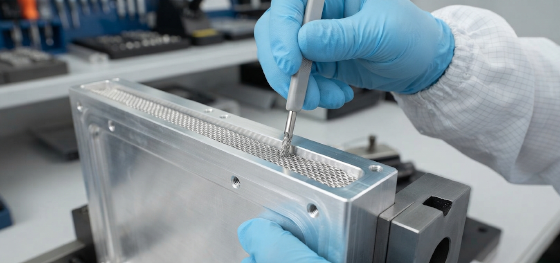
When planning electronic enclosure assembly, specify the shielding target and frequency range. Include seams, apertures and cable entries in the design. Select EMI shielding gaskets for the intended joint and environmental conditions; an EMI gasket is not automatically a weather seal.
Conductive fabric-over-foam or wire-mesh gaskets can help maintain continuity at compatible interfaces. Control coatings at the specified bonding points and verify the relevant shielding performance. A test of an empty enclosure does not establish EMC compliance of the equipped product.
PCB Mounting and Heat Sink Integration
What is the most reliable method to mount printed circuit boards and heavy cooling systems inside a metal chassis?
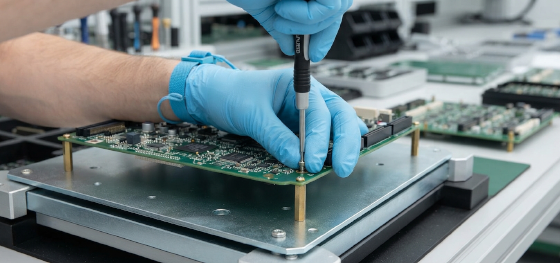
We utilize high-precision pneumatic presses to install self-clinching standoffs, and integrate five-axis milled aluminum plates to serve as high-efficiency thermal paths.
Mounting delicate electronic PCBs directly onto the flat cabinet base is an extreme risk, often causing short-circuits and structural damage. We resolve this by using pneumatic presses to install self-clinching threaded standoffs. This delivers precise, perpendicular mounting points that raise the board off the base, ensuring safe clearances.
For high-power assemblies, we integrate custom-milled aluminum plates to serve as a high-efficiency heat sink. Mating-face flatness is one input to thermal contact. Choose the interface material, contact conditions and cooling based on the heat load, ambient temperature and path to the surrounding air. Verify component temperatures under representative operating conditions before deciding whether a fan is needed.
Custom Electronics Enclosures at Jucheng Precision
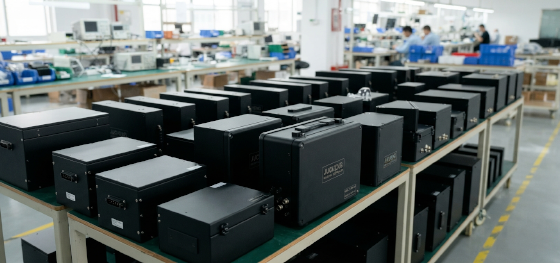
Sourcing high-precision custom enclosures requires a seamless transition from virtual CAD files to physical parts. Jucheng Precision operates multiple multi-axis lasers, automated benders, and clean assembly bays, allowing us to manage your entire project under a unified quality system certified to ISO 9001 and IATF 16949 standards. This integrated capability ensures that your complex box-builds are fabricated, coated, and assembled with extreme consistency and zero dimensional drift.
Integrating these water channels, conductive gaskets, and heat sink interfaces into your early sheet metal design cycle is the single most effective way to eliminate production defects. Supported by our 24-hour free DFM reviews, no MOQ policy, and rapid delivery guarantee, we manage your project from initial flat pattern cutting to final, high-durability packaging throughout our precision sheet metal fabrication and assembly lines.
FAQ: Critical Questions About Electronic Enclosure Assembly
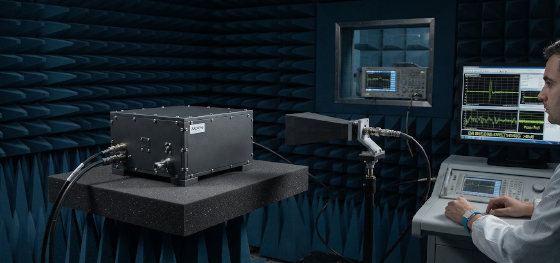
Our engineering team has compiled professional, concise solutions to the most common quality challenges faced during electronic box-builds:
How do you maintain a low-resistance grounding path in a powder-coated enclosure?
Mask or otherwise prepare the specified bonding points so insulating paint does not interrupt the intended electrical path. Check continuity after assembly using the project acceptance criterion.What is the difference between silicone and polyurethane gaskets for IP65 water sealing?
Compare the actual gasket grades for compression, temperature, weathering and the intended fluid exposure. Neither silicone nor polyurethane determines IP65 on its own; confirm the performance of the assembled seal.Can a sheet metal enclosure block high-frequency RFI/EMI noise?
It can attenuate interference over a defined frequency range. The result depends on the seams, apertures, cable penetrations and installed components. Specify the target and verify it in the intended configuration.How does Jucheng Precision prevent thermal bottlenecks during electronic enclosure assembly runs?
Review mating-face geometry, the thermal interface and the full heat path at the intended load and ambient temperature. Verify temperatures in the assembled unit to determine whether passive cooling is sufficient.

