


Processing massive computational loads generates terrifying heat that actively attacks and destroys expensive microchips. Standard manufacturing methods fail completely when hardware engineers require microscopic cooling channels squeezed into tiny physical footprints. Specifying a custom cnc machined heat sink neutralizes this thermodynamic threat instantly by maximizing the available external surface area. Subtractive milling allows hardware teams to carve incredibly dense, highly complex cooling fins straight out of solid billets, providing military-grade thermal extraction without relying on noisy, failing mechanical fans.
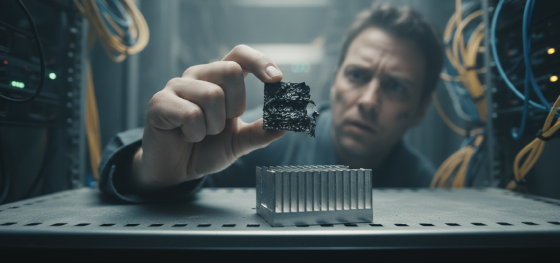
Relying on cheap mass-produced extrusions guarantees catastrophic failure for high-wattage telecommunications equipment. Pushing heavy data streams requires bespoke geometric cooling patterns that generic factory catalogs simply cannot provide. Operating our massive Shenzhen precision hub, JUCHENG deploys advanced 5-axis mills to carve customized thermodynamic armor for global commercial fleets.
Defeating extreme thermal limits dictates your ultimate product lifespan. Let's dissect why subtractive cutting violently outperforms cheap pushing techniques, how fine-tuning your aerodynamic geometry saves vital processors, and why raw material selection heavily impacts your heat transfer rates.
content:
Extrusion Limitations: Why Cut Instead of Push?
Geometric Optimization: Maximizing Aerodynamic Flow
Material Selection: Copper Versus Aerospace Aluminum
JUCHENG Hub: Rapid Thermal Manufacturing Arsenal
FAQ: Honest Answers About Fin Density and Coatings
Extrusion Limitations: Why Cut Instead of Push?
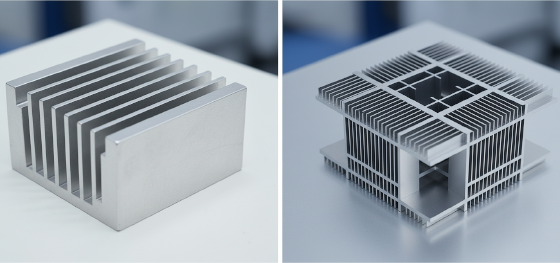
Why do top-tier engineers violently abandon cheap extruded cooling solutions?
Pushing heated metal through a standard steel die severely limits the physical height and spacing of the cooling fins, whereas precision milling removes these restrictive geometric boundaries entirely.
Squeezing metal into a linear shape forces designers to compromise their thermodynamics. Extruded fins must remain relatively thick and widely spaced so the soft metal does not snap during the factory pushing process. This massive physical limitation severely reduces the total surface area available for bleeding off heat.
Deploying advanced subtractive milling shatters these boundaries completely. Our cutters carve ridiculously thin, towering metallic fins packed tightly together. This extreme fin density dramatically increases the heat-dissipating surface area, allowing heavy servers to run flawlessly under brutal computational stress.
Geometric Optimization: Maximizing Aerodynamic Flow
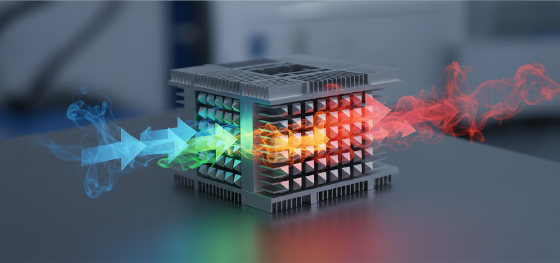
How does customized fin geometry actively accelerate heavy thermal extraction?
Carving specific aerodynamic curves and multi-directional channels directs ambient air precisely across the hottest internal zones, creating a powerful natural convection vacuum without electricity.
Standard straight extrusions block crosswinds entirely, restricting cooling efficiency to a single linear direction. Complex outdoor telecom boxes often face unpredictable wind patterns. We mill sophisticated pin-fin arrays and intersecting channels that aggressively catch passing air from absolutely any angle.
Machining the cooling mechanism directly into the main structural housing entirely eliminates thermal bottlenecks. Instead of bolting a separate radiator onto the motherboard, our Custom electronic enclosure CNC machining seamlessly integrates the cooling ribs directly into the primary metallic shell, providing an uninterrupted thermodynamic highway.
Material Selection: Copper Versus Aerospace Aluminum
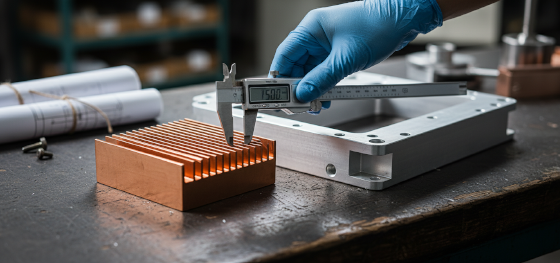
Selecting the correct metallic billet dictates both your overall unit weight and your maximum cooling threshold. The engineering benchmark matrix below outlines exactly when hardware teams must upgrade their foundational metallurgy.
| Thermodynamic Material | Primary Engineering Advantage | Major Commercial Drawback |
|---|---|---|
| Aluminum 6061-T6 | Excellent thermal conductivity, highly machinable, featherweight structure. | Struggles with absolute extreme laser-array temperatures. |
| Pure Copper (C110) | Unbeatable heat extraction, pulling energy away instantly. | Incredibly heavy, very expensive, wears out CNC drill bits rapidly. |
| Hybrid (Copper Core / Alu Fins) | Balances intense core extraction with lightweight massive radiation. | Requires highly complex press-fitting assembly labor. |
Specifying an Aluminum electronics housing remains the undisputed industry standard for ninety percent of commercial hardware projects. It sheds thermal energy brilliantly while keeping the overall assembly light enough for flying drones and portable medical devices.
Copper enters the equation only when dealing with extreme, concentrated laser arrays or hyper-dense server chips. While copper pulls heat incredibly fast, it weighs three times as much as aluminum and rapidly destroys cutting tools, driving up your manufacturing invoice significantly.
JUCHENG Hub: Rapid Thermal Manufacturing Arsenal
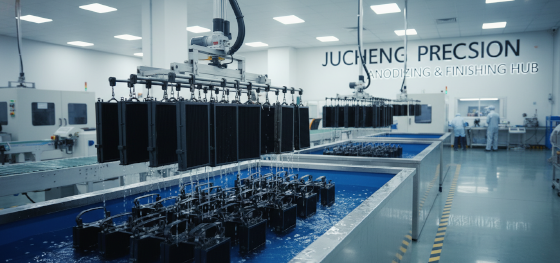
Why trust Jucheng Precision to execute your mission-critical thermal hardware?
Because we operate 150+ advanced milling centers alongside dedicated rapid prototyping bays, seamlessly transforming complex thermal CAD simulations into physical reality within days.
Shipping your raw metallic heat extractors across town for chemical coating exposes them to severe oxidation risks. We keep the entire supply chain locked inside our facility. We carve the intricate fins, wash away the cutting fluids, and apply protective anodizing completely under one roof.
Stop letting cheap thermal management throttle your flagship technology. Send your complex motherboard dimensions to our engineering team today. We evaluate the thermodynamic flow, optimize your fin density, and deliver breathtaking cooling solutions.
FAQ: Honest Answers About Fin Density and Surface Finishes

Can heavy industrial powder coating negatively insulate the delicate cooling fins?
Yes, applying thick plastic polymers acts like a heavy blanket, trapping heat inside the metal. We strictly utilize specialized micro-thin anodizing or bare chemical conversion coatings to protect radiators without ruining their thermodynamic efficiency.
What is the absolute thinnest fin your advanced machines can reliably cut?
Depending on the specific alloy and the required height of the fin, our 5-axis spindles routinely carve structurally rigid cooling ribs down to an incredibly delicate 0.5 millimeters thick.
Do complex multi-directional pin-fins cost significantly more to manufacture?
Carving intersecting channels requires extended spindle time, which naturally increases the piece price. We mathematically evaluate your required heat extraction to ensure you only pay for complex geometries when absolutely necessary.
Will harsh outdoor environments quickly rust exposed aluminum radiators?
Untreated aluminum forms a natural oxide layer, but harsh coastal saltwater will aggressively pit the metal. We mandate marine-grade hard anodizing for any exposed cooling array destined for oceanic deployments.

