


Leaving raw metal exposed to humid outdoor environments guarantees catastrophic molecular decay. Procurement teams frequently underestimate how aggressively saltwater and atmospheric moisture attack untreated hardware, leading to massive structural failures in the field. Locking down a professional die cast aluminum surface finish creates an impenetrable barrier, drastically extending the commercial lifespan of your expensive assemblies.
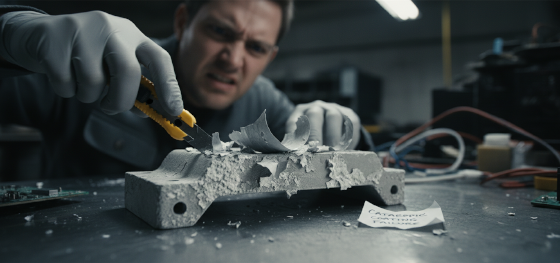
Slapping wet paint directly onto a porous metallic substrate represents a massive financial mistake. Raw alloys inherently feature microscopic manufacturing oils and trapped gases that actively reject standard cosmetic topcoats. Executing the ultimate die casting surface finish requires meticulous chemical preparation, ensuring the final protective layer grips the substrate furiously without peeling.
Balancing aesthetic requirements against brutal weathering determines your ultimate factory strategy. Let's explore why specific alloys reject bright oxidation baths, how heavy polymers defeat blistering, and why consolidating your finishing supply chain prevents transit scratching entirely.
content:
Oxidation Battles: Why Raw Metal Decays Quickly
Tactical Armor: Navigating the Hard Oxidation Trap
Polymer Defenses: Stopping Outgassing Blisters
JUCHENG Hub: Shenzhen's Turnkey Coating Arsenal
FAQ: Honest Answers About Tolerances and Conductivity
Oxidation Battles: Why Raw Metal Decays Quickly

What happens when untreated aerospace hardware faces severe coastal humidity?
Microscopic galvanic corrosion instantly begins eating away the raw exterior skin, forming a dull white powdery residue that severely weakens critical mounting brackets over time.
Stopping this environmental degradation requires immediate factory intervention. Applying specialized chromate conversion coating die casting protocols seals the microscopic pores, providing an essential chemical anchor for subsequent heavy-duty paints.
Deploying these foundational chemical films ensures your heavy machinery survives brutal marine environments. Hardware engineers rely heavily on this exact preparatory step to secure permanent adhesion for premium liquid cosmetics.
Tactical Armor: Navigating the Hard Oxidation Trap

Why do luxury consumer brands avoid bright electrochemical plating on these specific alloys?
High silicon content required for molten fluidity reacts terribly inside acidic baths, turning the metal into a muddy, dark gray mess instead of delivering a brilliant, colorful aesthetic.
Specifying anodizing die cast aluminum treatments works flawlessly only when engineers prioritize brutal mechanical wear resistance over vibrant visual beauty.
Military and heavy-duty automotive sectors actively demand this specific die cast aluminum surface finish. The resulting tactical gray finish provides unbelievable scratch resistance, effortlessly surviving abrasive friction inside heavy engine bays.
Polymer Defenses: Stopping Outgassing Blisters

How do top-tier factories prevent thick plastic coatings from bubbling inside curing ovens?
Exposing the raw hardware to extreme thermal pre-baking safely forces the trapped internal manufacturing gases to expand and escape before any cosmetic layers are applied.
Skipping this vital degassing phase destroys your commercial aesthetics instantly. When the parts hit the 400-degree curing oven, trapped air explodes outward, leaving hideous volcanic craters across your product.
Properly executing aluminum die casting powder coating demands this rigorous thermal discipline. Securing your final die cast aluminum surface finish with this melted polymer shell acts like indestructible armor, hiding shallow flow marks while providing absolute defense against intense UV radiation.
JUCHENG Hub: Shenzhen's Turnkey Coating Arsenal
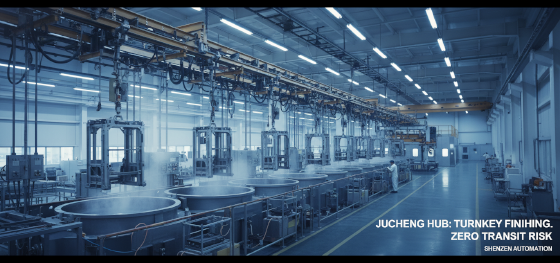
Why must hardware founders consolidate their machining and painting vendors immediately?
Shipping raw, untreated metal across a humid industrial zone exposes the delicate parts to flash oxidation and severe physical scratching before they even reach the paint booth.
Operating our massive Shenzhen precision hub eliminates this logistical nightmare. JUCHENG executes the raw injection, 5-axis CNC machining, and chemical dipping entirely under one integrated, dust-free factory roof.
Stop paying third-party vendors for a ruined die cast aluminum surface finish. Send your complex CAD files to our engineering team today for a comprehensive metallurgical audit, ensuring flawless aesthetic deliveries.
FAQ: Honest Answers About Tolerances and Conductivity

Does applying thick polymer armor alter the dimensions of tapped screw holes?
Yes, electrostatic powders add significant measurable thickness. We proactively mask all critical internal threads with high-temperature silicone plugs to guarantee perfect assembly tolerances.
Can I maintain electrical grounding if the part receives a chemical wash?
Absolutely. Unlike thick oxide layers, trivalent chromate films remain highly conductive, allowing engineers to protect the metal from rust without blocking vital electrical pathways.
Will standard mechanical tumbling remove deep manufacturing flow marks?
Vibratory tumbling beautifully softens sharp edges but cannot erase deep structural grooves. Erasing severe cosmetic flaws requires aggressive manual polishing or precision CNC face milling.
Why do some painted enclosures fade rapidly in direct sunlight?
Standard epoxy coatings break down aggressively under intense UV exposure. Specifying high-grade polyester or polyurethane topcoats ensures your outdoor hardware retains its vibrant color indefinitely.

