


Scraping a corporate logo off a brand new medical device with a fingernail destroys consumer trust instantly. Hardware founders frequently spend millions of dollars engineering beautiful metallic enclosures, only to ruin the final commercial aesthetic with cheap, incompatible liquid graphics. Executing professional die casting screen printing requires mastering deep chemical bonds, not just wiping wet color across a stencil. If your factory uses standard commercial inks on top of highly textured industrial powder coats, the graphics will naturally peel off during the first aggressive alcohol wipe-down.

Procurement teams often outsource this critical branding step to cheap local print shops. Those third-party vendors have absolutely zero idea what chemical primers or releasing agents the original foundry used on the raw metal. Operating our Shenzhen precision finishing hub, JUCHENG tightly controls the entire chemical stack, ensuring your foundational die casting surface finish perfectly grips the final aesthetic ink layers.
Navigating cosmetic durability demands rigorous factory discipline. Let's dissect the brutal physical differences between optical burning and wet graphics, explore why customized machining jigs prevent blurry text, and understand how thermal baking locks your corporate identity down permanently.
content:
Graphic Selection: When to Avoid Laser Etching
Chemical Bonds: Stopping the Peeling Nightmare
Multi-Color Precision: Defeating Blurry Logos
JUCHENG Hub: Shenzhen's Turnkey Aesthetic Arsenal
FAQ: Honest Answers About Curved Surfaces and Scratch Tests
Graphic Selection: When to Avoid Laser Etching
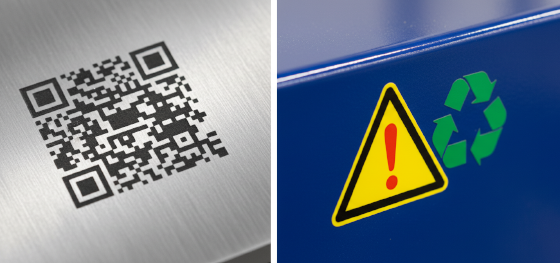
Carving traceability codes directly into raw metal using laser marking die cast components provides indestructible, military-grade permanence. However, optical beams physically cannot generate vibrant, multi-colored user interface warning labels or bright red corporate branding on a dark chassis.
Demanding bold, highly visible operational instructions for heavy industrial machinery forces engineers to pivot toward liquid polymers. Pushing thick, highly opaque epoxy inks through fine mesh screens deposits a heavy physical layer of vibrant color that sits proudly on top of the dark metallic substrate.
Evaluating visibility from a distance validates this specific commercial choice. While laser burns look incredibly premium up close on a luxury smartphone, factory workers need bright, unmistakable yellow and red safety warnings readable from ten feet away, making heavy liquid graphics absolutely mandatory for heavy-duty safety enclosures.
Chemical Bonds: Stopping the Peeling Nightmare
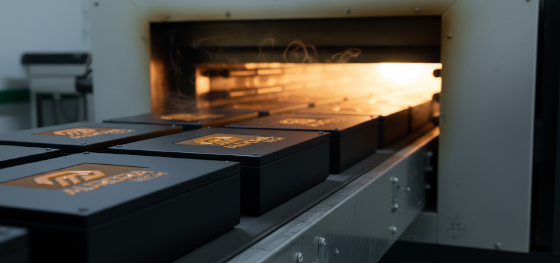
Applying liquid graphics over a heavily textured, baked powder coat introduces massive adhesion risks. Standard commercial inks rely purely on weak air-drying evaporation, causing the logo to flake off instantly the moment a hospital technician scrubs the enclosure with harsh medical bleach.
Mastering exactly how to paint die cast parts requires recognizing that the base layer and the top graphic must share a chemical affinity. We aggressively deploy specialized two-part epoxy inks that physically bite into the underlying polyurethane or powder-coated substrate, forming an unbreakable molecular cross-link.
Baking these freshly printed components inside dedicated thermal curing ovens locks the aesthetic down permanently. The intense heat physically fuses the thick epoxy graphic directly into the foundation layer, guaranteeing your corporate branding easily survives aggressive tape-peel tests and brutal chemical washdowns.
Multi-Color Precision: Defeating Blurry Logos
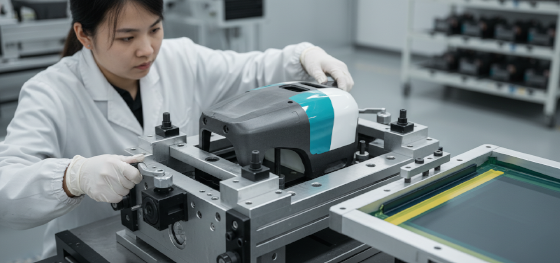
Printing three distinct colors onto a complex, curved metallic drone housing requires staggering mechanical precision. The squeegee must press down with extreme force; if the metal enclosure shifts even half a millimeter under that pressure, the red ink will bleed disastrously into the white text.
Building custom CNC-machined aluminum nesting jigs prevents this catastrophic movement. Our tooling engineers carve exact reverse-replicas of your hardware, providing a massive, rigid cradle that swallows the part completely and locks it flawlessly into position during the aggressive squeegee stroke.
Securing this absolute zero-movement stability allows our technicians to layer multiple colors perfectly. The final aesthetic emerges razor-sharp, with crisp, high-definition borders that rival expensive digital printing, elevating your B2B hardware from a basic cast part into a premium commercial device.
JUCHENG Hub: Shenzhen's Turnkey Aesthetic Arsenal
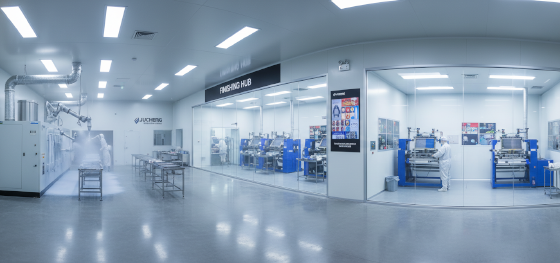
Shipping beautifully painted, pristine metal enclosures to a third-party print shop across the city invites massive cosmetic scratching. Every time rough warehouse hands unpack and repack your luxury hardware, the risk of permanent transit damage destroys your ultimate cosmetic yield rate.
Consolidating your entire visual journey inside our massive Shenzhen facility completely eradicates this logistical friction. The metal parts exit our cleanroom painting booths and roll immediately into our dedicated graphic application stations, completely avoiding dangerous outdoor atmospheric exposure.
Stop paying external vendors to smudge your company name. Send your intricate vector logos and 3D CAD files to our engineering team today. We will formulate the perfect chemical ink bonds, machine the rigid holding jigs, and deliver breathtaking, retail-ready metallic hardware.
FAQ: Honest Answers About Curved Surfaces and Scratch Tests
Standard screens are flat; how do you print on heavily curved cylindrical parts?
We switch the manufacturing process to precision pad printing for severe curves. A soft, flexible silicone stamp picks up the wet ink and smoothly rolls it across the extreme geometric contours of the metal.
No ink survives everything; what chemicals will actually strip these baked graphics?
While highly resistant to alcohol and standard bleach, prolonged submersion in heavy industrial paint strippers or aggressive MEK (Methyl Ethyl Ketone) solvents will eventually dissolve the cured epoxy bonds.
Curved metal cools unevenly; does baking the ink warp the underlying casting?
Because we utilize low-temperature curing epoxies (typically baking around 150°F to 200°F), the thermal energy remains far below the danger zone, keeping your strict dimensional assembly tolerances perfectly intact.
Yes, my part is heavily textured; will the ink bleed into the deep microscopic valleys?
Applying highly viscous, thick ink formulas prevents this capillary bleeding. The heavy graphic sits proudly on top of the textured peaks rather than flowing uncontrollably down into the rough metallic valleys.

